
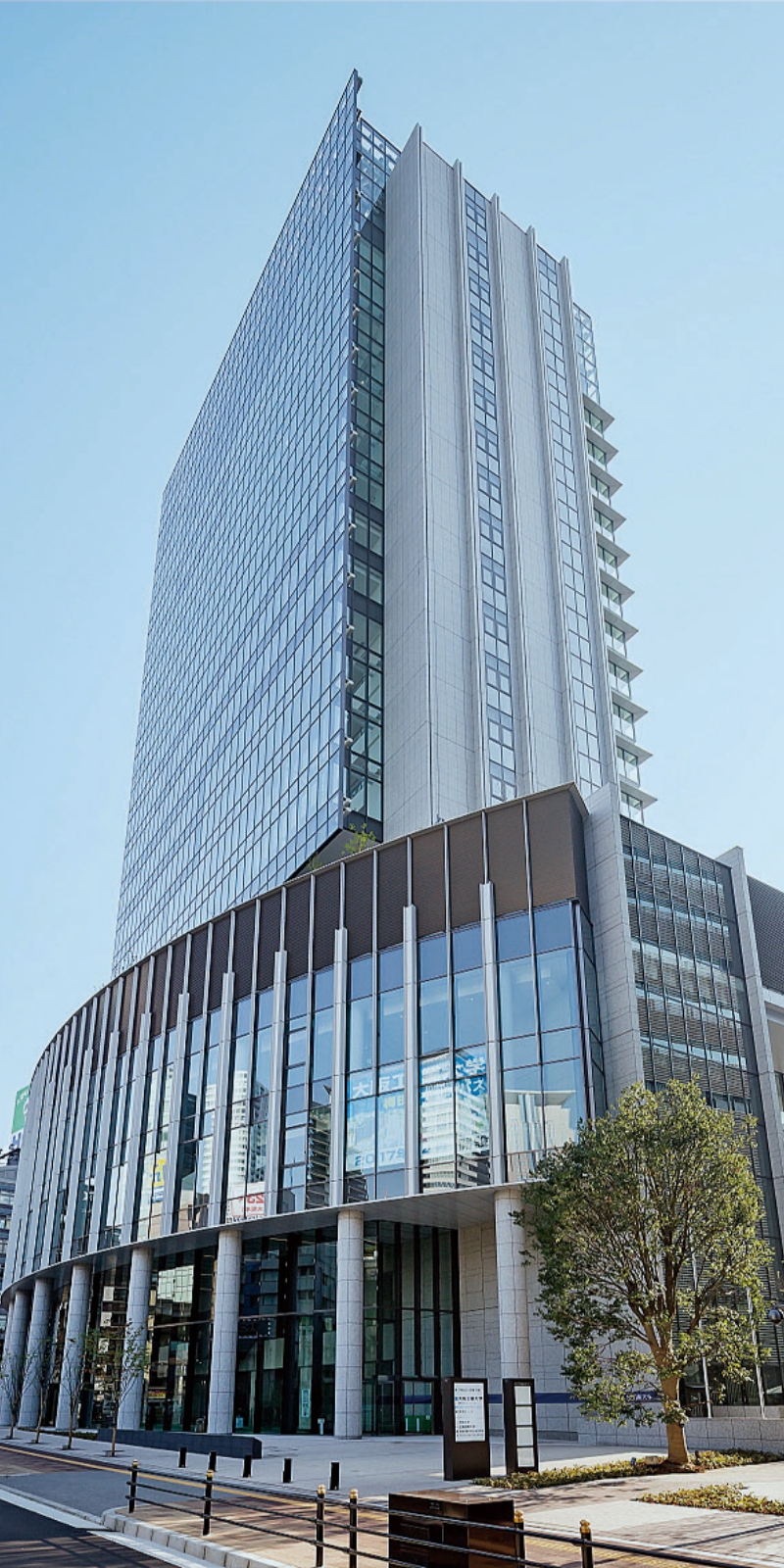






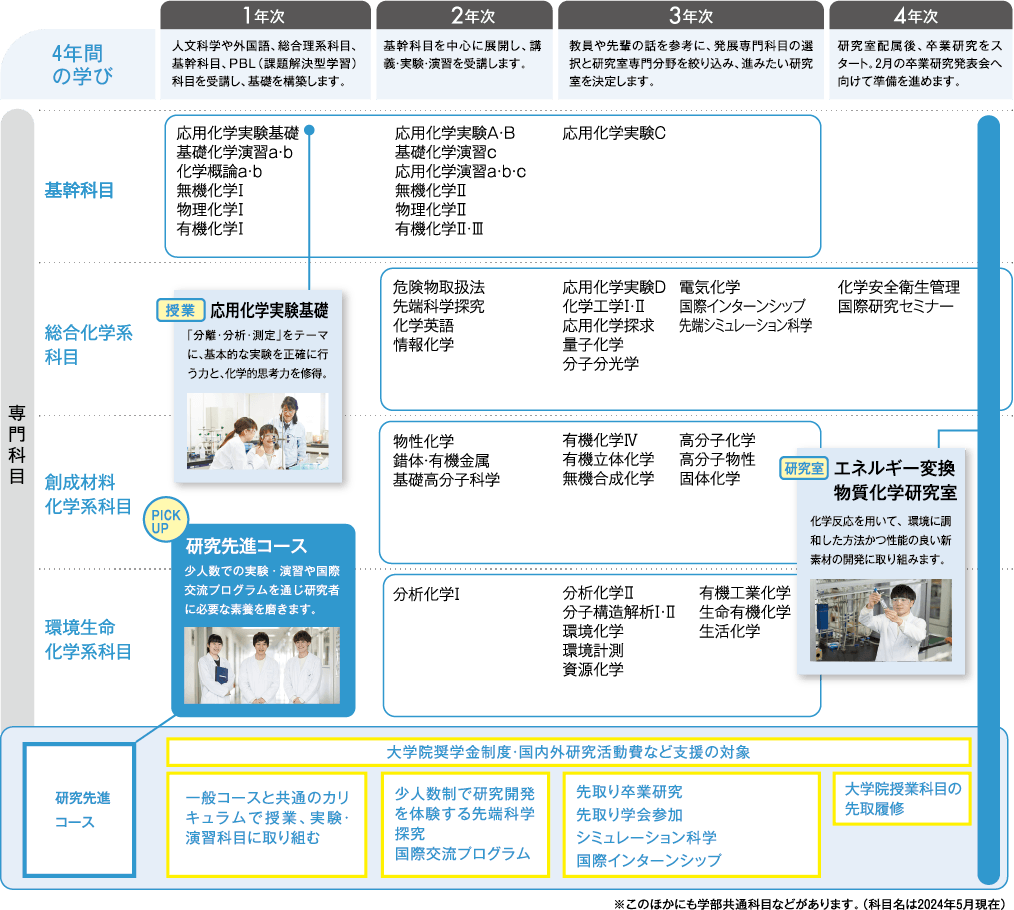
Starting from the basics, students gradually gain interest in specialized fields. With a support system from all faculty members, students can use all of their learning for their graduation research.
Four-year course schedule
First year
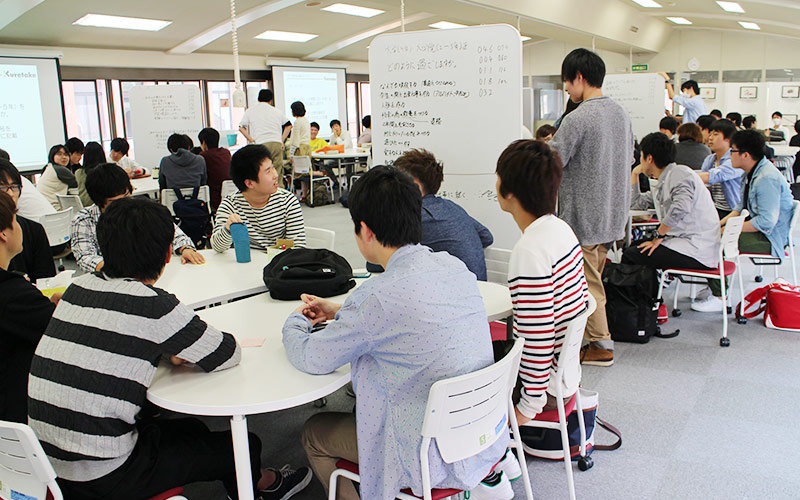
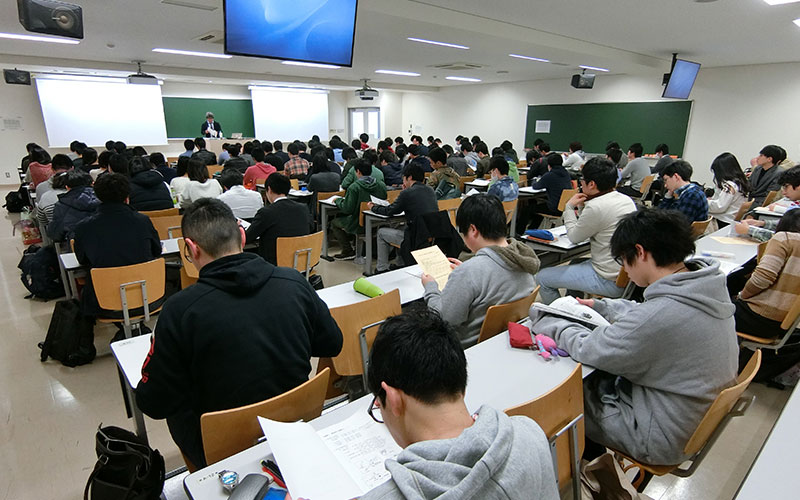
Second Year
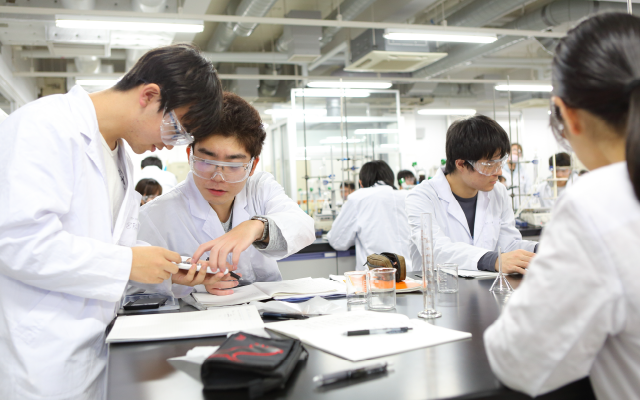
Third Year
Fourth Year
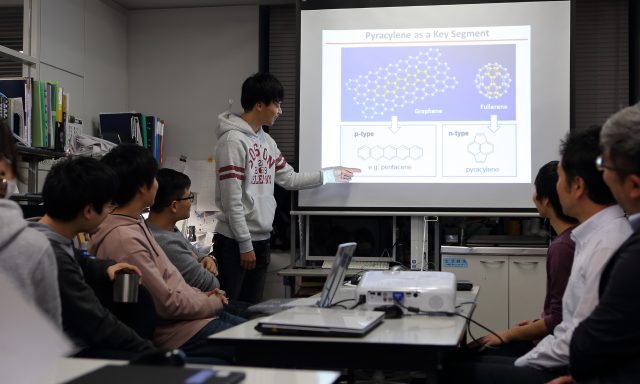
Student Voices
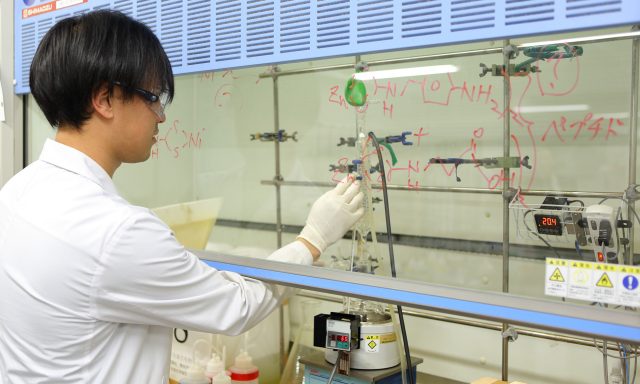
The large number of experiments is appealing, as it allows students to think from scratch and develop the ability to act independently.
Graduated from the Department of Applied Chemistry in 2019. Graduated from Kakogawa Nishi High School in Hyogo Prefecture.
Osaka Institute of Technology Institute of Technology Graduate School

We experience growth every day. The possibilities of chemistry are endless; it is even possible to "turn the human body into a battery."

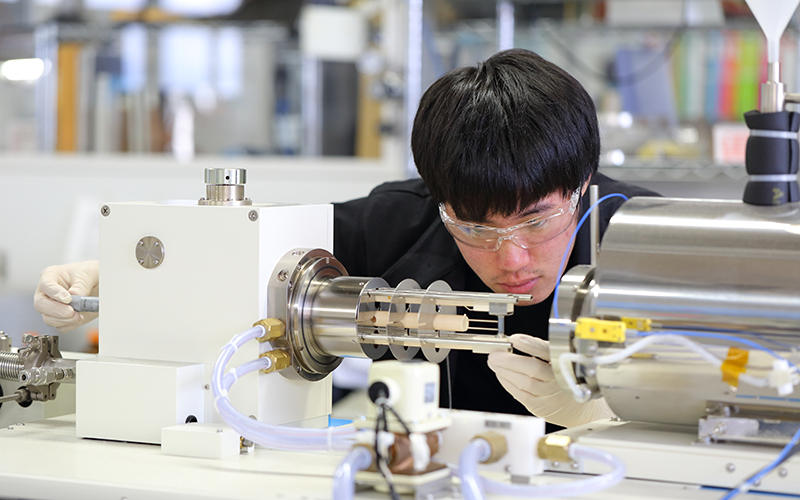
In the lab, we are working on organic materials that convert heat into electricity.
For example, if we could create a flexible sheet-shaped polymer, we could attach it to the body and convert body heat into electricity, turning humans into infinite batteries.
We are searching for materials that can synthesize these from raw materials and generate electricity most efficiently.
By simply changing one carbon atom, a compound can become a different substance, and its performance will also change.
It requires patience to change the conditions, such as the amount of catalyst or mixing time, and there is no goal as we strive for better performance.
I decided to go to graduate school to further my research and pursue it further.
This time, this research won the top prize at a joint presentation held by all laboratories, but this is still an evaluation within the university.
To be recognized by society, you need results. I would be happy if the results of my research could one day lead to a new invention.
Recommended Lectures
-
Science Exploration Seminar
Makoto Uda
3rd year student in the Department of Applied Chemistry(as of 2017)
Graduated from Hannan University High School, Osaka Prefecture
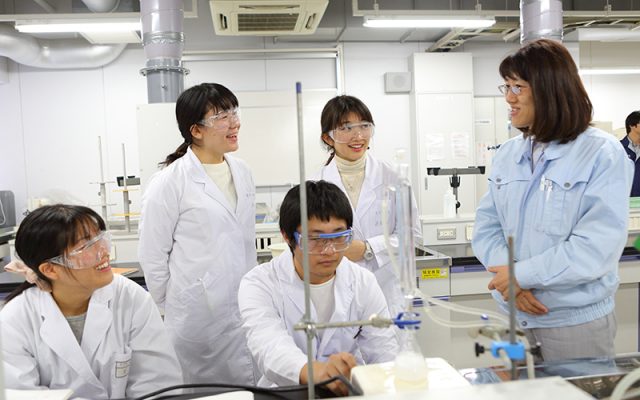
Students will choose one of the four experiments that interest them, form teams of five to six people, and work on creating an experimental procedure manual and conducting the experiment.
The topic I chose was "Clock Reaction," and the task was to mix two solutions of different substances at 40 °C, find the concentration that would cause a reaction after 30 seconds, and prove it experimentally.
In this exercise, students will be expected to think about the experimental method themselves, rather than following a set procedure for the experiment.
We were able to use all the lab equipment and reagents freely, which made it fun and proactive for me, who loves experiments.
I also learned about the theory of chemical reactions and how to set up experiments, which helped me develop an attitude toward research. -
Applied Chemistry Experiments III & IV
Sakino Kaidou
4th year student in the Department of Applied Chemistry (as of 2016)
Graduated from Hatsushiba Tondabayashi High School, Osaka Prefecture
Through organic synthesis experiments and the separation and analysis of components, students will learn the basics of how to use laboratory equipment and chemicals.
You can also deepen your understanding of the experiment by thinking about what happened during the experiment process based on the results.
In an experiment to dye fabrics such as linen, cotton, and synthetic fibers with a substance called Orange II, the students worked in teams to consider why different fabrics dye differently, researching in the library and reflecting on what they had learned so far.
By getting reference books from my professor and having many discussions with my peers, I was able to improve my research, thinking and problem-solving skills, which was excellent preparation for my graduation research. -
Applied Chemistry Experiment V
Shigeki Aoyanagi
4th year student in the Department of Applied Chemistry (as of 2015)
Graduated from Asahikawa Higashi High School in Hokkaido
Starting in my first year, I was able to carry out experiments and gain a real understanding of chemistry by seeing and touching things.
In particular, polyvinyl acetate, which is produced in polymer synthesis experiments, actually becomes soft when heated and hardens when cooled, so I realized that this is the main component of chewing gum.
It was also interesting to see how different people's thoughts were about the same experiment. Writing reports after the experiment is hard work, but the teachers are very close and I'm learning in a good environment. -
Bioorganic Chemistry
Takeshi Yasumoto
4th year student in the Department of Applied Chemistry (as of 2014)
Graduated from Jonan High School, Fukuoka Prefecture
What process does a substance go through to transform it into a final product?
I am interested in the "reaction mechanism" of chemical reactions and chose the Department of Applied Chemistry to learn more specialized information.
In the third-year "Bio-Organic Chemistry" class, I found it fascinating to learn about reaction mechanisms using familiar materials such as nutrients, such as how proteins and lipids in food change and are metabolized in the body.
I am currently working in the Natural Products Chemistry Laboratory, researching molecules involved in maintaining life.
In the future, I would like to apply this to food research and development and compile it into my graduation research.
Lecture List
Specialized Subjects
International Experiential Learning
Global Education and Exchange
We consider responding to "globalization" to be the most important issue in human resource development at our university.
-
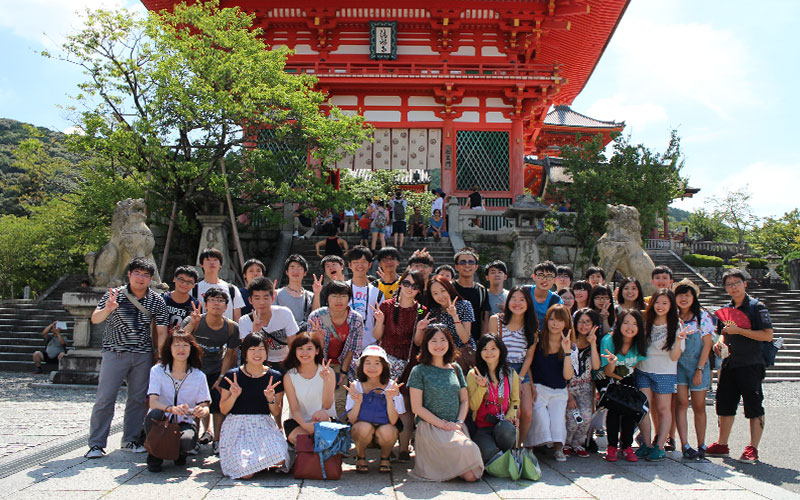
Interacting with international students -
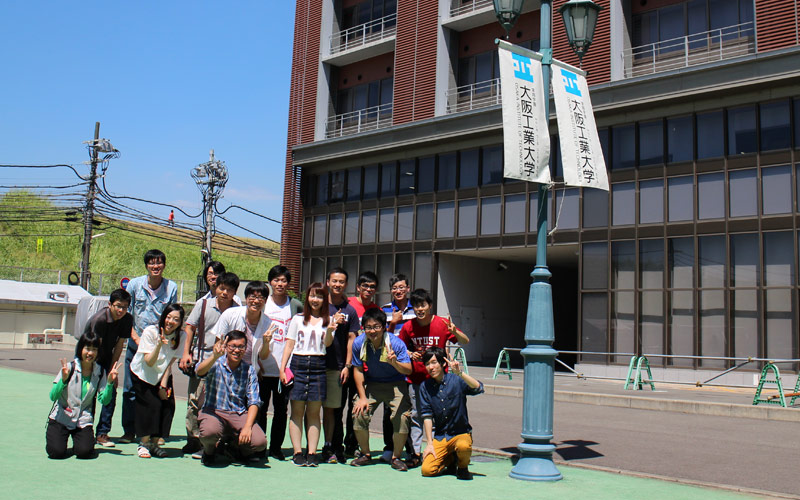
Interacting with short-term international students
Basic policy for global expansion
As a university with a focus on science and engineering, we have three goals in "developing global human resources":
- Have a positive attitude towards communicating with people from different cultural backgrounds
- Have acquired English as a tool and are familiar with not only everyday conversation but also technical terminology
- To have the skills to gather and disseminate information from around the world in order to play an active role on the front lines as a "professional"
To achieve these goals, we offer a variety of overseas study programs.
- Click here to see the Sakura Science Program held in January 2022.
- Click here for a video overview of the program
Language training and cultural experience programs
① Language training: Programs that focus on learning a language
② Cultural Experience: Programs that focus on experiencing the culture of that country.
International PBL Program
International PBL program (Hands-on Engineering Program) (Dispatch/Acceptance)
The significance of conducting international PBL
Recent examples
- October 4th (Tuesday) - October 21st (Friday), 2022
"Online International PBL with Bangladesh University of Textiles" - January 20th (Thursday), 25th (Tuesday), 26th (Wednesday), 2022
"Online Exchange with Widya Mandala Catholic University" - September 30th (Tuesday) - October 9th (Saturday), 2021
"Online International PBL with Bangladesh University of Textiles" - Wednesday, August 19, 2020 - Saturday, September 12, 2020
"Five-University Joint Online International PBL" - November 26th (Sunday) - December 5th (Tuesday), 2017
"Creation of solar-powered energy conversion materials through Japan-China-Taiwan collaborative research" - August 20th (Sunday) - August 26th (Saturday), 2017
"PBL-based training program on the synthesis of epoxy resin curing materials aimed at energy conservation" - February 7th (Tuesday) - February 15th (Wednesday), 2017
"International PBL for Chemistry Students from Three Countries"
International Internships and Research Abroad
Overseas Research Experience Program (Dispatch)
Starting in the second semester of 2013, the university will provide financial support to a certain extent for necessary expenses for fourth-year students (including third-year students who have been accepted for early advancement in the Faculty of Intellectual Property) and graduate students who have been accepted to continue on to the university's graduate school and who undertake research or work experience of one month or more at an overseas university or research institute.
The host universities will support each laboratory in building a network with overseas research institutes, etc. Activities at the host universities will be evaluated from the viewpoint of connection with graduation research and master's thesis research, and continuity with the educational content at the university is emphasized.
29 applications were accepted for the 2017 study abroad program (5th batch).
Student Projects
About Us
Our student project (Science A La Carte Ecole Project) is made up of students from the Department of Department of Applied Chemistry who are studying a wide range of subjects, from the basics to applications of chemistry. We do not simply convey the fascinating nature of phenomena, but also address children's "why" questions.
Some of the members are students who want to become teachers, and they strive to provide "easy-to-understand explanations" from a child's perspective so that elementary school students can understand chemistry. In addition, rather than ending it as a simple science class, they always strive for teamwork among exhibitors and smooth communication with the many visitors, and actively strive to improve their own basic social skills.
Project members (2025)
Continuity and development
Through events such as open campuses held at universities, craft experiment fairs, and off-campus events such as Science Agora and Rikejo Seminars, we continue to work to motivate elementary, junior high, and high school students to become interested in science. We have participated in Science Agora, organized by JST, for 11 consecutive years from 2014 to 2024, and in the Rikejo Seminar organized by Cleo Osaka's Rico Challenge Support, with the aim of discovering students who love science. We exhibit science experiments and directly confront the "why" of children.
Hearing the children's feedback, "It was fun and I want to do more at home," gives us great confidence and motivates us for our future activities.
Impact on society

We conduct science awareness activities for elementary, junior high, and high school students and the general public.
Recently, the trend of people turning away from science has become serious, so we are trying to find ways to allow people to experience fun science experiments and to pique their interest. We continue our activities with the goal of getting as many young children as possible interested in science, so that they will become people who will support Japanese technology, and we are increasing our presence in society.
We also aim to promote "4 Quality Education for All," one of the Sustainable Development Goals (SDGs).
Activity Record
●Exhibition at Science Agora
Science Agora, organized by the JST, is an event that anyone can participate in, such as science experiments for children, dialogue with top scientists, and citizen participation in scientific discussions, to foster relationships between science and society.
-
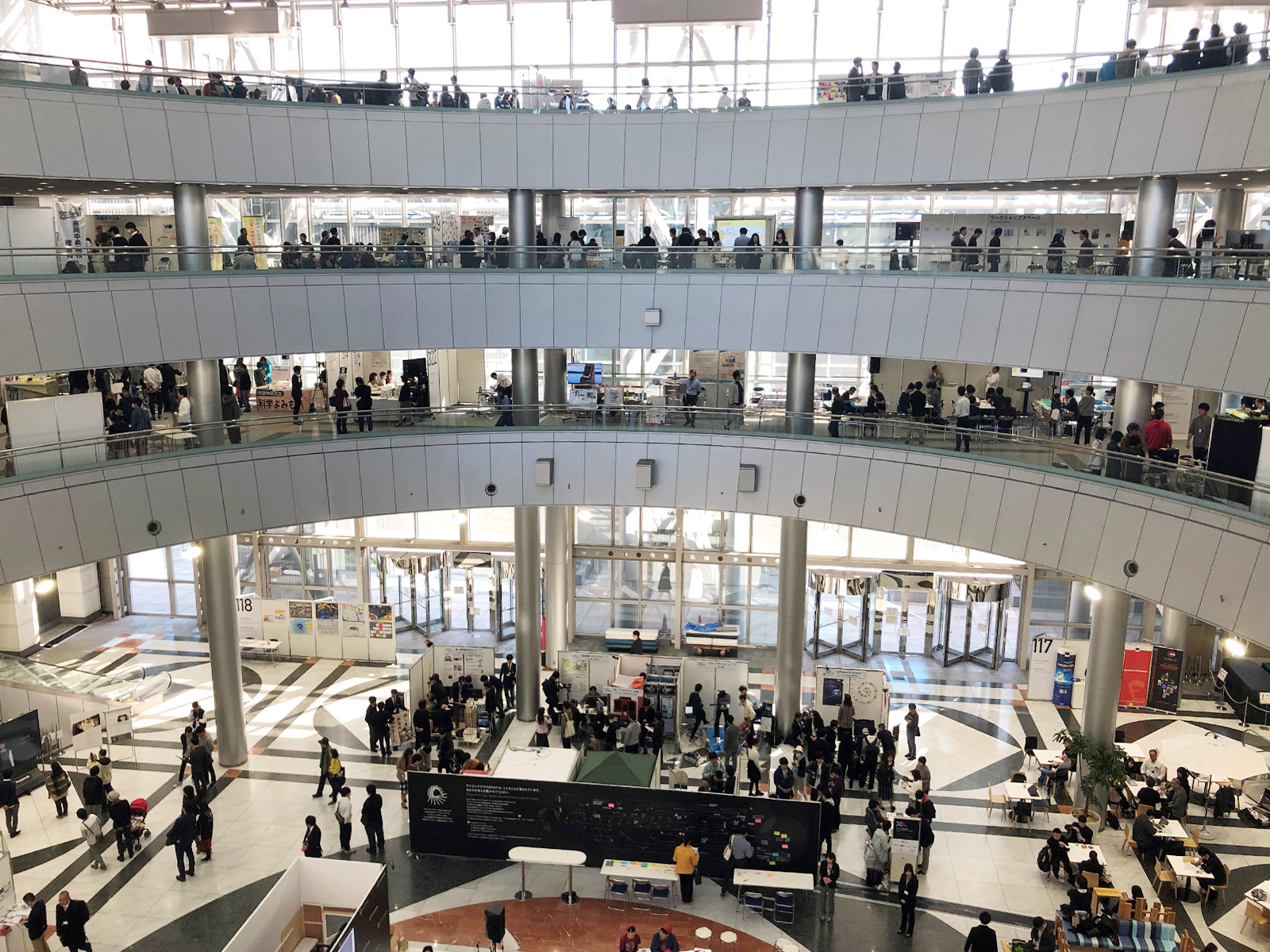
Telecom Center Building (Odaiba, Tokyo) -
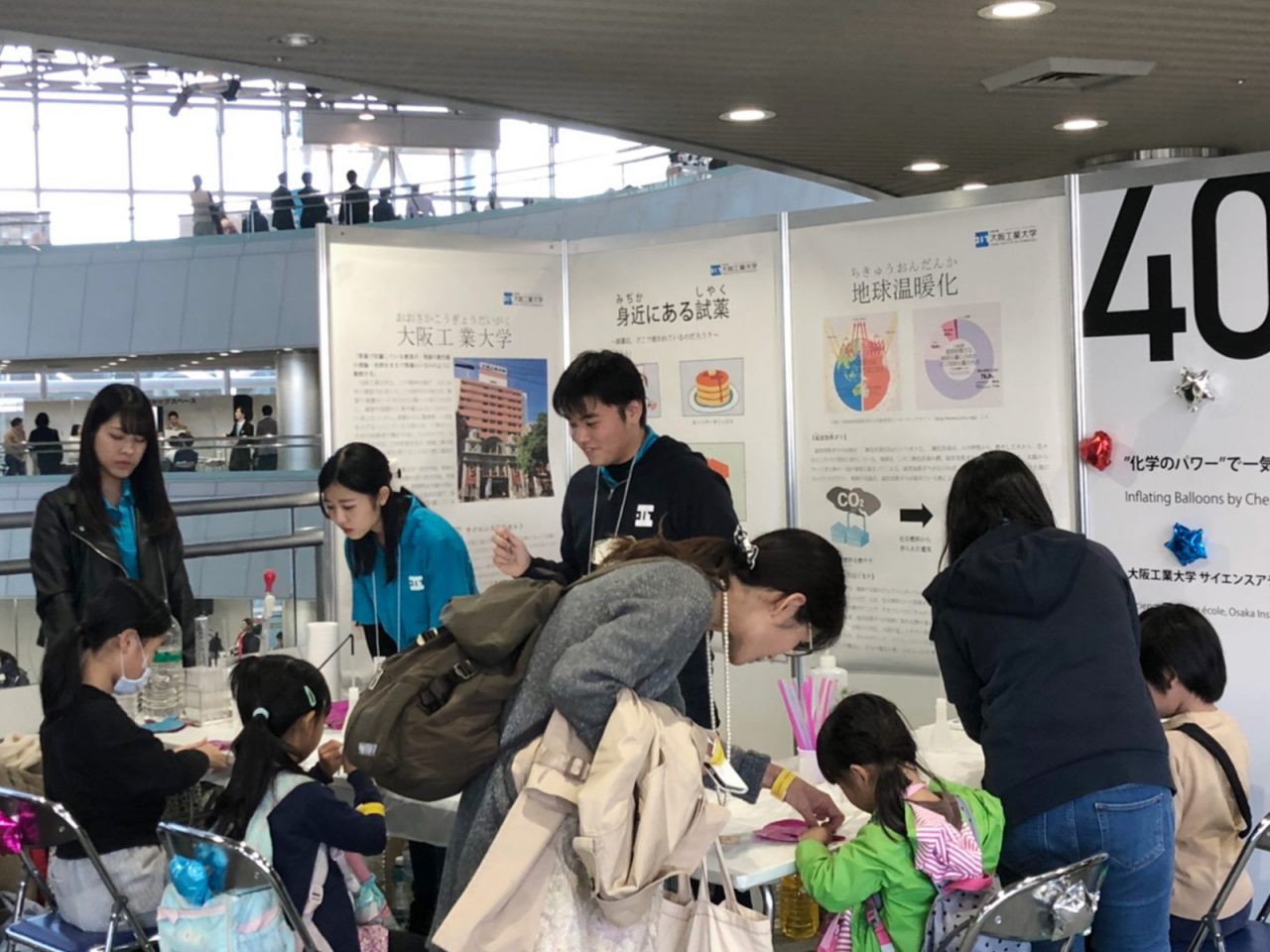
Enjoying science experiments with elementary school students at the booth
Implementation status
- October 25, 2025 (Sat) - October 26, 2025 (Sun)
A chemistry experiment with light and color! ~The mysterious water that changes with light~ - October 26th (Sat) - October 27th (Sun), 2024
"Learn about the future of energy with fuel cells" - November 18th (Sat) - November 19th (Sun), 2023
"Creating secret codes with chemistry: invisible ink" - Friday, November 4, 2022 - Sunday, November 6, 2022
"Mysterious! Colorful Flower Patterns - Paper Chromatography" - November 3, 2021 (Wednesday) - November 7, 2021 (Sunday)
"Let's do science with soap bubbles!" Go to the introduction page for SCIENCE AGORA 2021 - November 15, 2020 (Sunday) - November 22, 2020 (Sunday)
"Volcano: A fascinating bubble created by chemical reactions" - SCIENCE AGORA 2020 introduction page - November 15th (Friday) - 17th (Sunday), 2019
"Let's inflate a balloon in one go with the power of chemistry!" - Friday, November 9th to Sunday, November 11th, 2018
"Touch and Squish! Pinchable Aqua Ball" (Exhibited with an Indonesian student from our university who is an international trainee) - Friday, November 24th to Sunday, November 26th, 2017
"Let's make 'Squishy Slime' from laundry starch!" - Thursday, November 3rd to Sunday, November 6th, 2016
"Super ball that glows in the dark - using phosphorescent phenomenon" - November 13th (Friday) - November 15th (Sunday), 2015
"Seven Changes in Pigments: Experience the Colors All Around Us" "The Story of a Bright Future Female Chemist" - November 7th (Friday) to November 9th (Sunday), 2014
"The Color of Fire - Enjoying the Flame Color Reaction through Visual Perception"
●Seminar for female scientists held
Cleo Osaka, which serves as the hub for activities and networks aimed at gender equality in Osaka City, runs the Rico Challenge Support event, which is aimed primarily at elementary, middle, and high school girls and their parents. The event encourages girls to listen to talks by seniors who are active in the science and engineering fields and to take on new challenges in the things they like and want to do through experiments.
The female student project team spoke to elementary and junior high school girls about career choices and university life, and introduced them to the fun of chemistry, hoping to get girls interested in science to develop a love for the subject.
-
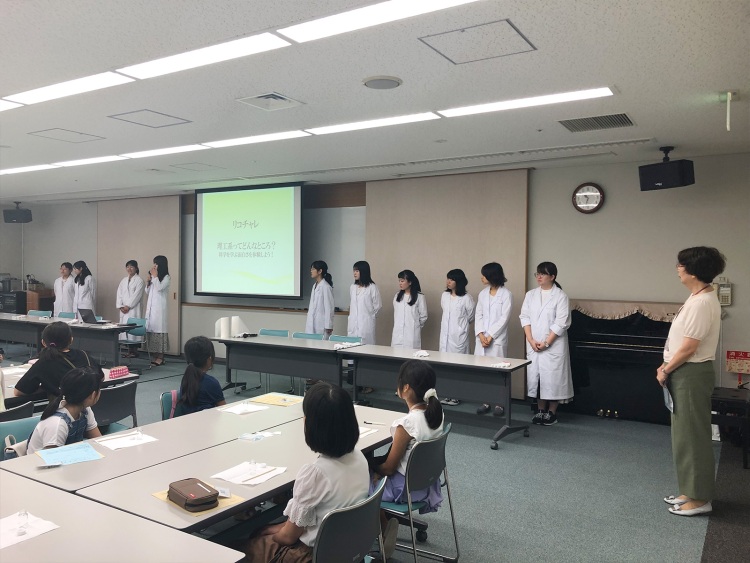
Holding a "Ricochallenge Support Seminar" at the Cleo Osaka Childrearing Center in Osaka City -
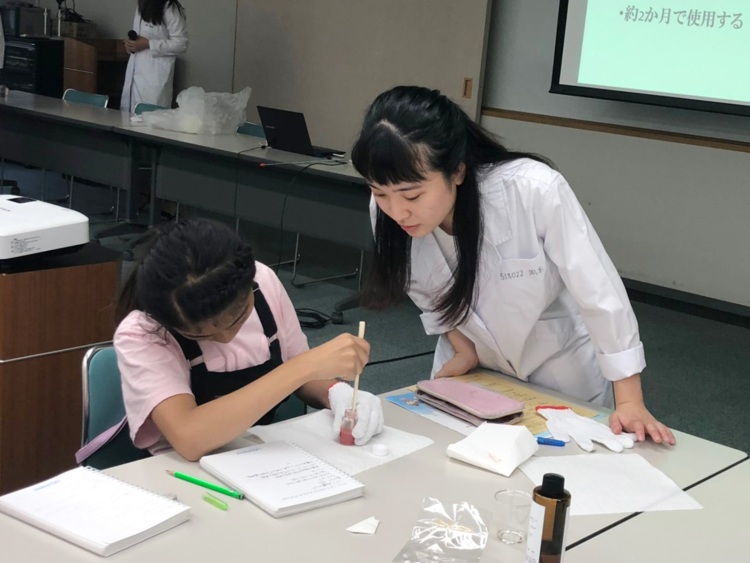
Students conducting experiments in a fun and serious manner
Implementation status
- Sunday, August 3, 2024
"Colored Soap" - Sunday, August 19, 2023
"Colorful Snow Globe" - Sunday, August 20, 2022
"Your own bath ball (original bath additives)" - Sunday, August 22, 2021
"A scent you can touch!? Scented balls" - Saturday, August 24, 2019
"Making lip gloss" - Saturday, August 19, 2017
"Making lip gloss" "Coloring roses made from filter paper" - Wednesday, December 23, 2015
"Acidic or alkaline verification experiment" "Coloring roses made from filter paper"
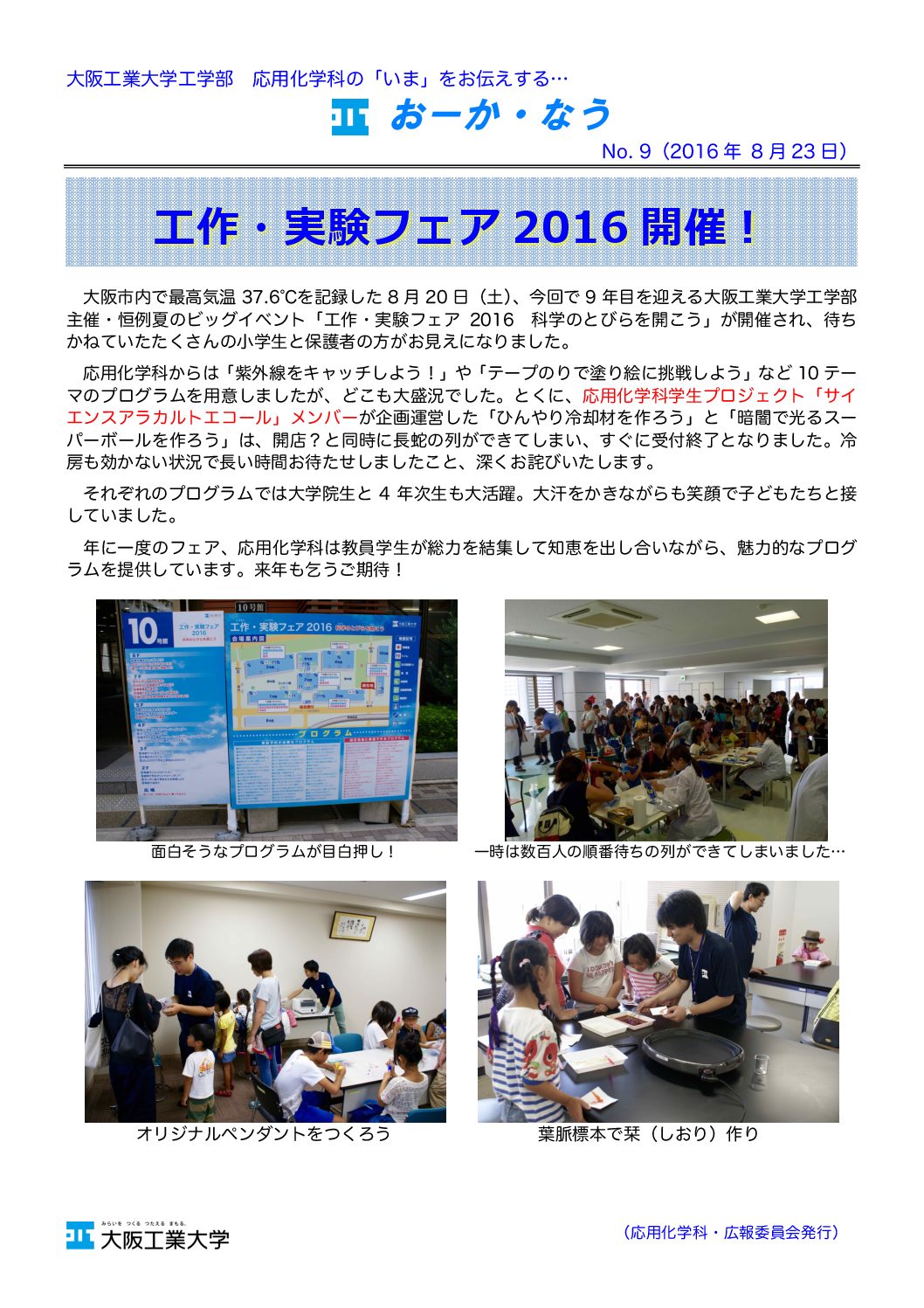
● Engineering Experiment Fair
Every year, Osaka Institute of Technology holds an Engineering Experiment Fair for local elementary school students.
It has been enjoyed by many elementary school students and their parents. It has been a big success, as it has given them hints for their summer vacation science homework.
Implementation status
A total of 12 exhibits, with around 800 visitors per event
- Saturday, August 10, 2019
"Let's make squishy slime," "Let's make a bouncy super ball," "Let's make a cooling agent" - Saturday, August 11, 2018
"Let's make soap bubbles that don't burst" "Let's make a cooling agent" - Friday, August 11, 2017
"Let's make a glow-in-the-dark ball" "Let's make a cool cooling material" - Saturday, August 20, 2016
"Let's make a cool cooling material" "Let's make a glow-in-the-dark super ball" - Saturday, August 29, 2015
"Let's look at different kinds of soap bubbles" "Let's dye things with vegetable colors" - Saturday, August 30, 2014
"Make your own original bath salts!" "Learn the weight of air with soap bubbles!"
●Kawakami Elementary School Parent-Child Science Class
Implementation status
- May 25, 2019 (Saturday)
"Let's make an aluminum-air battery!" 350
Contactinquiry

Department of Applied Chemistry,Omiya Campus, Building 10, 8th floor
Reception hours: Weekdays 9:00-17:00 *We may take some time to respond to inquiries during the summer and winter holidays.