




The Electrical, Electronic and Mechanical Engineering has two courses: the Electrical and Electronic Engineering Course and the Mechanical Engineering Course. Basically, students from the Department of Electrical and Electronic Systems Engineering and the Department of Electronics and Information Systems Engineering study the specialized field of the Electrical and Electronic Engineering Course, and students from the Department of Mechanical Engineering study the specialized field of the Mechanical Engineering Course, but they can also study the content of other courses in an interdisciplinary manner.
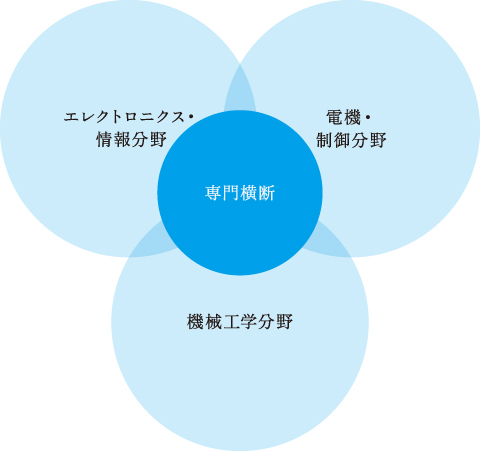
The Electrical, Electronic and Mechanical Engineering has an organic curriculum that is made up of the specialized fields of "Electronics and Information," "Electrical and Control Engineering," and "Mechanical Engineering," as well as the integrated subject "Cross-disciplinary," so that students can acquire the comprehensive specialized knowledge and skills necessary for technological innovation and research execution, based on the broad, fundamental specialized knowledge cultivated in undergraduate education.
Through this, we aim to develop specialists and highly skilled engineers who can broaden their perspectives and ways of thinking, and who can play a multifaceted role in industry with the advanced specialized knowledge and skills that combine the three fields.
Electrical and Electronic Engineering Course
The Electrical and Electronic Engineering course is a pioneer in promoting technological innovation in the fields of electronics, information, and electrical engineering, which are part of the broad range of electrical and electronic engineering specialties.
You will gain the highest level of expertise and skills.
-
Key Points of the Electrical and Electronic Engineering Course
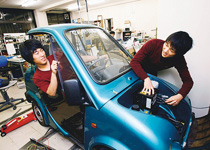
01 Gain a thorough understanding of power electronics technology, which supports next-generation energy conversion.
To use electrical energy efficiently and effectively, it needs to be converted into a form suited to how it is used. Power electronics technology supports this electrical energy conversion. It is an essential technology in all fields that use electrical energy, including solar and wind power generation, smart grids (new power networks with communication and control functions), and various home appliances. To gain a deeper understanding of this technology, you need to know not only electricity, but also semiconductor and information technology. This course provides an environment in which you can learn everything you need to know about this technology.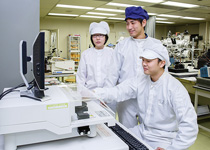
02Understand the basics of the devices used in various products around us and develop their applications.
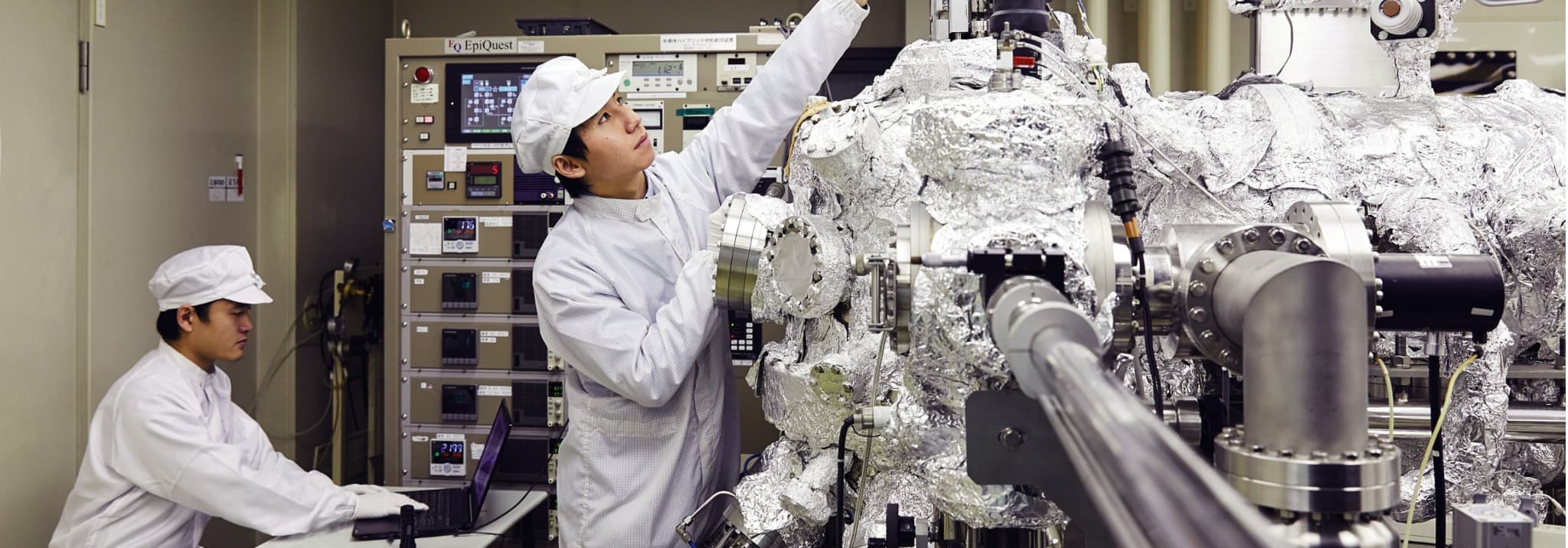
Electronic devices such as semiconductors are used in the electronic devices around us, such as smartphones and game consoles. At the Nanomaterials and Microdevices Research Center, research is being conducted on the creation of new materials, including semiconductors, and the application of next-generation electronic and optical devices. We also conduct collaborative research with domestic companies, universities, and research institutes, as well as overseas universities, and share our excellent research results with the world by presenting them at academic conferences and in papers.
03 Learn communication and network technologies to realize a comfortable society that utilizes IoT.
The spread of the Internet has brought about major changes in our lives. Using IoT and connecting to the cloud over the Internet, we are conducting research and development of advanced virtual reality, creating a dream world where reality and virtuality are fused. In this course, we are conducting research and development of such multimedia and wireless communication technologies, and you can learn the latest technologies necessary to realize communication and IoT via the Internet.
Mechanical Engineering Course
In the Mechanical Engineering course, students will have the opportunity to independently explore and solve research problems related to materials, mechanical mechanics, heat, fluids, design and manufacturing in the increasingly complex and diverse field of mechanical engineering.
You will acquire knowledge and skills.
-
Key Points of the Mechanical Engineering Course
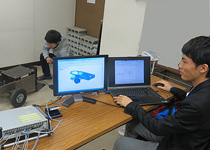
01The school has strong ties with industry, as many of its faculty members are from the development and research departments of manufacturers.
A major feature of this course is that many of the faculty members are from the development and research departments of manufacturers, and many of them are active on the world stage. This means that there are very strong ties to the industrial world, and students can be directly involved in development projects at companies and national research institutes. The experience gained there not only helps students acquire knowledge, but also helps them develop logical thinking. For this reason, many of our graduates are assigned to research and development departments after joining companies. In job hunting at companies and government agencies, the two years of graduate school study are also highly regarded, more so than the four years of undergraduate study.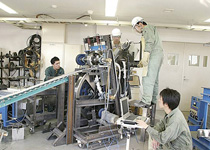
02We work with companies on practical challenges to find technologies that support a better life.
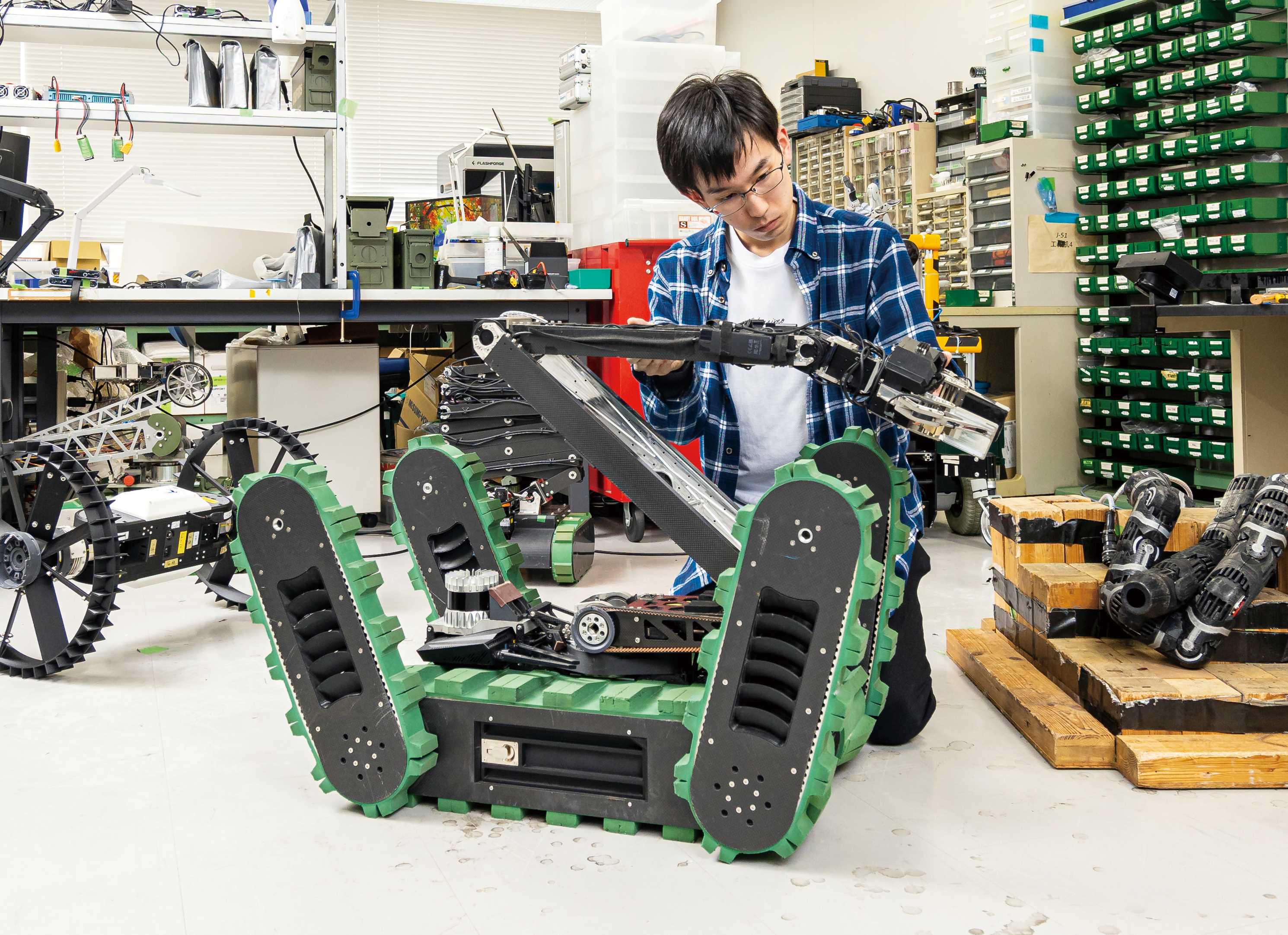
In this course, you will have the opportunity to work with various manufacturers on various collaborative research projects. In recent years, we have been asked by an electronics manufacturer to think of ways to reduce the vibration of washing machines, and worked with an automobile manufacturer to develop a lower-cost aluminum body. Naturally, there are no answers to these problems, so you will be expected to use all possible research methods, come up with original ideas, and conduct repeated experiments, getting closer to solving the problem step by step. By repeating this training, we hope that you will become a world-leading technology researcher in the future.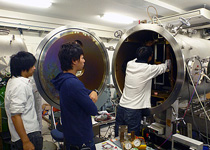
03The university is actively engaged in collaborative research with external research and development institutions, utilizing some of the country's top-level research facilities.
What is important for more advanced experiments is the research facilities used for the experiments. Our university has some of the best research facilities in Japan, including rocket engine injection test equipment and equipment for wind tunnel experiments on automobiles and aircraft. Because of these facilities, we are also conducting joint research with the Japan Aerospace Exploration Agency (JAXA), and are developing the world's most advanced electric propulsion rocket engines (the type of engine installed on the asteroid probe "Hayabusa"). We have also set up a factory called "Mono Lab" on campus, providing an environment where students can create things using a variety of machine tools.