



What’s New Latest News from the Faculty of Intellectual Property


Message Message from the Dean of the Faculty of Intellectual Property

Message from the Dean
About What is Intellectual Property?
Do you know what intellectual property is?
Simply put, intellectual property is a system that provides legal protection for ideas that people create.
If it is an object (such as a smartphone) or property (money) around you, you can physically prove that it was "stolen." However, information (such as ideas) can be easily stolen by others by seeing or hearing it. And even if that information is stolen by someone else, it is difficult to prove it. That is why the intellectual property system is used in modern society. So, I will explain what intellectual property is specifically and how it is used. For example, let's say you have a groundbreaking idea and have created a product that has never existed before. Let's imagine a world where bicycle pumps do not exist.
So let's say you finally make a bicycle pump after much trial and error (let's say you fail and remake it about 20 times), and you can make a lot of money by selling it, but once you release the finished product to the public, other people can look at it, take it apart, and make the same thing without any trouble.
So let's think about how things would change if there was a system of intellectual property.
Intellectual Creation Cycle

-
Patents
 A patent right grants exclusive rights to the implementation of an invention. Most of the electrical devices around us are made up of a combination of multiple patented technologies.
What is a patent?
In recent years, the word "patent" has become more common in newspapers and the news.A patent is a right given by the government to an inventor who has made a groundbreaking invention, which allows the inventor exclusive use of the invention for a certain period of time in exchange for making the invention public.These patents are used in all kinds of products, including smartphones, electrical appliances, cars, etc. Famous examples include the light bulb created by the inventor Thomas Edison, and iPS cells, which became a hot topic when the Nobel Prize was awarded.The purpose of protecting inventions is to "develop industry." For inventors, if an invention is not protected and others can easily copy it, and the profits that should have been obtained by the inventor are stolen by others, the inventor may lose motivation to invent more, and new products may not be created. This will result in the loss of opportunities for industrial development. On the other hand, if inventors were given a permanent monopoly on their ideas, then there would be people who wanted to use the ideas but couldn't. If good ideas were shared by everyone, better ideas might emerge, but giving the rights to only one person would not have a positive impact on society.So, in order to strike a good balance between inventors and other people, the purpose of the patent system is to protect inventors by giving them a monopoly on their invention for a certain period of time, but to make their ideas available to society as a whole, and once that monopoly period is over, to make them available to everyone, thereby helping to develop industry.

How to obtain a patent
In order to obtain a patent, you need to document your invention and explain to the Patent Office, "I have come up with this invention. Please grant me the patent rights." This is called a "patent application."When a patent application is filed, the Japan Patent Office first checks whether the documents are complete. Next, they determine whether the invention can be protected by granting a patent (determination of novelty and inventive step). If the Japan Patent Office determines that the invention is "suitable for granting a patent!", the patent will be granted. On the other hand, if the Japan Patent Office determines that the invention cannot be protected by a patent, the patent will not be granted.
What are patentable inventions?
Definition of the invention
The Patent Act defines an invention as "a highly advanced creation of technical ideas that utilize the laws of nature.""Laws of nature" refer to scientific laws empirically found in the natural world, and indicate that the effects of an invention can be repeated to produce the same results."Creation of technical ideas" indicates that concrete means that are executable and communicable to a third party are used to achieve the problem to be solved.In addition to satisfying these requirements, we are required to create something new and advanced.Furthermore, to be granted a patent, the invention must be "novel" and "inventive step." "Novelty" means that the invention is something new that has never been seen before (not publicly known), and "inventive step" means that a person skilled in the art (a person with the same knowledge and technical ability) would not easily come up with the invention.The power of patents
Exclusive right
If you have a patent right, you can exclude other companies from implementing it, and only the right holder can implement it. This is a very powerful right, and even if the other party does not intentionally infringe, and happens to be the same, you can be found to have infringed.License
There are two types of rights to implement a patent: an exclusive license and a non-exclusive license. A patent owner can utilize his/her rights by granting a non-exclusive license to a third party and receiving a license fee in return.Examples of intellectual property utilization
Utilizing corporate intellectual property
In Japan, since former Prime Minister Koizumi declared the country to be "an intellectual property-based nation" in 2002, emphasis has been placed on the protection and utilization of intellectual property. The recognition that intellectual property is extremely important for profit-seeking companies has spread. For example, patent holders have a variety of options, such as selling, licensing, and exchanging patents, and in some cases can earn large profits. Here, we will look at how intellectual property rights are utilized.Example 1: Allowing someone to use patent A
Let's say that Kodai Seisakusho holds patent A for electrical technology. If Josho Seisakusho cannot use patent A, it will have to cancel all of its planned railway projects, which is expected to result in huge losses. Josho Seisakusho then asks Kodai Seisakusho if they can use patent A for 2 billion yen, and Kodai Seisakusho agrees. Kodai Seisakusho has succeeded in making a huge profit by owning patent A.
Case 2: Selling Patent A
Let's say Kodai Seisakusho holds patent A related to electricity. If Josho Seisakusho cannot use patent A, it will have to cancel all of its planned business, which is expected to result in huge losses. Meanwhile, Kodai Seisakusho is considering withdrawing from the electrical business. So, after discussing with Josho Seisakusho, Kodai Seisakusho decides to sell patent A for 2 billion yen. In this way, patent rights can be sold to make a profit.
Example 3: Exchanging each other's patents for equal value
Let's say that Kodai Manufacturing has patent A related to electricity. Josho Manufacturing also has patent B related to electricity. Both companies want to use each other's patents. So, the two companies exchange patents for equal consideration. This type of approach is called a cross-licensing agreement.
Patent Topics and Issues
Patent thickets
Now that every company patents technology as an invention, it is becoming difficult to avoid other companies' patents when selling a single product. Therefore, if your company's product includes a patent from another company, you must license it to avoid infringement. Since the number of patents is enormous, large companies sometimes exchange patents with each other in the form of cross-licensing.For this reason, companies that provide products and services that involve patents, such as manufacturing and IT businesses, are required to conduct thorough patent research.Generic drugs
Have you heard the word "generic" recently in commercials, advertisements, or when you went to the doctor or pharmacy? Generics are generic drugs, and are not new drugs, but drugs with similar ingredients to existing drugs that are provided cheaply and safely. So why can they be provided so cheaply? In fact, patent rights play a major role here. Since new drugs are inventions, they are protected as "patent rights." New drugs require huge development costs, sometimes hundreds of millions or tens of billions of yen. These development costs are included in the price of the new drug, making it an expensive drug. However, once the patent period has expired, anyone can use the invention used in the new drug. Therefore, since they can be manufactured without huge development costs, "generics" can be provided at a lower price than new drugs.There are various problems with generic drugs. For example, without generics, poor people may not be able to buy regular medicines. This can become a matter of life and death. When such problems exist, even an excellent invention may not be of any use to the world. In such cases, measures to address such problems may be taken by releasing patent rights (allowing other companies to manufacture the product cheaply).Who owns the invention?
In recent years, the news that the invention of LEDs was awarded the Nobel Prize has been a hot topic. Various patents have been obtained for LEDs, but in the past there have been disputes over patents between the people and companies that developed LEDs.Usually, companies have a set bonus for inventors, and the patent rights belong to the company. However, there are cases where the inventions made by employees include major inventions that have an impact on innovation. In this case, it becomes a difficult question as to whether they should be treated the same as regular inventions.Benefits of Obtaining a Patent
The advantage of obtaining a patent is that a company can recover the high research and development costs that it has invested in. For example, if a company can obtain a patent for an invention, other companies cannot use the same invention.If other companies want to use a patented invention, they must pay a certain amount of money. The money gained in this way can be used for new research and development costs, which leads to the development of the company. It is important to obtain patent rights, which increases the possibility of obtaining money.
-
Design rights
 Design rights are rights related to the "color and shape" of industrial products. Shapes, patterns, and designs created for automobiles, home appliances, furniture, jewelry, etc. are protected by design rights.
What is Design Law?
The Design Act is a law that protects the designs of mass-produced items. For example, our eyes are drawn to products with distinctive designs, such as the operating screen of a smartphone or the shape of a desk, right? Eye-catching designs are more likely to be consumed. The Design Act protects those distinctive designs.Requirements for registration under the Design Act
A design that is recognized under the Design Law must be: 1) a design that is identical to the one in question does not exist; 2) the same design can be mass-produced; and 3) the design is not something that anyone can easily come up with. If these basic requirements are met, the design will be protected under the Design Law. For example, even a pen can be protected under the Design Law by adding a clip or an eraser to create a new design that has never been seen before.*Furniture is protected under the Design Act because it can be mass-produced.
Types of Design Law
The fundamental principle of the Design Act is one design, one application. One application is permitted for one item. There are five types of designs: 1) set designs, 2) dynamic designs, 3) partial designs, 4) related designs, and 5) screen designs.Composition design
A set of items that cannot be protected as a single item, such as a dinner set, can be protected as a set of items if they have a sense of unity as a whole. For example, a set of a speaker and its main unit, or a set of chairs, etc.Partial design
A partial design is a system that allows you to protect only a part of an item as a design, rather than the entire item. For example, if you apply for a smartphone screen, only a part of the operating screen is protected. Also, only the handle of a pair of scissors is protected.
Dynamic Design
Dynamic designs protect objects that change shape, such as pop-up toys and sliding USB memory sticks.Related Designs
Related designs are designs that are variations of a single principal design. For example, by protecting a ballpoint pen as the principal design and a grip as a related design, it is possible to obtain rights to a single design in its various forms.Screen design
Screen design design is a system that protects the operation screen that is integrated with an object. For example, the operation screen of a smartphone (not including the icon itself) or the operation screen of an alarm clock.Merits of Design Law
The benefit of obtaining a design right is that it protects the design. In recent years, for commoditized products (where technological advances have reached a plateau) such as toothbrushes and pens, consumers tend to make purchase decisions based on the design rather than the quality of the product. Therefore, by selling products that are differentiated by their appearance, you can make an impact on consumers. Therefore, it is important to obtain a design right to prevent other companies from imitating your product. For this reason, companies are focusing on obtaining not only patent rights to protect technology, but also design rights to protect the appearance.
-
Trademark rights
 When buying a product, you often look at the logo or mark on the product to find out where it is made. Trademark rights protect these logos and marks. Companies use these trademarks to establish their brands.
What is a trademark?
We live our daily lives surrounded by a variety of products and services. Even when buying a bottle of mayonnaise, there are many different types sold by many companies. We decide which mayonnaise to buy by looking at the name and shape of the product. The name and shape that help us make this decision are "trademarks." This "trademark" allows us to purchase a product without mistaking it for another product. Furthermore, trademarks do not exist for us, the consumers, but also for the companies that provide the products and services. Companies can appeal to consumers by saying "this is our product" so that they do not mistake it for another product and buy it.Also, if a company sells the same product for a long period of time, consumers will start to think, "That company's products are good, you can't go wrong if you buy their products!", which will increase the company's credibility as a brand, ultimately improving its corporate image and creating a cycle of further product sales.A trademark in itself does not represent any advanced technology, but because it represents a company's credibility and image, it is protected by a law called the Trademark Act.In order to protect a trademark under the law, an application must be made to the Japan Patent Office and the trademark must be registered. This process is called "filing an application." If the application is examined and permission is granted, the trademark is registered. Not everything can be registered simply by filing an application; what can and cannot be registered is clearly defined by law. For example, the following are some examples:
Unregistrable trademarks
 A trademark has three main functions, which are called the three main functions of a trademark.
What is a trademark?
- Source display function: Who is providing the product or service?
- Quality assurance function: A certain level of quality is guaranteed
- Advertising function: Encouraging consumers to purchase and use

-
Copyright
 Not only famous paintings and works of art displayed at exhibitions, but also music, novels, manga, and other things that we are familiar with in our daily lives have their creators' rights protected by copyright.
With the spread of video sites and social networking sites, viewing music and photos has become more commonplace. However, because they are so easy to use, copyright infringement can occur in unexpected ways. Here we will provide a brief explanation of copyright law, which protects expression.What is Copyright?
What is copyright protected?
The subject of protection is "anything that belongs to the scope of literature, academia, art, or music." Examples include novels, music, paintings, and even papers and computer programs. The Copyright Act defines protected works as "any creative expression of ideas or emotions..."
Copyright protection period
Copyright arises at the time of creation. The right expires 70 years after the creator's death. Works and films created by corporations are protected for 70 years after publication.After the copyright expires, anyone can use it, and literary works that are no longer under copyright are made available on the Internet as public domain.What is piracy?
Copying someone else's work exactly as it is without permission, making a profit from it, or making it public is copyright infringement. For example, you cannot copy a DVD you have purchased and sell it or distribute it on the Internet.Even if you do not copy it exactly, using part of someone else's work or changing the expression is also an infringement. It is also forbidden to use the contents of someone else's novel to create video content or quote parts of a song without permission.In this case, it is difficult to make a judgment, but you need to confirm that you have certainly used (relied on) the copyrighted work of others. If the work happens to be similar, it does not constitute infringement. Here, "thoughts and emotions" refer to the content and feelings that the author has thought up. For example, a "novel expressing political ideas" or a "painting of a beautiful mountain" contains the thoughts and feelings of the creator. "Creative" means original (expressing the author's individuality). Even if you create a work of art, if it is an expression that anyone could easily come up with, or if it is the same as someone else's work, it will not be recognized as original. "Expression" means expressing what you are thinking in your head using some method or medium. For example, making it recognizable to others by playing music or writing words.
Copyright Content
Copyright includes "moral rights" that protect the right holder's own reputation, and "neighboring rights" that protect those who disseminate copyrighted works.What are moral rights?
Creators have three rights: 1) the right not to have their work made public without permission, 2) the right to choose how their name is displayed, and 3) the right not to have their work altered without permission.What are neighboring rights?
Neighboring rights are rights given to those who communicate copyrighted works. Examples include television broadcasting companies and singers and other performers. Copyright is a right held by the creator, and only the rights holder can control the rights. However, television broadcasts are produced by many performers and creators. Even baseball broadcasts have multiple players. In this case, when a broadcast becomes the target of an infringement, it is not realistic to obtain confirmation from all rights holders, and it may be more convenient for the broadcasting company or record company to exercise the rights.
Copyright Content
When using SNS, you must be aware of copyright. For example, if you search for an image of a movie poster and post it as a comment, this is considered unauthorized copying and therefore copyright infringement.The problem of illegal copying
Recently, music and movies are distributed as digital information on CDs and DVDs. Digital information can be easily copied and does not deteriorate when copied, so once that information is leaked onto the Internet, it quickly spreads around the world. This could result in no one buying genuine CDs or DVDs, and the profits of copyright holders could be undermined.This is difficult to control through legislation and is a matter that depends on the user's sense of ethics.Recently, we often hear the term "piracy," which is closely related to digital content. This is because, unlike analog information, digital content data can be easily copied. Copyright means "the right not to be used without permission." Movies, music, photos, etc. are all created by people who own the copyright to them. Therefore, you should not use them without permission.One of the cases where the copyright of digital content was an issue was the case of file-sharing software. This software became a problem because it was said to have assisted in copyright infringement. Furthermore, on October 1, 2012, illegal downloading was made a criminal offense, and the crackdown on digital content was further strengthened.
What is Open Source?
It is important to protect copyrighted works, but in some cases it may be better to allow them to be widely used. For example, if software is widely available on the Internet and you allow free modification, it will become software that programmers around the world participate in developing. Although you will not make a profit, you can expect easy-to-use software that includes the opinions of many people.Examples of copyright infringement issues
A certain game maker offered a fishing game in which the player had to attract fish to the screen after catching them (plaintiff). Then, a competing company appeared (defendant) that offered a fishing game similar to the plaintiff's, in which the player had to attract fish to the screen. The plaintiff filed a lawsuit against the defendant for copyright infringement. However, the court dismissed the plaintiff's argument, stating that the expression of attracting fish to the screen is something that anyone can come up with, and therefore should not be protected as a copyrighted work.Although copyright infringement was not found in this trial, game expressions are often similar, and this can easily develop into a copyright issue. However, the interface (operation screen) is often the same no matter who makes it, so caution is required as there are cases where rights cannot be asserted.The future of copyright
Copyright is a right that anyone can have. However, copyright is also easily infringed. In today's digitalized world, movies and music are uploaded to video sites without permission, and we can watch and listen to them as if it were a matter of course. Although this is actually copyright infringement, it is nearly impossible to control all of this in this day and age when such things are commonplace. If copyright holders rest easy thinking that they have the rights, their rights will continue to be infringed without their knowledge. It is becoming necessary for copyright holders to make efforts to prevent infringement. It is also true that it has become easier to quickly spread one's own works by taking advantage of today's digitalized society. From now on, it will be important for both rights holders and users to respond well to changes in the times.
New course 2024 "Content Business Course" to be established
Games, anime, manga, music, movies, and other works are all part of the intellectual property known as "works." You will learn about the content business that produces and provides these works, copyright law, and the mechanisms for commercialization.
Feature Learning at the Faculty of Intellectual Property
The Faculty of Intellectual Property is the only faculty in Japan that specializes in intellectual property and aims to cultivate talent that can "connect creativity to society."
The Faculty of Intellectual Property has two major pillars: "Law" where you learn about various intellectual property laws, and "Business Administration" where you learn about the use of intellectual property in companies. For this reason, this faculty is particularly suitable for students in the humanities course.
On the other hand, there are also courses available to acquire technical knowledge in order to gain a deeper understanding of product creation using new technologies and designs, so it is also suitable for students with a science background.
01 The only Faculty of Intellectual Property in Japan
The aim is to cultivate talent who can "connect creativity to society."
-
Learning Policy
The Faculty of Intellectual Property has two major pillars: "Law" studies, where students learn about various intellectual property laws, and "Business Administration" studies, where students learn about the use of intellectual property in corporate business activities. For this reason, this faculty is particularly suitable for those who were in the liberal arts course in high school. On the other hand, it also offers subjects that allow students to gain technical knowledge in order to gain a deeper understanding of product creation using new technology and design, so it is also suitable for those who were in the science course in high school. This faculty is particularly recommended for the following students.
- Are interested in the structure of society and companies, including law and management
- I am interested in creating products using new technologies and designs.
- I am interested in branding, such as product naming and advertising.
- I'm interested in how the entertainment industry works.
Intellectual property is highly valued both in Japan and around the world. For this reason, there is a strong demand for students who have studied a wide range of subjects, including law and business administration, with a focus on intellectual property. Our graduates are active in companies across a variety of industries.
-
Learning Policy
Innovation is considered to be the most important factor for the development of industrial society. Innovation is not simply creation, but bringing about social change based on creativity. Creativity can only become innovation by "connecting creativity to society." The concept of our faculty, "Faculty of Intellectual Property Connecting Creativity to Society," represents this.
In order to "connect creativity to society," it is necessary to ensure that intellectual property such as new technologies and designs are utilized in society through the business activities of companies. Intellectual property such as video game software, music, movies, and manga cannot convey joy and excitement to many people unless the content and entertainment industries that provide these to society function well. Active marketing by companies using their brand power is also a type of activity that connects creativity to society.
The specific abilities required to achieve this include "legal knowledge" to understand and use intellectual property law, and "business management knowledge" to utilize intellectual property in economic activities.
Based on this knowledge, students are also expected to acquire advanced technical and international knowledge.
The goal of our faculty is for students to independently study interdisciplinary, comprehensive studies that involve many academic fields.
Specifically, students will study intellectual property laws such as patent law, design law, trademark law, and copyright law based on general laws such as civil law, as well as acquire business management knowledge and skills to utilize intellectual property such as new technology, design, brand, and content in corporate business activities. Furthermore, based on this knowledge, students will tackle practical problem solving related to intellectual property in research subjects.
02 Detailed instruction through small class sizes
-
Small-group seminars
Basic Seminar
In the Faculty of Intellectual Property, students are assigned to seminars from their first year, and are not only guided in their studies at the Faculty of Intellectual Property, but also in their daily lives. Seminars are conducted in small groups of about 10 students per seminar, and detailed guidance is provided.Advanced Seminar
In their second year, students choose a seminar based on their own preferences. Second-year seminars are divided into two semesters, A and B. In the first semester, seminars are conducted according to the chosen course, while in the second semester, they are divided into areas such as innovation, global studies, social contribution, and case law research, providing a meticulous educational environment tailored to students' learning aspirations.Basic Research Exercises and Graduation Seminars
In the third year, students are assigned to a seminar for basic research exercises, which continue into their graduation research in the fourth year. In these seminars, students are supervised not only by undergraduate faculty but also by graduate faculty, and as a small seminar, students receive intensive research guidance. Job-hunting guidance is also an important element of the seminars at this stage. Supervising faculty members also make an effort to help students find employment in line with their wishes, which is a feature that is only possible in a small seminar.
03 Management and technical subjects available
04 Early Admission to Graduate School
If you advance to higher education early, you can obtain a Master's degree in Intellectual Property (Professional) in five years from undergraduate enrollment, which has great economic benefits. It will also be a strong selling point during job hunting.
The content learned in the Faculty of Intellectual Property is merely basic knowledge when viewed from the perspective of the entire intellectual property field. However, already having basic knowledge is a great advantage. By taking advantage of this advantage and acquiring more advanced knowledge and skills at graduate school, you can acquire high-level capabilities that will enable you to play an active role in the industry right away.
Contents List of each department's contents
-

curriculum
Please click here for more information on the four years of study, lecture content, and global human resources.
-

Laboratories and Faculty
In a variety of research laboratories and under the guidance of highly qualified faculty members, students can learn the two fields of "Law" and "Business Administration" both theoretically and practically.
-

Employment and Career Paths
Find out more about the paths and employment opportunities available to you after graduation. Check out the diverse career possibilities available to you.
Three Policies of the Faculty of Intellectual Property Department of Intellectual Property
Facility Facility Introduction
-
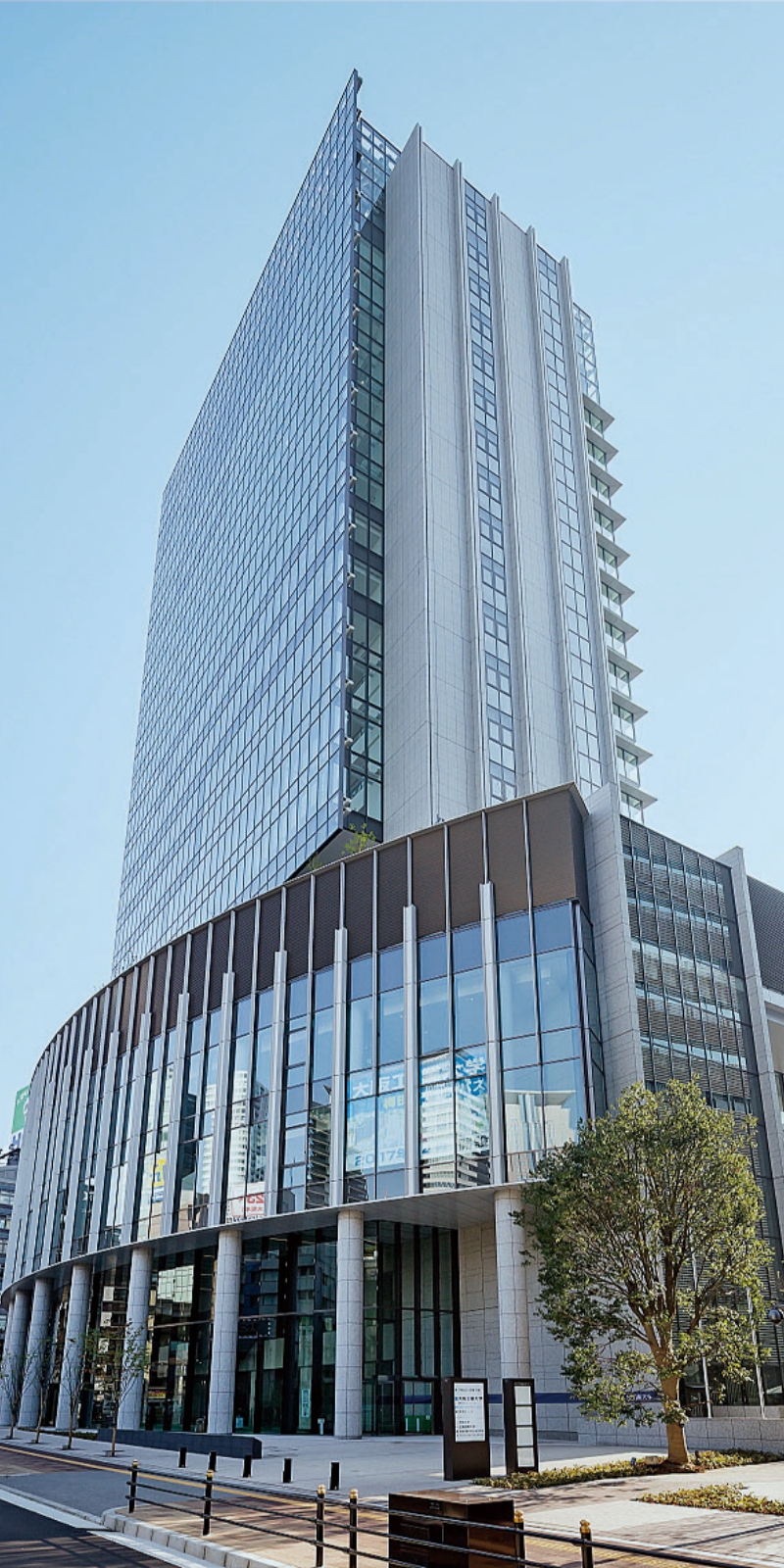
An intelligent campus towering over Omiya.
Equipped with the latest high-tech equipment, our intelligent campus is home to nine departments. In an environment where students can focus on cutting-edge research, each student acquires the skills and knowledge to create something from scratch.

-
A specialized library on intellectual property.
"Intellectual Property Document Storage Room"The Faculty of Intellectual Property has a literature storage room as an annex of the library (Omiya Main Building) that stores intellectual property-related books and magazines. There is also a computer corner where you can view legal books and CD/DVD-ROM teaching materials, supporting all kinds of learning.

ContactInquiries and Access
Faculty of Intellectual Property Department of Department of Intellectual PropertyOmiya Campus Building 1, 8th floor
Reception hours: Weekdays 9:00-17:00
Please note that it may take some time to respond to inquiries during the summer and winter holidays.