



Faculty of Faculty of Information Science and Technology List


What’s New Faculty of Information Science and Technology Latest News


Message Message from the Dean of the Faculty of Information Sciences

Department Five departments that transcend fields
Development capabilities for advanced and diverse information technologies (AI, software, media, cybersecurity, etc.) suited to the AI era
The distinctive feature of the Faculty of Information Science and Technology is the need for students to use AI x data science and AI x IoT to solve problems in business and the real world.
We also offer educational programs that transcend the boundaries of the five departments, allowing students to acquire practical development and application skills that will enable them to take on everything from creating AI and information technology to applying it to real social issues.
-

Department of Data Science
-

Department of Real World Computing
*Opening in April 2025 -

Department of Information and Computer Science
-

Department of Information Systems
-

Department of Media Science
The following departments are not currently recruiting students.

Feature Learning at the Faculty of Information Science and Technology
01 Development of IT engineers

-
About programming
In the Faculty of Information Science and Technology, students learn a variety of programming languages and development tools and put them to practical use. Let's pick out a few and introduce them.Programming Language
 The Faculty of Information Science and Technology places emphasis on programming education as part of practical education. There are many different programming languages in the world, but among them, we select a representative language that is widely used in society and provide thorough education from the basics to applications through various subjects over a four-year period. Even beginners can learn from the basics without worry, and we also provide advanced application education, so the content is satisfactory for students who already have programming experience. Since the five departments in the Faculty of Information Science and Technology follow a common policy, students can learn programming regardless of which department they enroll in.C is a basic language for learning programming, has been used for a long time, and is still in high demand in society. In the Faculty of Information Science and Technology, students learn the basic concepts of programming in introductory courses in each department, and in the common courses for five departments, "C Exercise I" and "C Exercise II," students learn not only how to write programming languages, but also how to solve various problems.
C
Java is also a language with many job openings and a high social need. You can learn the concept of object-oriented programming, which is not available in C language. The curriculum allows you to acquire the skills to develop so-called applications with a graphical user interface. This is also taught from the basics to applications in the "Java Exercises" course, which is common to all five departments.Java
Python is a language that has been gaining attention in areas such as artificial intelligence, and since it is taught as a step-up based on what you have learned in C and Java, you can easily understand it. By working on distinctive exercise subjects and PBL (problem-based learning) in each department, you will be able to practice using Python in realistic problem settings, and gain practical learning.Python
In developing various systems, it is necessary not only to use programming languages, but also to use various development tools efficiently. In the Faculty of Information Science and Technology, students mainly learn how to use development tools in practical courses and then use them in actual system development.Development Tools
Examples of development tools used:
- Smartphone application development
Android Studio - 3D computer graphics, 3D games, video editing
Unity
Blender
Filmora - CG character and conversation agent creation
MikuMikuDance
MMDAgent - Computer Music Production
Notion Mobile - Artificial Intelligence Programming
PyTorch
Keras
TensorFlow - Robot and IoT device programming
LEGO Mindstorm
MESH
- Smartphone application development
-
Practical examples of programming
In the Faculty of Information Science and Technology, students put the programming skills they have acquired at university into practical use in a variety of situations. Let us introduce some of the situations in which students are actively involved.Soi Challenge is a student project aimed at solving problems faced by businesses, government, and local communities in Hirakata City through collaboration between students and each organization. Here, research and development is carried out for evacuation guidance in the event of a disaster in a large city and infectious disease prevention measures (avoiding the three Cs). Participating students are using the programming skills they have acquired to implement people flow sensing technology and simulation technology on computers and smartphones, which are useful for acquiring and processing huge amounts of data.Social Open Innovation Challenge (abbreviated as SoyChallenge)
Every year, the Faculty of Information Science and Technology collaborates with the Sirindhorn International Faculty of Engineering, Thammasat University in Thailand to hold a PBL (Project Based Learning) program in which Thai and Japanese students form teams to take part in robot competitions and image processing application development contests. Here, students use the programming skills they have acquired in class and in seminars to develop image processing applications that implement robot auto-pilots and object recognition. This provides learning experiences that are hard to find anywhere else, such as intensive international exchange through the common language of programming.International PBL
Related URL: OIT×SIIT website -


02 Adding strengths of expertise
Start of specialized and applied education that is the feature of each department


03 Ability to function in society
Developing practical skills through various projects

-
Collaboration with high school education
Osaka Institute of Technology collaborates with high schools to develop human resources in science and engineering, such as supporting high school students in their research projects, and many faculty members from the Faculty of Information Science and Technology are involved in these activities. -
Social Open Innovation Challenge
 The Faculty of Information Science and Technology is conducting PBL (problem-solving learning) education in collaboration with companies and government agencies with the aim of learning that is directly connected to the real world. In 2019, in collaboration with Hirakata City Hall and the Kita-Osaka Chamber of Commerce and Industry, we established the local problem-solving project "Hirathon", which was renamed "Social Open Innovation Challenge (Soichare)" in 2022 as the target areas of stakeholders expanded. Currently, we are promoting activities with the support of SoftBank Corp., Ricoh Japan Co., Ltd., Fujitsu Japan Ltd., and Hirakata Shinkin Bank. For local issues such as health, tourism, regional development, garbage collection, disaster response, and work style reform, we aim to solve problems in the form of "ideathons" for idea generation and "hackathons" for system development using an AI data science approach, utilizing public open data (big data) provided by Hirakata City.
-
Overseas Project "International PBL Program"
In this program, students will form mixed teams with students from overseas and work on common problems. By working on a given problem under limited conditions, the aim is to bring out the students' diverse abilities (problem-solving ability, creativity, teamwork, time management, communication, leadership, etc.) and at the same time have them feel diversity through global exchange. The Faculty of Information Science and Technology places emphasis on "team development," and students from different countries cooperate with each other to work on group work and image and robot programming. In light of the social situation, some projects were carried out online. Nevertheless, by utilizing the strengths of the Faculty of Information Science and Technology, we have achieved communication that is close to reality through a 2D virtual space using avatars.In addition, starting from 2020, our university has set the SDGs as a common theme for international PBL, with the aim of encouraging change in awareness and behavior by having students and societies overseas tackle common global issues they face.
Related URL: OIT×SIIT website -
-
A variety of student projects
-
Media Experience Project
The Media Experience Project is a project activity that creates experiential content that combines media technologies (images, xR, sound) and other technologies with electronics such as IoT. Initially, we aimed to participate in events such as the IVRC held within the VR Society, but we are now researching and developing systems on a daily basis, aiming for various contests such as SICHI, academic conferences focusing on demo experiences, and exhibitions for companies.
URL: https://mix-lab.net/mex_projects/
-
MAGIOT (IT x Real Mystery Solving Game Creation Project)
In this project, we aim to create puzzles for a real-life mystery solving game using IT technology, and to deliver a new form of mystery solving game that has never been seen before. In cooperation with real-life mystery solving game production groups outside the university, we hold various mystery solving game events both on and off campus. The name comes from the six-letter anagram of "OIT", the abbreviation for Osaka Institute of Technology of Technology, and "AMG", the abbreviation for the Awaji Island Mystery Game, which we are cooperating with. For more information, please visit our website or X. -
Oh! IT Channel
This is a student project that posts on social media and creates videos to promote the appeal of Osaka Institute of Technology Institute of Technology's Hirakata Campus. It is mainly made up of graduate students from the Graduate Graduate School of Information Science and Technology. The content created in this project is published on the following websites and social media. -
AI Smart Car Student Project
We have developed AI-equipped robots that can navigate autonomously on public roads and perform visual recognition, and are participating in autonomous robot competitions such as the Nakanoshima Robot Challenge and Tsukuba Challenge. In these competitions, the robot must navigate a set course autonomously while avoiding obstacles amid pedestrians, cyclists, etc., and in the Nakanoshima Robot Challenge, the robot completed a course of approximately 500 meters around Nakanoshima Central Public Hall. The technology of the developed robots is also used in smart mobility research and in the business of Osaka Intelligent Robotics Co., Ltd., a university-based venture company.Related URL: https://www.nakanoshima-rc.jp/index.html -
Drone Project
We aim to participate in drone competitions both in Japan and abroad. To fly a drone outdoors, you need a drone license and amateur radio. We are currently recruiting members and practicing with competitive drones in preparation for the competition. During the summer vacation, we held a seminar to acquire private drone licenses, and three students have already acquired private drone licenses. This project is also the main organizer of the Super Summer School and drone programming at Osaka Institute of Technology. -
Paiza Rank Challenge
We are holding a competition to improve students' programming skills. This is being carried out in cooperation with the online learning site paiza. On the paiza site, you can learn programming online and receive a rank according to your ability. In this competition, students with high rankings will be awarded. The competition level is very high, and it is said that if you achieve an S rank, you will be able to play an active role in society immediately. Last year, five students from our university achieved an S rank. -
Security Contest
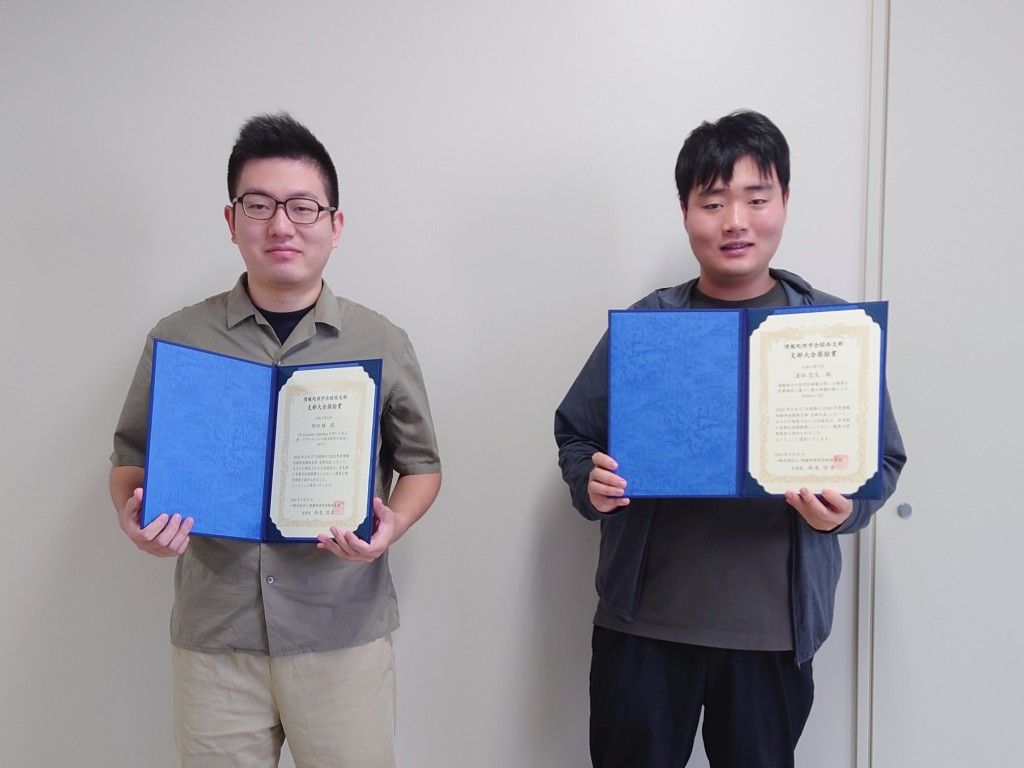
We participated in the malware analysis contest MWSCup (2024.10.23: Kobe International Conference Center) organized by the Computer Security Study Group of the Information Processing Society of Japan. At MWSCup, security technologies are competed in four categories: Hackathon, Malware Static Analysis, Surface Analysis, and DFIR (Digital Forensic Incident Response). This year, 19 teams participated, and Team SakanaCushion won the overall runner-up! Team BirdStone (undergraduate 2nd and 3rd year students) also placed 7th despite being a first-time participant, gaining confidence in their performance at the national level. Through participating in the contest, we realized the fun of working together as a team and the improvement of our technical skills. It was also a valuable opportunity to learn about various activities and trends in the security field, as well as human connections. We expect to see further growth in the future.
-
Edutainment Programming Project
This is a student project to develop bots to be used in a "programming contest that even first-year students can participate in using commercially available games" (Minecraft BOT Contest). As an attempt at edutainment (a fusion of entertainment and education) in university education, the Minecraft BOT Contest will involve students using the C programming skills they learned in their first year to create a bot (automatic execution) program that searches for and defeats enemies using the commercially available Minecraft Education Edition. In this project, students will work together to create a library for programming beginners to use in this programming contest, utilizing image processing, learning, etc.
-
Computer Design Project
In this project, student groups are tasked with designing their own processors within a set period of time, and competing in a contest to determine their performance. Each group is made up of around four members, and aims to design a processor that can execute instructions more efficiently, based on a given instruction set. This project takes the form of a PBL approach, and aims to have students acquire practical problem-solving skills in groups, as well as acquire advanced design techniques, by enthusiastically working to solve specific problems.
-
Osaka Faculty of Information Science and Technology, Competitive Programming Team
Our goal is to participate in the ICPC domestic qualifying round held every July and advance to the Asian regional qualifying round. We also hold study sessions with volunteer members to learn programming techniques and are continually working to improve our programming level.Four teams (three people per team) participated in the domestic qualifying round held on July 5, 2024, and the results were 193rd, 196th, 247th, and 324th out of 363 participating teams. Unfortunately, we were unable to pass the domestic qualifying round this year, but we will continue to participate in the next year and beyond, aiming to pass the qualifying round. -
Smartphone Application Design Project
The aim is to acquire practical system development skills through smartphone app development. We will hold regular study sessions on campus and develop apps. The developed apps will be exhibited on campus and evaluated by many people. At the same time, we will also aim to enter them in external contests.
-
Tsukuba Challenge Project
In the Tsukuba Robot Zone, teams will create autonomous mobile robots that can clear designated courses and challenges in a space where pedestrians, bicycles, and cars coexist. The actual run will be in November, but until then, the teams will participate in two or three test runs to develop 3D sensor configuration technology, map creation technology, and other areas.
-
RoboCup@Home League Project
(Open Platform)The development of this lifestyle support robot was divided into four systems - running, grasping, vision, voice, and overall control - and was carried out by a student team. The team won their third consecutive victory at the 2017 RoboCup Japan Open in May, and won the @Home League Special Judges Award at the World Championship RoboCup in July.
Since 2018, we have also been challenging a simulation league called SigVerse, where we are conducting competitions and research on interaction/communication with robots in VR space. In 2018, we won third place and the WRS Executive Committee Chairman's Award at the World Robot Summit 2018, and in 2019, we won second place at the RoboCup Japan Open, in 2020, we won the Breastfeeding Award at Robocup Asia-Pacifi in 2021, and won the Open Challenge from 2023 to 2024. In 2025, we were able to earn a higher score than in 2024, but we came in fourth place. We will continue to work hard to win prizes!
For more information, please see the project page .
-
Solution Design Project
Groups will use information technology to solve familiar social issues such as declining birth rates, childcare, measures to deal with people living alone, and waste disposal. Groups will be made up of members with different talents in applications, design, interfaces, etc., and will build prototypes, create services based on those prototypes, and propose them to users. User evaluations will be fed back into service development and improvements will be made. In order to develop the skills to produce such services effectively and in a short period of time, there will be an opportunity to receive guidance from active producers. Specifically, the program aims to hone marketing skills, design skills, short-term development skills, and team-building skills. To confirm the improvement of these skills, students will actively participate in ideathons and hackathons.
-
Digital teaching material development project "Smart Learning Lab"
(Nickname: SmaLab)This year, we will strengthen our English learning events using VR materials, which we started last year. We plan to develop more applications using iPod Touch and cardboard goggles called "Hakosuko."For details, please see the WEB MOVIE -
Game Create Project
The Game Create Project (GCP) allows individuals and teams to create games. To create a game, participants repeat the PDCA cycle over and over, gaining the ability to "think, complete, and reflect," and by completing the game, they can experience "having users play the game and getting feedback." Through creating games to entertain users, participants can acquire practical skills that can be used in society, such as "getting to know people" and "communicating the appeal of the game in an easy-to-understand way."For details, please see the project page .
-


FacilityFacility Introduction
-
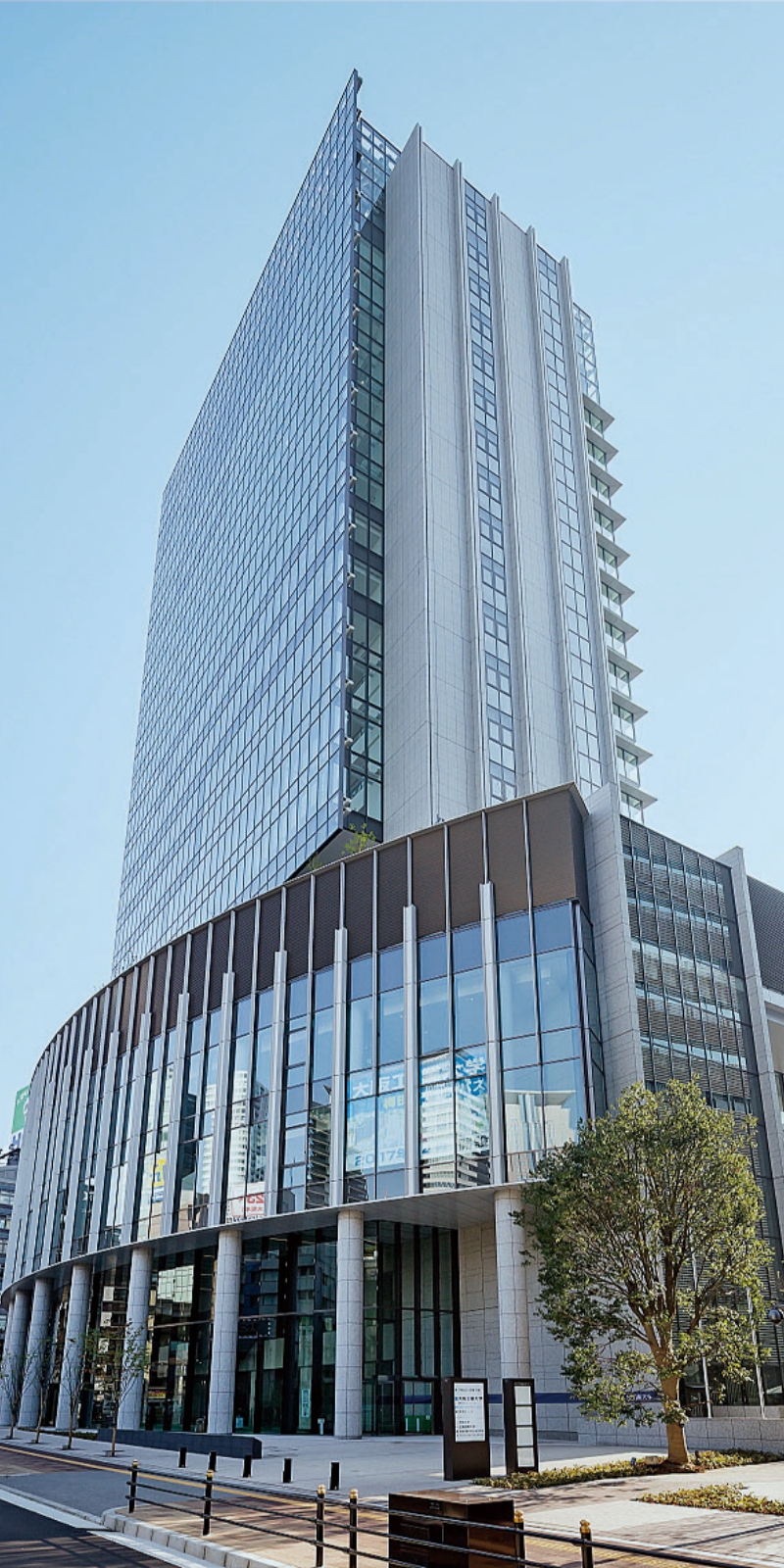
A vast campus towering over Hirakata.
The vast campus, located in northeastern Osaka, is equipped with a wide range of facilities related to information science.
Surrounded by a quiet residential area, you can study and participate in extracurricular activities in a peaceful environment.
-
The birth of the "DX Field" that connects society and changes the future
It will be a base for practical research, education, and on-campus ventures in smart mobility services. It will be a suitable facility for nurturing rich creativity by pursuing academic theories from diverse perspectives in the Faculty of Information Science and Technology, which conducts education and research such as collecting real-world information, analyzing the data, and reproducing it in virtual space.

-
Human Robotics Research and Development Center
We are researching and developing elemental technologies and service prototypes for life-support robots that can coexist with humans, envisioning situations such as nursing care, rehabilitation support, and lifestyle support for the elderly and physically disabled. We also play a role in practical manufacturing education through the creation of robots.

-
Visualization Software Development Center
We are developing software that can "visualize" various events and phenomena that cannot be seen directly through the senses of sight and touch by analyzing and reconstructing them using methods of image processing, computer graphics, and numerical analysis.

-
Digital Archive Center
This room is equipped with various input/output devices for creating and viewing digital content. Digital content can be created in a variety of ways, including motion data that digitizes human movements and digital models that digitize three-dimensional objects. A motion capture system with eight cameras is used to measure human movements (motion capture). To obtain data on actual Noh and golf swing movements, a number of markers are attached to locations corresponding to each joint of the human body, and the eight cameras capture the reflections of light projected onto the human body, allowing the movements to be captured three-dimensionally. In addition, a three-dimensional non-contact shape input device is installed that projects laser light onto the target object and uses the reflected light to directly input the three-dimensional shape into a computer.

-
Virtual Reality (VR) Room
This room is equipped with facilities for creating and experiencing virtual spaces and immersive video spaces. An 8K projector with a resolution 16 times that of HDTV is installed, and immersive high-definition images can be viewed on a large 200-inch screen (4.4m wide, 2.5m tall). In addition, content production equipment includes high-definition cameras and high-performance PCs that can generate CG in real time, allowing the creation of a variety of virtual spaces. There is also a 3D printer that can output computer-designed CG models as real objects. Such facilities are used for research on CG production, VR/AR technology, 3D video, projection mapping, and more.

Three Policies of the Faculty of Information Science and Technology
Q&A/Frequently Asked Questions
Frequently asked questions at the beginning of the year
We have posted a lot of information about academic matters such as courses, grades, and classes, so please check here first if you have any questions.
If you have checked the list and are still unable to resolve your issue, please contact the Faculty of Information Science and Technology Office (1st floor, Building 1).
About commuting
-
What is the daily and weekly class schedule?
From the 2018 academic year, each class will be 100 minutes long, with the first class starting at 9:10 a.m. Normally, classes last up to the fourth period, but a fifth period may be used for teacher training subjects or special cases. Classes are held every week from Monday to Friday, and there are no regular classes on Wednesday afternoons and Saturdays, but these days are used for teacher training subjects and supplementary classes.
-
Please tell me the annual class schedule.
Classes generally begin in early April, with one class per week, regular tests in mid-July, and the first semester ends at the end of July. Summer vacation usually lasts about one and a half months from August to mid-September. The second semester begins in mid-September, with regular tests in mid- to late January the following year. Winter vacation is about two weeks. The second semester classes end around early February. Spring vacation is from mid-February to the end of March. However, once you enter your third year and are assigned to a research lab, each lab will have its own events, so summer and spring vacations may not always be the entire vacation period.
-
How long does it take from the train station?
There are two bus routes: from JR Gakkentoshi Line Nagao Station (about 10 minutes) and Keihan Railway Kuzuha Station (about 25 minutes). During term time, direct buses are operated from Nagao Station (about 7 minutes) and Kuzuha Station (about 16 minutes) at the start of term time. The university provides assistance for purchasing commuter passes.
For students enrolled before 2021: Keihan bus pass from Nagao Station to Kitayama Chuo or Osaka Institute of Technology: 1,100 yen per month. Where to buy: Josho Welfare (Building 1, 2nd floor)
・For all students, Keihan Bus "Kuzuha area" commuter pass holders: 830 yen subsidy per month (paid after the trip)
Application location: Josho Welfare (Building 1, 2nd floor)
-
Is it okay to commute to school by motorbike or car?
Although it is not recommended due to the risk of traffic accidents, students at the Faculty of Information Science and Technology can use both motorcycles and cars to commute to school. However, if you use a car, you will have to pay the parking lot management fee. There are plenty of parking spaces and bicycle parking areas. For more information, please contact the faculty office.
About the classes
-
Is there a homeroom teacher?
In the first semester of the first year, there is a small class called "Basic Seminar". Until the student is assigned to a laboratory, the supervisor of the basic seminar will continue to provide academic guidance (there is no homeroom system). Usually, students are assigned to a laboratory in the first semester of the third year, after which the supervisor of the laboratory will provide academic guidance. -
It seems that Mathematics III may not be included in some entrance exams, but is it not required for university classes?
Since the field of information science makes heavy use of mathematical science, there are many classes that require knowledge of Mathematics III. However, in these classes, we have a system in place that allows students to supplement and understand the content through application. For this reason, we have a follow-up system in place that allows students to fully understand the classes even if they have not studied Mathematics III. In addition, we also offer supplementary classes (high school level) in mathematics and physics, and we recommend that students who are unsure of their academic ability take these classes. -
Can I go on to graduate school?
Osaka Institute of Technology of Faculty of Information Science and Technology has a complete master's and doctoral program. Graduates of these programs are highly sought after by companies, and are highly recommended for those who wish to study a specialized field of study. Students with good grades during their undergraduate years have an internal advancement system, and can advance to higher education simply by passing an interview. There is also a scholarship system for students with particularly excellent grades, and a comprehensive scholarship system.
For details about the scholarship program, please see " Graduate Students (Campus Scholarships) ."
-
Can I get a teaching license?
In the Faculty of Information Science and Technology, students can obtain a Junior High School Teacher's License (Mathematics) or a High School Teacher's License (Mathematics, Information) by earning the required credits in the teacher training course. Every year, many students graduate with a teaching license. In addition, if you proceed to the graduate school of the Faculty of Information Science and Technology, you can also obtain a High School Specialist Teacher's License (Information).
Computer Use
-
Is there a place where I can bring my laptop and use it?
If you have a computer with built-in wireless LAN, you can connect to the campus network in many places in the building and study freely in a network environment.
-
Can I use the school facilities from home via the network?
Various connection methods are provided for the purpose of completing homework at home and submitting it via the network. When you enter your fourth year and begin working on your graduation research, you will likely start to use this function in earnest.
About life
-
Are there any restaurants or convenience stores?
There is a cafeteria in the faculty building. It has a full range of dishes, including noodles, curry, rice bowls, and set meals. It is open every day except Sundays, the Obon holiday, and the New Year holidays. During term time, they also have a very cheap breakfast menu. There is also a convenience store and a book center in the building, and they also provide services such as referrals to driving schools and selling mobile phones.
-
Is there a dormitory?
There is a dormitory facility called the International Hall in Osaka City. Each room is equipped with a bathroom, toilet, air conditioning, a sink, a bed, a desk, a refrigerator, etc. There are also many one-room apartments for students around the Faculty of Information Science and Technology, which are introduced at Josho Welfare (a convenience store).
-
Is there a study abroad program?
There is a language study abroad program, and participants can transfer their credits to English classes. In addition to English, there is also an exchange program with overseas technical universities. However, you need to check whether the exchange program is continuing depending on the year.
For details, please see " International Exchange and Collaboration Programs ."
-
What kind of scholarships are available?
There are various types of scholarships, including the Japan Student Services Organization (formerly the Japan Scholarship Association), university-specific scholarships, and local government scholarships. Each has its own conditions, so it is a good idea to inquire at the Faculty of Information Science and Technology office. There is also a scholarship program for students who have excellent results on the entrance exam, and there are many scholarship programs available.
For details about scholarship programs, please see " Scholarships ."
About Club Circle
-
What kind of clubs are there?
There are 10 athletic clubs and 14 cultural clubs that are mainly active on the Hirakata campus.
For more information, please see the Extracurricular Activities website .
-
Are there any exchanges with clubs on the Umeda or Omiya campuses or with other universities?
Because it takes over an hour to get to the Umeda and Omiya campuses by public transportation, there is not much interaction with clubs on the Omiya campus, but there are many examples of students living nearby who are active in clubs in the Omiya area. Also, within walking distance of the Faculty of Information Science and Technology is the Faculty of Pharmacy at Setsunan University, which was established by the same corporation, and there are clubs with which the faculty has exchanges.
-
Are there any facilities where we can hold training camps?
There are self-catering facilities on the Faculty of Information Science and Technology grounds, as well as the 60th Anniversary Hall on the Omiya Campus.
About employment
-
I've heard that the employment opportunities for students in the Faculty of Information Science and Technology are good. Why?
This is because "information technology" is an essential technology in a wide range of industries, and the employment support system is very well developed. In the second semester of the third year, some kind of employment support event is held almost every week, and the employment office and teachers complement each other to provide attentive guidance and advice to each student. In addition, a placement pilot system was launched in 2006, and students who have decided on their career path early on can share the experiences they gained through job hunting with younger students.
-
Is there any support to obtain qualifications that will be advantageous for employment?
In addition to providing intensive support for the official certification systems required by IT companies and other organizations through classes, students can also take various preparatory courses offered by the Extension Department upon request. In addition to technical certifications, many courses are offered, including TOEIC English test prep and employment exam prep courses. In addition, we hold classes and extracurricular courses for vendor certifications that are advantageous in certain industries.
ContactInquiries and Access
Faculty of Information Science and Technology Office Hirakata Campus Building 1, 1st floor
Reception hours: Weekdays 9:00-17:00
Please note that it may take some time to respond to inquiries during the summer and winter holidays.