





- what's new
- message
- Features
- List of each department's contents
- Facility Introduction
- Frequently asked questions
- inquiry
What’s New Department of Design and Architecture Latest News


Message from the Dean
Architecture Architecture

- Curriculum for architect exams
- Students study a range of architectural subjects, including architectural design, planning, structure, environment and construction, with the aim of achieving architectural design from a comprehensive perspective.
- We understand the role of architecture in a sustainable, ecological, and advanced IT society, and create architecture that meets the needs of the times.
Qualifications that qualify you to take the exams: First-class architect | 二級建築士 | 木造建築士 | Commercial facility engineer assistant
Qualifications to aim for: First-class architect | 二級建築士 , etc.
Product design Product Design

- Practical education to enhance design and engineering skills.
- Along with specialized subjects such as design and drafting, structure, materials, and ergonomics, students will also acquire a variety of skills and ways of thinking required in the IT society, including programming, UI, usability engineering, and design management.
- From the perspective of "design x business," we aim to create products that are suited to the IT society, from everyday household items and furniture, lighting fixtures, to mobility and information devices. We understand the role of architecture required in a sustainable, ecological, and advanced IT society, and create architecture that meets the needs of the times.
Eligibility to take the exam
Commercial facility assistant license, etc.
Qualifications to aim for: Lighting technician | Color technician (1st, 2nd, 3rd grade) | Engineer, etc.
Interior design Interior Design

- A curriculum tailored to the architect exam.
- The aim is to train interior designers with a comprehensive perspective by taking specialized subjects in spatial design, mainly architecture and interior design.
- From the perspective of "design x business," he works on the design of commercial spaces and housing, the renovation of architectural spaces, and even the design of interior elements and transport spaces that are integrated with products.
Qualifications that qualify you to take the exams: First-class architect | 二級建築士 | Commercial facilities engineer assistant, etc.
Qualifications to aim for: First-class architect | 二級建築士 | インテリアプランナー , etc.
Information design Information Design

- Practical education to enhance visual communication design and information technology skills.
- He works on a wide range of analog and digital design, from the basics of visual communication design to package design, web design, photography and video production.
- Students will deepen their understanding and skills in information technology, including programming, and acquire comprehensive design skills through exercises that combine design management, UI, usability engineering, and other information design suited to the Society 5.0 era with product design.
Qualifications for which you can take the exam Commercial Facility Specialist, etc.
Qualifications to aim for: Lighting technician | カラーコーディネーター | Engineer, etc.
FeatureFeatures
The appeal of the Department of Design and Architecture is that it uses engineering technology as a foundation to understand the essential value and significance of design and delve deeply into the relationship between "things" for humans and space. Through a wide range of practical training and exercises, we train designers who can develop and create excellent designs with an engineering mindset, from sophisticated living spaces and easy-to-use products to CG that expresses spatial images.
-
Comprehensive construction of spaces that connect interiors to the city (Architecture)
Students will acquire architectural knowledge and skills to meet modern needs, from architectural design in dynamic urban spaces to residential design based on a human scale and the renovation of vacant homes. Students will learn about artistic sensibilities, futuristic engineering, and digital technologies to conceive spaces for people that are in harmony with the natural environment. In addition to full-time faculty, Assistant Professor will also receive instruction from renowned designers active at the forefront of the industry.

-
Expanding from interior design to environmental design to create new spaces (interior)
Interior design approaches problems in a very logical way. In particular, for stores, we understand the environment in which the store will be located, including the shape and nature of the products being sold, as well as the economic perspective, and design not just a sales space, but a space for communication through products and services. In addition, we are a field that creates new and attractive commercial and residential spaces that shape people's living environments, including renovations that preserve and utilize existing excellent elements.

-
Weaving comfortable designs that are in tune with people's lives (product design and information design)
Product design and information design are the design of the relationship between people and things. Using familiar tools related to daily life as subjects, students will create prototypes using various machines and verify their usability while improving the precision of the design. Students will also master the process of creating an actual product using actual materials. Students will also acquire the skills of information design (graphic design and UX design) to clearly communicate the process from various research to creation, as well as the appeal of the work.

ContentsList of each department's contents
-

curriculum
Please click here for more information on the four years of study, lecture content, and global human resources.
-

Laboratories and Faculty
You can learn about visual design, UX design, and more in a variety of research laboratories and under the guidance of highly-qualified faculty members.
-

Employment and Career Paths
Find out more about the paths and employment opportunities available to you after graduation. Check out the diverse career possibilities available to you.
Learn through the video
Three educational policies of the Department of Design and Architecture
FacilityFacility Introduction
-
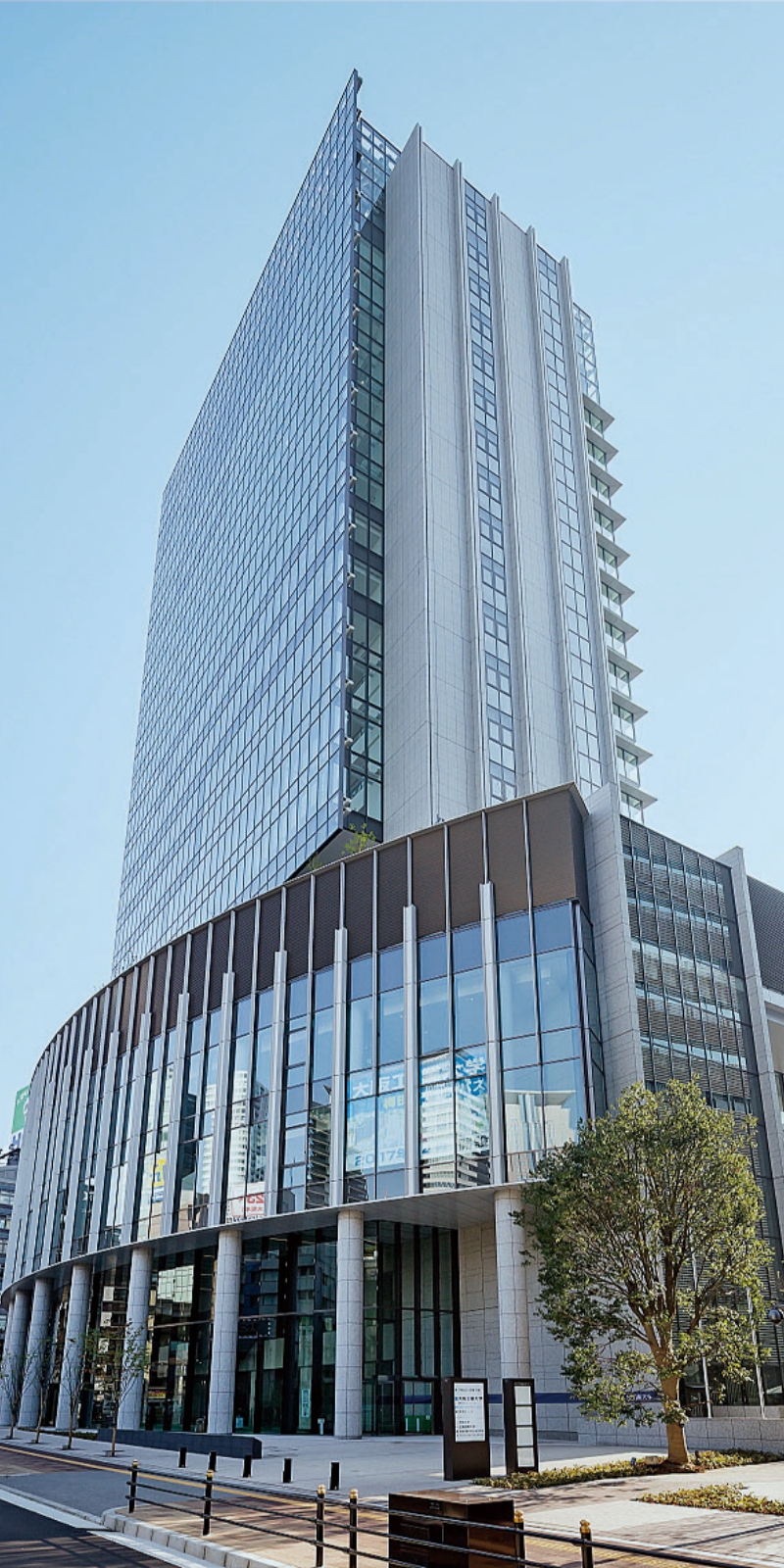
An urban tower campus standing tall in Umeda, Osaka.
With cutting-edge facilities and an environment, we will foster collaboration between industry, government and the public sector,
We will develop a new generation of talent with robotics technology and the design skills to connect that technology to attractive products and systems.
Q&AFrequently asked questions
-
What do you learn in the Department of Design and Architecture?
In the Department of Design and Architecture, students can learn about the various design genres of architecture, interior design, and product design from the perspective of spatial design, in order to build environments that support the richness of people's lives.
We aim to train architectural and interior designers and product designers who have acquired a solid foundation in engineering technology and design and can contribute to society. -
What are the characteristics of the curriculum?
You will learn design focusing on two design areas: spatial design (architecture and interior) and product design (product and information design).
- Students can also take courses such as "Design Mechanics," "Architectural Structural Engineering," and "Architectural Environmental Engineering" to gain engineering knowledge, and if they meet the credit requirements, they will be eligible to take the first and second class architect examinations.
・Practical learning will be conducted based on real issues in the real world in collaboration with companies and local shops. -
When do I choose my spatial design and product design subjects?
First, students' preferences are heard in the second semester of their first year. Then, preferences are heard in the first and second semesters of their second and third years. Ideally, students should choose a particular field consistently, since deciding on a specialization early allows them to deepen their learning in that field from an earlier stage. However, students may be allowed to change their selected field after consulting and coordinating with their professor. -
Is it difficult if I'm not good at math or physics?
In engineering, knowledge of mathematics and physics is essential, so you need to acquire a minimum level of knowledge. Even if you are not good at these subjects, there is a support system in place, such as special courses, so don't worry. -
After choosing a department, is there any interaction with each specialty?
A distinctive feature of the department's work space and laboratories is that there are no partitions between specialties, creating an environment where all year students can learn and create in one space. Even if students choose different fields, the work spaces are next to each other, and each seminar is held in the same large room, so the facility is designed to naturally allow students to learn about each other's research and activities. It is also possible for students to conduct joint research between laboratories, or to go beyond the boundaries of seminars and conduct graduation research in student groups that make use of their respective fields of expertise. -
What kind of practical learning is available?
The Department of Design and Architecture is currently working on a variety of projects.
For more information, please see Research & Projects.
・Created a wrapping design proposal for Coca-Cola Bottlers Japan's vending machines ・Exhibited at "1,000,000 Candle Night @ OSAKA CITY Chayamachi Slowdy 2018" ・Tested a new model of guide dog harness. -
What kind of graduation projects do students have?
Please take a look at our " Graduation Projects " here. The Department of Design and Architecture offers many practical exercises, including spatial design and product design. We plan to regularly post student projects on our website. -
Could you tell me about the entrance examination system?
Please see the entrance examination information here . -
Are there any female teachers?
There are five female full-time faculty members in the Department of Design and Architecture, and nine in the entire faculty. -
Can I participate in the MonoLab projects (Robot Project, Human-Powered Airplane Project, Solar Car Project, Student Formula Project) or club activities at the Omiya Campus?
Yes, but since the activities will be at the Omiya campus, you will need to travel to the Omiya campus after classes at the Umeda campus. There are limited shuttle buses available. -
Are there any club activities that are only available at the Umeda Campus?
There are clubs such as the Research Development Club, which works on issues together with companies, and the clubs that plan and hold events around the Umeda campus. There is also a club named after the department, the Spatial Design Research Club. -
Will you be at Umeda campus for four years?
On Mondays in the first year, classes such as physical education are held at the Omiya campus, but in principle, all selected subjects from the second year onwards are held at the Umeda campus. In general, students attend the Umeda campus for four years.
ContactInquiries and Access

Faculty of Robotics and Design Office Umeda Campus 7th floor
Reception hours: Weekdays 9:00-17:00
Please note that it may take some time to respond to inquiries during the summer and winter holidays.