





- what's new
- message
- Features
- List of each department's contents
- Facility Introduction
- Frequently asked questions
- inquiry
What’s New Department of Robotics Latest News
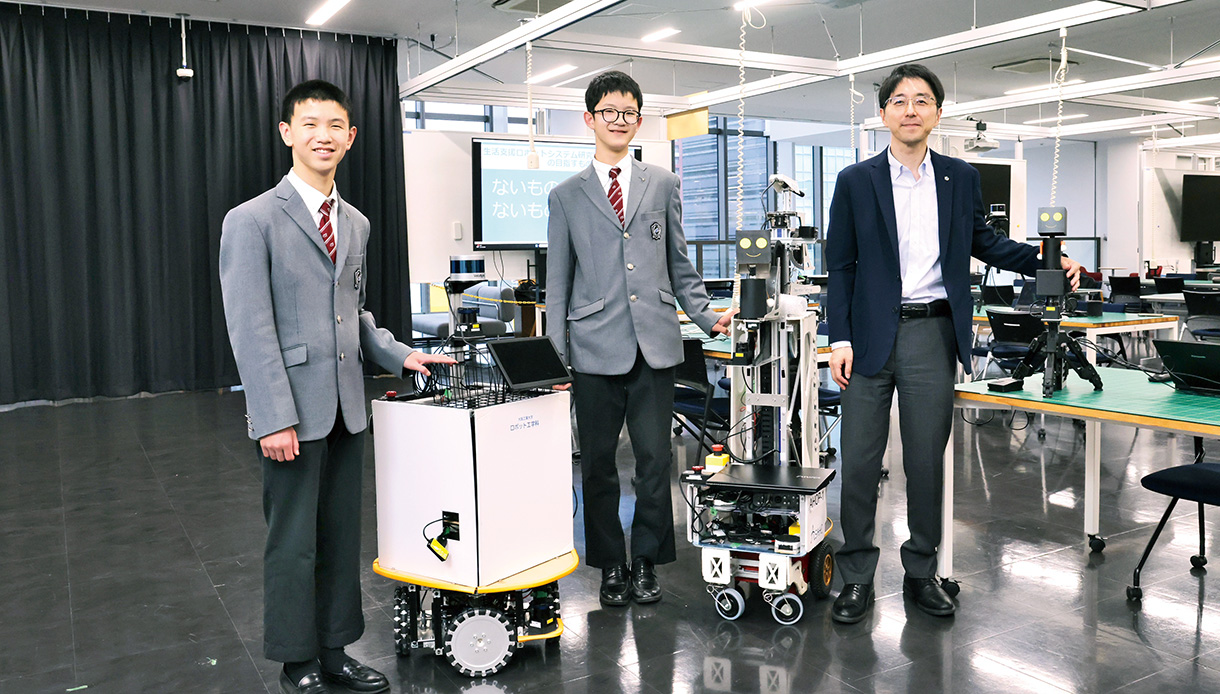
Message from the Dean
FeatureFeatures
In a rapidly changing society, the importance of robots in production, logistics, medical welfare, and store management is increasing. Developing robots requires manufacturing based on the theories of mechanical engineering, electrical and electronic engineering, measurement and control engineering, and information engineering. In the Department of Robotics, we train robot engineers who have both knowledge and skills through lectures that teach theory and hands-on manufacturing.
-
Comprehensive learning of robotics theory
In order to develop a robot, it is necessary to study mechanical engineering, electrical and electronic engineering, measurement and control engineering, information engineering (programming), and machine learning (AI) in a wide and balanced way. In the Department of Robotics, we have carefully selected classes to learn these theories and compiled a list of classes that can be learned step by step without difficulty.

-
Learn manufacturing skills through hands-on experience
Robots cannot be made with theory alone. It is important to develop the skills of making things by actually doing things based on theory. The Department of Robotics offers a wide range of practical exercises, including machine tools, design software, programming, sketching and modeling. By practicing making things from the first year, we will train people who can make robots from scratch by the time they graduate.

-
Emphasis on research
In the Department of Robotics, we place emphasis not only on the acquisition of theories and skills, but also on research that uncovers facts and creates something new that has never been seen before. Many of the graduation research projects undertaken in the fourth year are of a high level, and many students advance to graduate school and develop their research further, presenting at international conferences and submitting papers.

-
Items related to employment and career paths
The strength of graduates of the Department of Robotics is that they have studied a wide range of engineering fields, enabling them to meet the needs of a wide variety of industries. The variety of employment opportunities and high employment rate of graduates of the Department of Robotics are proof of this.

ContentsList of each department's contents
-

List of Course Subjects
This introduces the four years of learning and the contents of the courses.
-

Laboratories and Faculty
We introduce laboratories and faculty in various fields related to robotics.
-

Employment and Career Paths
Find out more about the paths and employment opportunities available to you after graduation. Check out the diverse career possibilities available to you.
Three Policies of the Department of Robotics
FacilityFacility Introduction
-
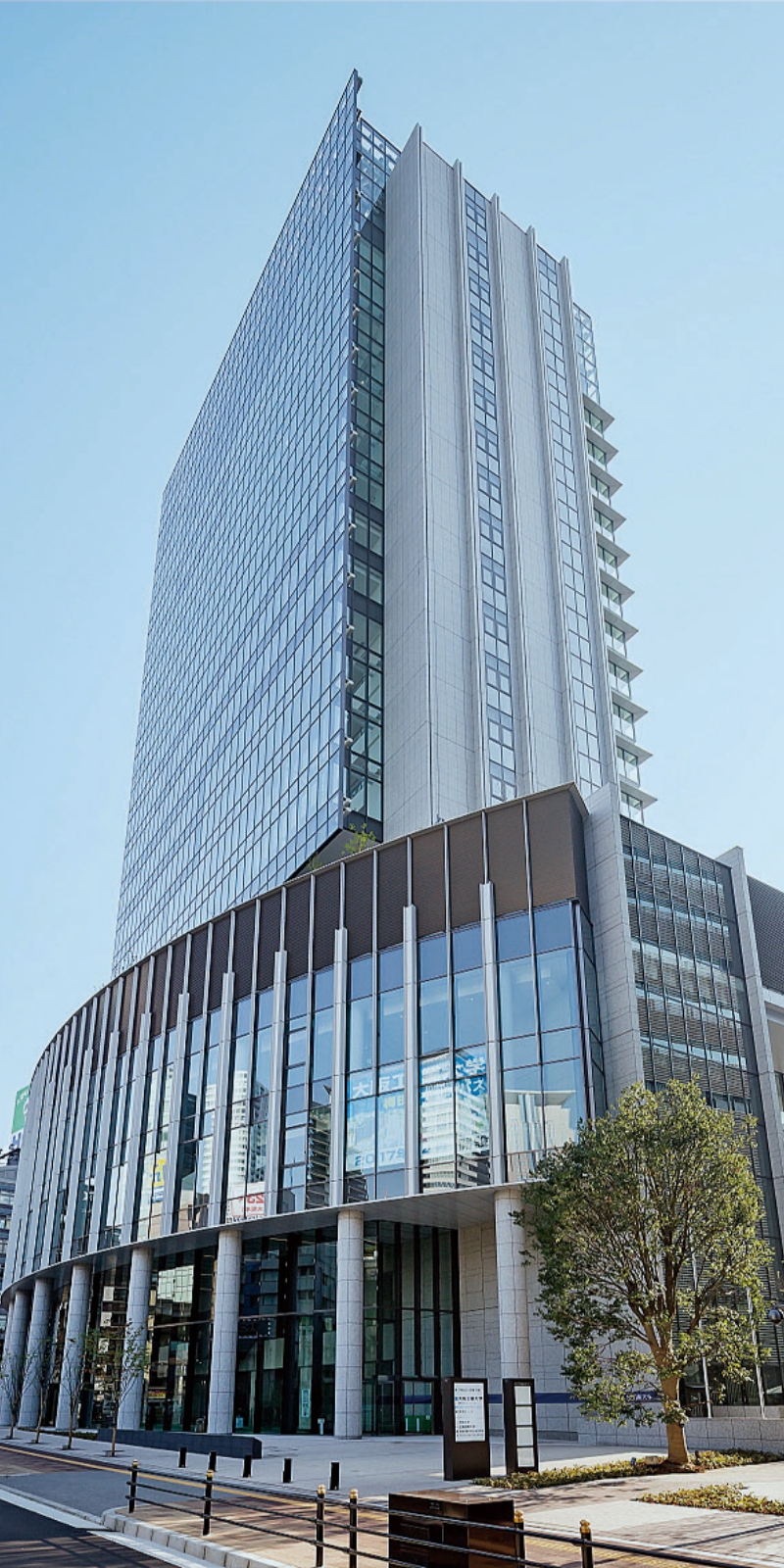
An urban tower campus standing tall in Umeda, Osaka.
With cutting-edge facilities and an environment, we aim to nurture a new generation of talent with the ability to collaborate with industry, government and the private sector, as well as the design skills to connect robotics technology with attractive products and systems.

Q&AFrequently asked questions
-
Could you tell me more about the entrance exam?
Please see the entrance examination information . -
Do you have any brochures?
Check out our digital brochure . -
I'd like to see the syllabus.
Please take a look at the course listings and search the syllabus . -
What kinds of clubs and circles are there?
At the Umeda campus, there are clubs such as the Umeda Robot Programming Club , the Design Thinking Practice Research Club , the Event Creator Club , the OIT Umeda Volunteer Club , and the Piano Club. Some students also participate in project activities at the Omiya campus (robots, human-powered aircraft, student formula racing, solar cars) and sports clubs. -
What company do you work for?
Please see employment and further education options . -
Is it difficult if I'm not good at math or physics?
In engineering, mathematics and physics are essential, so you need to have a minimum level of knowledge. Even if you are not good at them, there is a support system in place, such as answering questions and offering courses to improve your academic ability, so as long as you have the motivation, you will be fine. -
There is no Mathematics III class in my high school. Is that okay?
It is advisable to study Mathematics III to a certain extent before enrolling. In addition, the Education Center offers academic improvement courses for new students who have not taken Mathematics III, so please feel free to take advantage of these courses. -
Are there online classes?
Generally, classes are held face-to-face, but classes with a large number of students are held online. For some classes, we provide videos for review. -
What is the ratio of female students?
It's around 10% per grade. -
Please tell me where female students can find employment.
Please see below.
https://www.oit.ac.jp/admission/blossomgirls// -
I'm interested in artificial intelligence. Can I learn it?
There are classes related to artificial intelligence, such as statistical analysis, machine learning, intelligent robots, and image processing. Making robots operate intelligently is also necessary in the fields of production, logistics, medical welfare, and store management, so many students are working on this topic in their graduation research. -
Can you learn programming?
Programming is essential to developing robots. The Department of Robotics offers five programming classes, and in practical classes you will need to apply what you have learned in these programming classes to tackle assignments, so your programming skills will definitely improve. -
Will you be at Umeda campus for four years?
On Mondays in the first year, physical education, physics experiments, and machine work training classes are held at the Omiya campus. Other than that, students will spend their time at the Umeda campus. -
What happens to my student commuter pass when I go to the Omiya campus?
You can only purchase a commuter pass if you are commuting to the Omiya campus to earn the credits required for graduation. If you wish to purchase one, you must apply separately to the faculty office. You cannot purchase a commuter pass solely for extracurricular activities or teacher training classes. -
Could you please tell me about the qualifications I can obtain?
These include high school teacher type 1 (industrial), junior high school teacher (technology), engineer (Associate Professional Engineer), 3次元CAD利用技術者, CAD利用技術者, 基本情報技術者, 応用情報技術者, robot SI certification, robot safety assessor certification, SICE measurement and control engineer, etc. There are also subjects that must be taken to obtain the qualifications, so studying is necessary. -
Can I pursue a career in research and development?
If you want to be involved in corporate research and development, going to graduate school will increase your chances of pursuing your desired career path, so please consider going to graduate school. -
Can I study abroad during my undergraduate studies and graduate in four years?
It's difficult to do it in four years. There are ways to participate in language training and international projects at the undergraduate level and study abroad at the graduate school level.
ContactInquiries and Access

Faculty of Robotics and Design Office Umeda Campus 7th floor
Reception hours: Weekdays 9:00-17:00
Please note that it may take some time to respond to inquiries during the summer and winter holidays.