
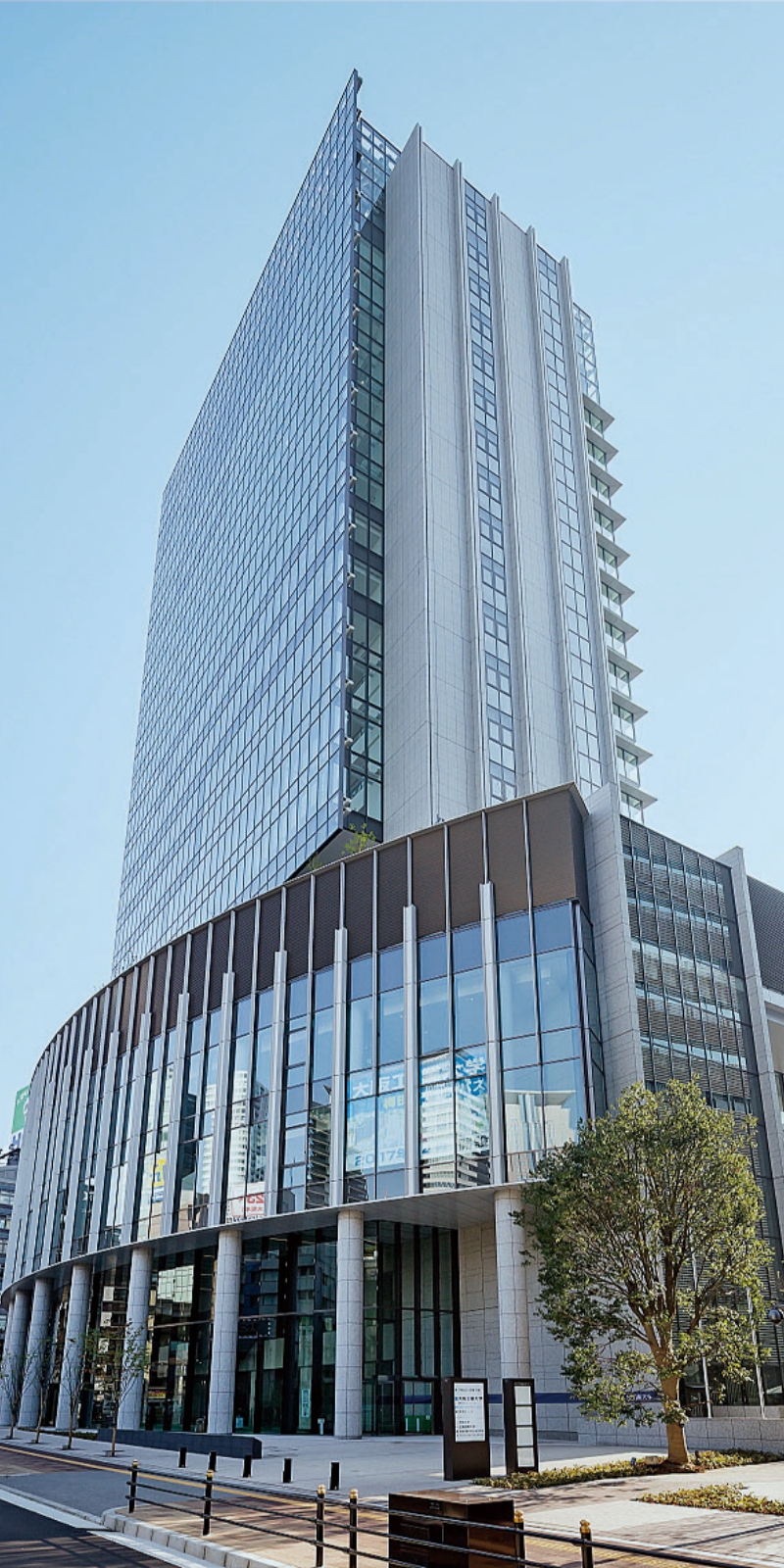






- Our philosophy regarding teacher training
- Information to be disclosed pursuant to Article 22-6 of the Enforcement Regulations of the Teacher Certification Act: Matters concerning the objectives of teacher training and plans for achieving those objectives.
- Contributions to the Board of Education and the Community
- The teaching and training system at our university
- Greetings from the Head of Teaching
- University-wide teaching and training system
- Teacher training classroom instructor
- List of Teacher Training Program Committee Members
- Teaching certificates available
- Licenses available (applicable to current students)
- How to take the course
- The process to obtain a license
- Teacher certification status
- Faculty Recruitment Status
- Course enrollment
- Points to note regarding the enforcement of the "Act on the Prevention of Sexual Violence Against Children"
- Teacher training course self-examination and evaluation
- Information on the Teacher Training Course Alumni Association "Yodotsumi Kibo"
Our philosophy regarding teacher training
Information to be disclosed pursuant to Article 22-6 of the Enforcement Regulations of the Teacher Certification Act: Matters concerning the objectives of teacher training and plans for achieving those objectives.
University's founding philosophy
Osaka Institute of Technology traces its roots back to the Kansai Engineering Vocational School, founded in 1922. Its founding principle has always been to "cultivate professional experts who possess practical skills backed by theory and can thrive in the field," serving society, people, and the local community. At its core is a field-oriented education that emphasizes "learning as if you were in the field, experiencing field technology, and learning with people in the field." As a comprehensive engineering university today, Osaka Institute of Technology Institute of Technology continues to uphold this spirit, advancing its education and research with the fundamental policy of cultivating professional experts who possess the fundamental academic skills, practical abilities, and applied skills to thrive in response to the demands of society and industry, and who are full of pioneering spirit, constantly striving for new intellectual and technological creations.
The founding principles of each department
Faculty of Engineering
Department of Civil Engineering and Urban Design
We aim to cultivate engineers who possess a broad general education that enables them to make judgments from a comprehensive, forward-looking perspective, cutting-edge technology and advanced expertise in urban design engineering, non-cognitive skills such as practical abilities and communication skills, and international perspectives, enabling them to adapt to a changing society and constantly take on challenges.
Department of Architecture
The program aims to cultivate professionals in architecture, such as architects, architectural engineers, planners, and designers, who can create and design buildings, cities, and environments that meet the needs of society and enable people to live and engage in various activities.
Department of Mechanical Engineering
We aim to cultivate practical professional individuals who can address real-world challenges related to mechanical engineering with a global and multifaceted perspective, a high sense of ethics and responsibility, and who can solve problems by utilizing specialized knowledge and practical skills in manufacturing based on mechanical engineering, as well as fundamental professional skills.
Department of Electrical and Electronic Systems Engineering
This program aims to cultivate practical professionals who, by leveraging their fundamental knowledge in the electrical and electronic fields, can identify and solve technical challenges themselves, thereby acting with a strong sense of ethics and mission to contribute to a sustainable society.
Department of Electronics and Information Systems Engineering
By utilizing a broad range of knowledge related to the fields of electronics, communications, and information, and by leveraging systems science and technology that integrates and crosses these fields, we aim to cultivate professional human resources who can solve engineering challenges through manufacturing and contribute to the realization of a sustainable society.
Department of Applied Chemistry
To cultivate practical professionals who can grasp phenomena involving chemistry from both global and local perspectives, understand their significance and meaning, and tackle practical problem-solving based on chemistry with a high sense of ethics and responsibility.
Department of Environmental Engineering
We aim to cultivate engineers and researchers who can play an active role in various environmental fields in the future, by acquiring knowledge not only in engineering but also in a wide range of academic disciplines, and by developing the fundamental skills and critical thinking abilities necessary for environmental conservation and the realization of a resource-recycling society.
Department of Biomedical Engineering
The aim is to cultivate individuals who can think about things from a global perspective, consider various aspects, and act with a high sense of ethics and responsibility regarding the impacts and effects of biotechnology on society and nature, while also learning independently and working systematically in teams.
Faculty of Robotics and Design
Department of Robotics
We aim to cultivate individuals who can master and apply the theories of robotics, confront challenging and unavoidable problems, persevere even when they don't know the answer, formulate their own questions, and see things through to the end.
Department of System Design
The aim is to cultivate the ability to flexibly integrate and utilize engineering knowledge in areas such as mechanics, electricity, electronics, information, measurement, control, and communications; the ability to propose and create new manufacturing ideas that are in line with societal needs and technological trends; and the ability to pursue the proposal and implementation of new lifestyles from the perspective of realizing a society and future where people can live fulfilling lives.
Department of Design and Architecture
The aim is to cultivate the ability to create excellent designs based on the foundational knowledge of natural sciences, culture, art, and a wide range of engineering necessary for designers with an engineering mindset, as well as the ability to create valuable designs that are relevant to a global society through practical manufacturing skills, and a foundation and practical skills in architecture, interior design, and product design.
Faculty of Information Science and Technology
Department of Data Science
By acquiring fundamental knowledge and problem-solving skills related to statistical analysis in addition to information processing technology, we aim to cultivate data science professionals who can create new value.
Department of Real World Computing
Through various IoT sensing technologies, we acquire information from the real world—the actual space where humans are active—and cultivate professionals who can solve concrete real-world problems through real-world interaction, such as analyzing and visualizing information about people, objects, and the environment, and controlling environmental equipment and robots surrounding people and objects.
Department of Information and Computer Science
Based on mathematical science, students will acquire information technology skills from both software and hardware perspectives, and by deeply studying artificial intelligence, we aim to cultivate AI specialists who can create and apply artificial intelligence.
Department of Information Systems
By acquiring fundamental information processing technologies as well as software engineering and security technologies, we aim to cultivate engineers who can develop safe and secure information systems that support a convenient and prosperous society.
Department of Media Science
This program aims to cultivate individuals who can contribute to society by acquiring cutting-edge processing technologies for various media such as images, sounds, language, and sensory experiences, as well as learning psychology-related knowledge such as human behavioral characteristics and interface design.
University teacher training goals and plans
Based on the university's founding principles, the following objectives for teacher training have been established.
<Goal>
(a) To cultivate well-rounded individuals who are suitable to be educators, who are driven by a passion and sense of mission to respect human rights, share in people's worries and anxieties, and find joy in actively participating in human growth.
(i) To cultivate expertise that leverages the unique characteristics of a comprehensive engineering university, while organically linking specialized education in each faculty and department with specialized education related to teaching, and to develop practical teaching skills that enable teachers to face various challenges and provide concrete and effective guidance and support to children.
(c) To cultivate the ability to educate oneself throughout one's life, both as an educator and as a human being.
<Plan> Based on the curriculum policies and diploma policies of each faculty and department of the university, and the expertise of each department, students will systematically and progressively take teaching methodology courses for each subject, as well as specialized teaching courses such as the principles of teaching and introduction to teaching. The courses are arranged to organically connect teaching practice and the final teaching practice seminar. Furthermore, utilizing the Special System for Curriculum and Education (certified in March 2026), courses offered by Osaka Kyoiku University, with which we collaborate, will be implemented on-demand as courses offered at our university. This will reduce the burden on faculty members, such as travel, due to courses being spread across multiple campuses, and allow them to use the extra time to strengthen close guidance to students. In addition, flagship designated courses that allow students to systematically learn about the latest issues such as inclusive education and guaranteeing children's rights will be introduced, achieving both improved quality of the teacher training program and sustainable and efficient operation.
Teacher training goals and plans for each department
Based on the philosophy of teacher training for each department, each department will focus on objectives (A) to (C) and (D) to aim to cultivate highly qualified teachers.
Faculty of Engineering
Department of Civil Engineering and Urban Design
(a) To cultivate well-rounded teachers who have broadly studied academic fields related to the development and maintenance of social infrastructure.
(i) To cultivate teachers who possess the knowledge, application skills, technical skills, and practical abilities required for the development and maintenance of social infrastructure, and who can provide practical and experiential instruction in manufacturing within school education.
(c) To respect human rights and cultivate individuals with the human qualities befitting an educator.
To achieve this objective, the curriculum and diploma policies will be arranged to ensure that students acquire the required specialized subjects in mathematics and industrial technology in a systematic and progressive manner.
Department of Architecture
(a) To train well-rounded teachers who have acquired a broad range of knowledge in academic fields related to building and urban development.
(i) To cultivate teachers who possess the knowledge and skills necessary to create comfortable, safe, beautiful, and environmentally friendly buildings and towns, and who have the practical teaching ability to provide concrete and effective guidance and support in school education.
(c) To respect human rights and cultivate individuals with the human qualities befitting an educator.
To achieve this objective, the curriculum and diploma policies will be arranged to ensure that students acquire the required specialized subjects in mathematics and industrial technology in a systematic and progressive manner.
Department of Mechanical Engineering
(a) To cultivate well-rounded teachers who have broadly studied academic fields related to manufacturing.
(i) To cultivate teachers who possess the knowledge, application skills, technical skills, and practical abilities required for manufacturing, and who can provide practical and experiential instruction in manufacturing within school education.
(c) To cultivate individuals with the human qualities befitting an educator, who respect human rights, accept diversity, and possess rich sensibilities.
(e) To develop teachers who will proactively address various social issues in order to realize a sustainable society.
To achieve this objective, the curriculum and diploma policies will be arranged to ensure that students acquire the required specialized subjects in each of the subjects of "Mathematics," "Technology," and "Industrial Arts" in a systematic and progressive manner.
Department of Electrical and Electronic Systems Engineering
(a) To cultivate faculty members with comprehensive abilities who can broadly study the academic fields of electrical, electronic, and systems engineering and utilize that knowledge to lead problem-solving based on theoretical thinking.
(i) To cultivate teachers who can provide instruction in manufacturing in the electrical and electronic fields through experiments and practical training in school education, by acquiring the knowledge, application skills, technical skills, and practical skills required for manufacturing.
(c) To respect human rights and cultivate individuals with the human qualities befitting an educator.
To achieve this objective, the curriculum and diploma policies will be arranged to ensure that students acquire the required specialized knowledge for each subject in mathematics and industrial engineering in a systematic and progressive manner.
Department of Electronics and Information Systems Engineering
(a) To cultivate well-rounded teachers who have broadly studied academic fields related to manufacturing, with electrical and electronic engineering, communications, information, and systems at their core.
(i) To cultivate teachers who can acquire the knowledge and application skills and technical abilities required for manufacturing, and who can implement education that fosters students' presentation skills and collaborative abilities through practical training and experimental guidance in school education.
(c) To respect human rights and cultivate individuals with the human qualities befitting an educator.
To achieve this objective, the curriculum and diploma policies will be arranged to ensure that students acquire the required specialized subjects in mathematics and industrial technology in a systematic and progressive manner.
Department of Applied Chemistry
(a) To cultivate well-rounded teachers who have a broad understanding of academic fields related to chemistry.
(i) To cultivate faculty members who possess the fundamental knowledge, technical skills, and practical abilities required for environmentally friendly and energy-saving manufacturing, and who can provide practical and experiential guidance on manufacturing in university education.
(c) To respect human rights and cultivate individuals with the human qualities befitting an educator.
To achieve this objective, the curriculum and diploma policies will be arranged to ensure that students acquire the required specialized subjects in each subject area, such as science and industrial arts, in a systematic and progressive manner.
Department of Environmental Engineering
(a) To cultivate well-rounded teachers who have a broad understanding of fundamental areas in the field of environmental engineering, such as resources and energy, urban metabolism, and coexistence with nature.
(i) To train teachers who can cultivate engineers who can address environmental problems based on engineering technology, by acquiring general technical skills in fields such as pollution prevention and environmental remediation, efficient use of energy, resource and waste recycling, and facility design related to these.
(c) To respect human rights and cultivate individuals with the human qualities befitting an educator.
To achieve this objective, the curriculum and diploma policies will be arranged to ensure that students acquire the required specialized subjects in each subject area, such as science and industrial arts, in a systematic and progressive manner.
Department of Biomedical Engineering
(a) To develop teachers with comprehensive abilities who have studied broadly in the academic fields of biomedical engineering and life science.
(i) To develop teachers who can scientifically explore natural phenomena and life phenomena and can train students to understand things from a scientific perspective through experiments and other means.
(c) To respect human rights and cultivate individuals with the human qualities befitting an educator.
To achieve this objective, the curriculum and diploma policies will be arranged to ensure that students acquire the required specialized subjects in each subject area, such as science and industrial arts, in a systematic and progressive manner.
Faculty of Robotics and Design
Department of Robotics
(a) To cultivate teachers who can convey the inherent appeal of academics and reflect it in the learning environment, based on their broad knowledge gained from studying various academic fields such as mechanical engineering, electrical and electronic engineering, information technology, and measurement and control.
(i) To cultivate teachers who possess the skills and practical abilities necessary for problem-solving, as well as a broad general education, and who can instill in the next generation of talent the aspirations, attitudes, determination, knowledge, and skills necessary for future society.
(c) To respect human rights and cultivate individuals with the human qualities befitting an educator.
To achieve this objective, the curriculum and diploma policies will be arranged so that students can acquire the required "specialized subjects related to their respective fields" in a systematic and progressive manner.
Department of System Design
(a) To cultivate well-rounded teachers who have broadly studied academic fields such as mechanical engineering, electrical and electronic engineering, control engineering, and information engineering.
(i) To cultivate teachers who possess the technical and practical skills required for manufacturing, and who can acquire the knowledge and skills that will be useful in conceiving new manufacturing methods and new lifestyles that are in line with the needs of society and technological trends.
(c) To respect human rights and cultivate individuals with the human qualities befitting an educator.
To achieve this objective, the curriculum and diploma policies will be arranged so that students can acquire the required "specialized subjects related to their respective fields" in a systematic and progressive manner.
Department of Design and Architecture
(a) To cultivate teachers who are sensitive to environmental literacy education, aiming for coexistence between people and nature, through initiatives for universal design closely related to daily life and product design ideas that approach environmental and resource issues.
(i) To cultivate teachers who understand both the scientific and human aspects and who can practice manufacturing education from a comprehensive perspective.
(c) To respect human rights and cultivate individuals with the human qualities befitting an educator.
To achieve this objective, the curriculum and diploma policies will be arranged to ensure that students acquire the specialized subjects required for "industrial engineering" in a systematic and progressive manner.
Faculty of Information Science and Technology
Department of Data Science
(a) To cultivate well-rounded teachers who have broadly studied academic fields related to information processing technology and statistical analysis.
(i) To cultivate teachers who possess information processing skills and problem-solving abilities, and who can promote the informatization of school education.
(c) To cultivate teachers who possess statistical analysis and problem-solving skills, and who can visualize and statistically verify the effectiveness of education, and propose educational improvements based on these findings.
(e) To cultivate individuals who respect human rights and possess the human qualities befitting an educator.
To achieve this objective, the curriculum and diploma policies will be arranged to ensure that students acquire the required specialized subjects in "Mathematics" and "Information Technology" in a systematic and progressive manner.
Department of Real World Computing
(a) To develop teachers who can apply the skills they have acquired to acquire and analyze information from the real world, as well as the interaction skills required to influence it, and who can then apply these skills to solving real-world problems.
(i) To develop ethical teachers who understand the impact of real-world information technology on society and the social roles and responsibilities of engineers, and who can make appropriate judgments and take action.
(c) To respect human rights and cultivate individuals with the human qualities befitting an educator.
To achieve this objective, the curriculum and diploma policies will be arranged to ensure that students acquire the required specialized subjects in "Mathematics" and "Information Technology" in a systematic and progressive manner.
Department of Information and Computer Science
(a) To cultivate teachers who can understand information technology in general, from the basics to its applications, including artificial intelligence, and who can convey to students not only the technical aspects but also the role and enjoyment of information technology.
(i) To cultivate teachers who understand the negative aspects of information technology and possess a high level of ethical awareness.
(c) To respect human rights and cultivate individuals with the human qualities befitting an educator.
To achieve this objective, the curriculum and diploma policies are arranged to ensure that students can systematically acquire the specialized knowledge required for each subject in "Mathematics" and "Information Technology."
Department of Information Systems
(a) To develop teachers with comprehensive abilities who have studied a wide range of academic fields related to information processing technology, software engineering, and security technology.
(i) To foster teachers who will acquire the technical skills to develop safe and secure information systems and who can lead the informatization of school education.
(c) To respect human rights and cultivate individuals with the human qualities befitting an educator.
To achieve this objective, the curriculum and diploma policies will be arranged to ensure that students acquire the required specialized subjects in "Mathematics" and "Information Technology" in a systematic and progressive manner.
Department of Media Science
(a) To develop teachers who have a deep understanding of various media generation and automatic recognition technologies as well as human behavioral psychology, and who can contribute to society by realizing a people-friendly and prosperous society.
(i) To cultivate teachers with a strong sense of ethics who understand the relationship between people and media and the impact that information media have on society, and who are aware of the role and responsibility they should play in society and can act appropriately.
(c) To respect human rights and cultivate individuals with the human qualities befitting an educator.
To achieve this objective, the curriculum and diploma policies are arranged to ensure that students can systematically acquire the specialized knowledge required for each subject in "Mathematics" and "Information Technology."
Purpose of establishing teacher training programs in each faculty/department (by school type and subject of license)
For Japan to achieve sustainable development through the expansion of its human resources, enriching education, particularly the development of human resources in the fields of science, industry, and information technology, is essential. Our university's teacher training program aims to cultivate teachers who possess advanced specialized knowledge and the ability to convey that knowledge clearly to the next generation, thereby contributing to solving challenges in the educational field and improving the overall educational capacity of Japan.
Faculty of Engineering
Based on specialized knowledge and skills in various fields of Department of Civil Engineering and Urban Design design engineering,
(Mathematics) In order to produce individuals who can concretely convey to children the importance and enjoyment of mathematics, which forms the foundation of industrial education, we will establish a teacher training program for "Mathematics" in junior and senior high schools.
(Industry) As an industrial nation, we believe that cultivating students with advanced scientific skills will lead to the development of engineers who will support Japan's future. Therefore, we will establish a teacher training program for "Industrial Arts" in high schools to produce personnel who can train engineers.
Department of Architecture
Based on specialized knowledge and skills in the fields of architecture, design, and housing studies,
(Mathematics) In order to produce individuals who can concretely convey to children the importance and enjoyment of mathematics, which forms the foundation of industrial education, we will establish a teacher training program for "Mathematics" in junior and senior high schools.
(Industry) As an industrial nation, we believe that cultivating students with advanced scientific skills will lead to the development of engineers who will support Japan's future. Therefore, we will establish a teacher training program for "Industrial Arts" in high schools to produce personnel who can train engineers.
Department of Mechanical Engineering
Based on expertise and skills in the fields of mechanical engineering, aerospace engineering, systems control, and materials engineering,
(Mathematics) In order to produce individuals who can concretely convey to children the importance and enjoyment of mathematics, which forms the foundation of industrial education, we will establish a teacher training program for "Mathematics" in junior and senior high schools.
(Technology) To convey the joy of manufacturing to children and to cultivate the talent for engineers who will support Japan's future as a technology-oriented nation, we will establish a teacher training program for "Technology" in junior high schools.
(Industry) As an industrial nation, we believe that cultivating students with advanced scientific skills will lead to the development of engineers who will support Japan's future. Therefore, we will establish a teacher training program for "Industrial Arts" in high schools to produce personnel who can train engineers.
Department of Electrical and Electronic Systems Engineering
Based on expertise and skills in the fields of system control, materials, electrical and electronic engineering, and information and communication engineering,
(Mathematics) In order to produce individuals who can concretely convey to children the importance and enjoyment of mathematics, which forms the foundation of industrial education, we will establish a teacher training program for "Mathematics" in junior and senior high schools.
(Industry) As an industrial nation, we believe that cultivating students with advanced scientific skills will lead to the development of engineers who will support Japan's future. Therefore, we will establish a teacher training program for "Industrial Arts" in high schools to produce personnel who can train engineers.
Department of Electronics and Information Systems Engineering
Based on specialized knowledge and skills in the fields of system control, electrical and electronic engineering, and information and communication engineering,
(Mathematics) In order to produce individuals who can concretely convey to children the importance and enjoyment of mathematics, which forms the foundation of industrial education, we will establish a teacher training program for "Mathematics" in junior and senior high schools.
(Industry) As an industrial nation, we believe that cultivating students with advanced scientific skills will lead to the development of engineers who will support Japan's future. Therefore, we will establish a teacher training program for "Industrial Arts" in high schools to produce personnel who can train engineers.
(Information) With the aim of developing individuals who can take the lead in identifying problems through the use of data in educational settings and who can be involved in formulating and implementing solutions, a teacher training program for high school "Information" will be established.
Department of Applied Chemistry
Based on expertise and skills in the fields of applied chemistry, energy, resource engineering, and environmental science,
(Science) To cultivate individuals who can instill in children a sense of scientific curiosity and the joy of learning, we will establish a teacher training program for "Science" in junior and senior high schools.
(Industry) As an industrial nation, we believe that cultivating students with advanced scientific skills will lead to the development of engineers who will support Japan's future. Therefore, we will establish a teacher training program for "Industrial Arts" in high schools to produce personnel who can train engineers.
Department of Environmental Engineering
Based on expertise and technology in the fields of environmental engineering, energy and resource engineering, and environmental science,
(Science) To cultivate individuals who can instill in children a sense of scientific curiosity and the joy of learning, we will establish a teacher training program for "Science" in junior and senior high schools.
(Industry) As an industrial nation, we believe that cultivating students with advanced scientific skills will lead to the development of engineers who will support Japan's future. Therefore, we will establish a teacher training program for "Industrial Arts" in high schools to produce personnel who can train engineers.
Department of Biomedical Engineering
Based on expertise and technology in the fields of biotechnology, medical engineering, biotechnology, and life sciences,
(Science) To cultivate individuals who can instill in children a sense of scientific curiosity and the joy of learning, we will establish a teacher training program for "Science" in junior and senior high schools.
(Industry) As an industrial nation, we believe that cultivating students with advanced scientific skills will lead to the development of engineers who will support Japan's future. Therefore, we will establish a teacher training program for "Industrial Arts" in high schools to produce personnel who can train engineers.
Faculty of Robotics and Design
Department of Robotics
Based on expertise and skills in the fields of mechanical engineering, system control, electrical engineering, and information engineering,
(Technology) To convey the joy of manufacturing to children and to cultivate the talent for engineers who will support Japan's future as a technology-oriented nation, we will establish a teacher training program for "Technology" in junior high schools.
(Industry) As an industrial nation, we believe that cultivating students with advanced scientific skills will lead to the development of engineers who will support Japan's future. Therefore, we will establish a teacher training program for "Industrial Arts" in high schools to produce personnel who can train engineers.
Department of System Design
Based on expertise and skills in the fields of mechanical engineering, system control, electrical and electronic engineering, and information engineering,
(Technology) To convey the joy of manufacturing to children and to cultivate the talent for engineers who will support Japan's future as a technology-oriented nation, we will establish a teacher training program for "Technology" in junior high schools.
(Industry) As an industrial nation, we believe that cultivating students with advanced scientific skills will lead to the development of engineers who will support Japan's future. Therefore, we will establish a teacher training program for "Industrial Arts" in high schools to produce personnel who can train engineers.
Department of Design and Architecture
Based on specialized knowledge and skills in the fields of architecture, design, art, history, and housing studies,
(Industry) As an industrial nation, we believe that cultivating students with advanced scientific skills will lead to the development of engineers who will support Japan's future. Therefore, we will establish a teacher training program for "Industrial Arts" in high schools to produce personnel who can train engineers.
Faculty of Information Science and Technology
Department of Data Science
Based on specialized knowledge and skills in the fields of systems control engineering, information engineering, statistics, information science, and business administration,
(Mathematics) In order to produce individuals who can concretely convey to children the importance and enjoyment of mathematics, which forms the foundation of industrial education, we will establish a teacher training program for "Mathematics" in junior and senior high schools.
(Information) With the aim of developing individuals who can take the lead in identifying problems through the use of data in educational settings and who can be involved in formulating and implementing solutions, a teacher training program for high school "Information" will be established.
Department of Real World Computing
Based on specialized knowledge and skills in the fields of electronics engineering, information and communication engineering, image and acoustic engineering, and information science,
(Mathematics) In order to produce individuals who can concretely convey to children the importance and enjoyment of mathematics, which forms the foundation of industrial education, we will establish a teacher training program for "Mathematics" in junior and senior high schools.
(Information) With the aim of developing individuals who can take the lead in identifying problems through the use of data in educational settings and who can be involved in formulating and implementing solutions, a teacher training program for high school "Information" will be established.
Department of Information and Computer Science
Based on specialized knowledge and skills in the fields of systems control engineering, electronics engineering, information engineering, image and acoustic engineering, and information science,
(Mathematics) In order to produce individuals who can concretely convey to children the importance and enjoyment of mathematics, which forms the foundation of industrial education, we will establish a teacher training program for "Mathematics" in junior and senior high schools.
(Information) With the aim of developing individuals who can take the lead in identifying problems through the use of data in educational settings and who can be involved in formulating and implementing solutions, a teacher training program for high school "Information" will be established.
Department of Information Systems
Based on specialized knowledge and skills in the fields of systems control engineering, information engineering, and information science,
(Mathematics) In order to produce individuals who can concretely convey to children the importance and enjoyment of mathematics, which forms the foundation of industrial education, we will establish a teacher training program for "Mathematics" in junior and senior high schools.
(Information) With the aim of developing individuals who can take the lead in identifying problems through the use of data in educational settings and who can be involved in formulating and implementing solutions, a teacher training program for high school "Information" will be established.
Department of Media Science
Based on specialized knowledge and skills in the fields of information engineering, image and sound engineering, psychology, and informatics, we will establish a teacher training program for mathematics in junior and senior high schools to produce individuals who can concretely convey to children the importance and enjoyment of mathematics as the foundation of industrial education.
(Information) With the aim of developing individuals who can take the lead in identifying problems through the use of data in educational settings and who can be involved in formulating and implementing solutions, a teacher training program for high school "Information" will be established.
Educational methods and implementation systems for collaborative classes utilizing the special curriculum system.
As part of the collaborative teaching method, all courses will be offered on-demand using "OZONE-EDU," an online education platform operated by Osaka Kyoiku University, the collaborating partner. Students will learn through viewing video materials, completing exercises, and taking exams on this platform. In addition, to ensure interactivity between students and instructors in the classes, an environment will be established on the platform where instructors can respond to questions and provide feedback on assignments. Each course will adhere to the objectives and core curriculum of Osaka Kyoiku University's teacher training courses, with basic knowledge acquired through viewing video materials, and understanding confirmed through exercises and exams set for each class session.
Next, regarding the educational implementation system, the operation of classes and the evaluation of grades (raw scores) will be carried out by the instructors at Osaka Kyoiku University. Our university will then evaluate these grades based on our own grading standards and grant credits. In addition, regarding student support for course registration, our university will conduct guidance sessions before the start of classes to explain the system, registration methods, and how to use "OZONE-EDU." During the course period, our university will also respond to inquiries regarding course registration, assignments, grades, etc., other than those handled by the instructors during class, as well as monitoring and guiding students' progress and providing support for their online learning environment. Furthermore, regarding collaboration between our university and Osaka Kyoiku University, we plan to establish a joint council between the two universities to continuously discuss the specific implementation, quality assurance, operation, and improvement of educational management.
Contributions to the Board of Education and the Community
The teaching and training system at our university
Greetings from the Head of Teaching

In order to smoothly operate and maintain the teacher training courses for the various license subjects offered at the three campuses, the "Teacher Training Classroom" has been established within the Academic Affairs Department, and six full-time faculty members are affiliated with it. The faculty members are in charge of subjects related to the basic understanding of education and subjects of teaching methods, as well as practical aspects such as creating timetables and drafting curricula. In addition, they provide detailed support to students, such as supervision of teaching practice and nursing care experiences, guidance on taking teaching subjects, individual consultations on studies and career paths, guidance for taking teacher recruitment exams, and publication of the "Teacher Training Classroom Newsletter." In addition, the faculty members in charge of each subject of teaching methods are familiar with the educational field at junior high and high schools.
As stated in the "Founding Spirit" and "Educational Philosophy and Policy, " Osaka Institute of Technology is promoting "engineer education" to develop human resources who directly support science and technology. Those who acquire wisdom and skills through learning and experience in such courses also have the potential to convey that experience and knowledge to children in simple terms and connect it to their interest. From this perspective, our School of Faculty of Engineering, Faculty of Robotics and Design, and Faculty of Information Science and Technology have established teaching courses in mathematics, science, information, and industry and technology*, and are promoting social contributions by training junior high school and high school teachers.
In fact, our teacher training course has a history of over 70 years, which means that we have been producing excellent teachers continuously since shortly after the school was founded. Many of our graduates are still active in the field of education, especially in the area centered around Osaka Prefecture.
University-wide teaching and training system
The actual operation of the teacher training course is mainly carried out by the Academic Affairs Department, which consists of the Academic Affairs Division and the Teacher Training Classrooms, under the Teacher Training Course Committee. Of these, the Academic Affairs Division is mainly responsible for liaison and coordination with external institutions such as the Board of Education and teaching practice schools, providing teacher training course guidance, and handling other administrative tasks required for completing the teacher training course or obtaining a teaching license. In addition to teaching teaching subjects, the Teacher Training Classrooms also provide instruction for students, supervising teaching practice and nursing care experiences, individual consultations regarding completing teaching subjects, guidance for taking teacher recruitment exams, publishing the "Teacher Training Classroom Newsletter," and exchanging information with teacher training courses at other universities, while also providing educational guidance to students.
Teacher training classroom instructor
| full name | kana | Position | Main Responsibilities | History and research achievements |
|---|---|---|---|---|
| Keiko Sakai | Sakai Keiko | Professor | "Educational Psychology" and others | Researcher Directory |
| Yoshito Hikida | Yoshito Hikida | Professor | "Principles of Education" and others | Researcher Directory |
| Ikuo Tatsumi | Tatsumi Ikuo | Professor | "Industrial Education Method" and others | Researcher Directory |
| Kensuke Tanaka | Kensuke Tanaka | Professor | "Science Education Methods" and others | Researcher Directory |
| Toshiaki Muto | Toshiaki Muto | Professor | "Mathematics Education Methods" and others | Researcher Directory |
| Fukai Momo | deep peach | Assistant Professor | "Curriculum Theory" and others | Researcher Directory |
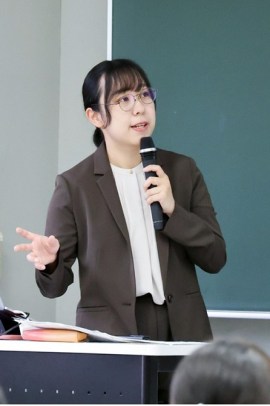
Messages from Teacher Training Department Faculty


List of Teacher Training Program Committee Members
| Faculty | Department | Teacher Name |
|---|---|---|
| Faculty of Engineering | Department of Civil Engineering and Urban Design | Osamu Oyama |
| Department of Architecture | Toshiya Okayama | |
| Department of Mechanical Engineering | Sei Ueda | |
| Department of Electrical and Electronic Systems Engineering | Tomoaki Miichi | |
| Department of Electronics and Information Systems Engineering | Hiroshi Oku | |
| Department of Applied Chemistry | Michihisa Murata | |
| Department of Environmental Engineering | Yasunori Kosaki | |
| Department of Biomedical Engineering | Eiji Nagamori | |
| Faculty of Robotics and Design | Department of Robotics | Yutaka Hiroi |
| Department of System Design | Akira Inoue | |
| Department of Design and Architecture | Ryo Masuoka | |
| Faculty of Information Science and Technology | Department of Data Science | Seigo Yasutome |
| Department of Real World Computing | Shigeyuki Sakazawa | |
| Department of Information and Computer Science | Tetsuji Kimura | |
| Department of Information Systems | Toru Amemiya | |
| Department of Media Science | Ikue Taoka |
Teaching certificates available
Licenses available (applicable to current students)
| Faculty | Department | License type and subject |
|---|---|---|
| Faculty of Engineering | Department of Civil Engineering and Urban Design Department of Architecture Department of Electrical and Electronic Systems Engineering |
Junior high school teacher license (mathematics) High school teacher license (mathematics) High school teacher license (industrial) |
| Department of Mechanical Engineering | Junior high school teacher license (mathematics) Junior high school teacher license (technical) High school teacher license (mathematics) High school teacher license (industrial) |
|
| Department of Electronics and Information Systems Engineering (Department of Electronics, Information and Communication Engineering) |
Junior high school teacher license (mathematics) High school teacher license (mathematics) High school teacher license (information) High school teacher license (industrial) |
|
| Department of Applied Chemistry Department of Environmental Engineering Department of Biomedical Engineering |
Junior high school teacher license (science) High school teacher license (Science) High school teacher license (industrial) |
|
| Faculty of Robotics and Design | Department of Robotics Department of System Design |
Junior high school teacher license (technical) High school teacher license (industrial) |
| Department of Design and Architecture | High school teacher license (industrial) | |
| Faculty of Information Science and Technology | All Departments | Junior high school teacher license (mathematics) High school teacher license (mathematics) High school teacher license (information) |
| graduate school | Major | License type and subject |
|---|---|---|
| Graduate School of Engineering Master's Program | All majors | High school teaching license (industry) |
| Graduate School of Robotics and Design Master's Program |
Robotics and Design Engineering | High school teaching license (industry) |
| Graduate Graduate School of Information Science and Technology, Master's Program | Department of Information Science | High school teacher certification (information) |
How to take the course
The process to obtain a license
| First year | Second Year | Third Year | Fourth Year | |
|---|---|---|---|---|
| March | Teacher training course enrollment guidance | |||
| "Introduction to Welfare Education" (Experience in caregiving, etc.) guidance |
||||
| Teaching Practice Course Guidance | ||||
| April | Course Registration | Course Registration | Application for course enrollment (including teaching practice) | |
| Visit to the school where you will be doing your teaching practice (until around September) | Teaching Practice Pre-training | |||
| May | ||||
| June | Teaching Practice | |||
| July | Teacher Training Course Guidance Course Registration |
Teaching Practice Post-Training | ||
| August | Care experience, etc. Advance training Caring experience etc. Post-experience guidance for caregiving, etc. |
|||
| September | ||||
| October | "Introduction to Welfare Education" (Nursing care experience) Guidance and application |
License application procedure (*1) | ||
| November | ||||
| December to February | ||||
| March | Advance permission for teaching practice | License Award (*1) | ||
Teacher certification status
Faculty Recruitment Status
Course enrollment
Junior high school/technical education: Courses required for obtaining a teaching license
Information on taking courses to obtain a junior high school/technology teaching license *Applications for 2026 have closed.
Important points to note regarding the revision of the Educational Personnel Certification Act and its Enforcement Regulations
To those considering taking courses to obtain a teaching license
Points to note regarding the enforcement of the "Act on the Prevention of Sexual Violence Against Children"
The "Act on the Prevention of Sexual Violence Against Children" will come into effect on December 25, 2026.
~Interns may also be required to have their criminal record for sex offenses verified.~
[Required actions for businesses (schools, daycare centers, cram schools, etc.)]
● We will continue to work towards creating an environment that protects children from sexual violence.
● We will check whether individuals working in jobs involving children have a prior record of sex offenses.
● If there is a risk of sexual violence, we will not assign the individual to work in a position that involves contact with children.
At our university, students, especially those enrolled in teacher training programs, may be asked by the training facilities to confirm whether or not they have a criminal record for sexual offenses during their teaching practice. Please be aware of this point.
[Points to note regarding interns]
● If the internship plan includes one-on-one interactions with children, or if the internship period is considerably long, and it is determined that the internship involves dominance, continuity, and isolation towards the children, it may be necessary to check whether the intern has a prior record of sexual offenses. The final decision on whether or not to check for a prior record of sexual offenses will be made by the internship organization.
● If it is determined that confirmation of whether or not the intern has a criminal record for sex offenses is necessary, the intern will be required to submit their family register and other relevant documents to the Child and Family Agency.
● Individuals confirmed to have a prior conviction for a sex offense will not be permitted to participate in practical training involving contact with children. While the educational licenses and qualifications obtainable at this university are as listed above, if a prior conviction for a sex offense is confirmed, the individual will not be able to obtain these licenses or qualifications due to their inability to participate in practical training involving contact with children.
● When enrolling in the teacher training program, you will be required to submit a written pledge stating that you have no prior convictions for sex offenses, as well as a consent form allowing the employer to verify your prior convictions for sex offenses.
Please note that, in addition to the practical training related to the teacher training program mentioned above, students who are expected to participate in practical training (including internships) or volunteer activities that involve contact with children may be required to submit a written pledge stating that they have no prior convictions for sexual offenses, as well as a consent form for the employer to verify their prior convictions for sexual offenses.
【reference】
For details about the system, please see here.
● Agency for Child and Family Affairs website: "Act on the Prevention of Sexual Violence Against Children (Act on Measures to Prevent Sexual Violence Against Children by School Establishers, etc. and Private Education and Childcare Providers)"
Link: https://www.cfa.go.jp/policies/child-safety/efforts/koseibouhou
Teacher training course self-examination and evaluation
Information on the Teacher Training Course Alumni Association "Yodotsumi Kibo"
Purpose of the Establishment
Origin of the alumni association name "Yodotsumi Kibo"
Source: University Song
Guidance for Executives (April 2025 onwards)
・Vice President Takashi Hori (Class of 2010)
Accounting: Eri Yokoya (Class of 2013)
How to register and change your information
Handling of Personal Information
Contact Information
*Please replace [at] in the email address with @.