






Promoting Diversity, Equity and Inclusion
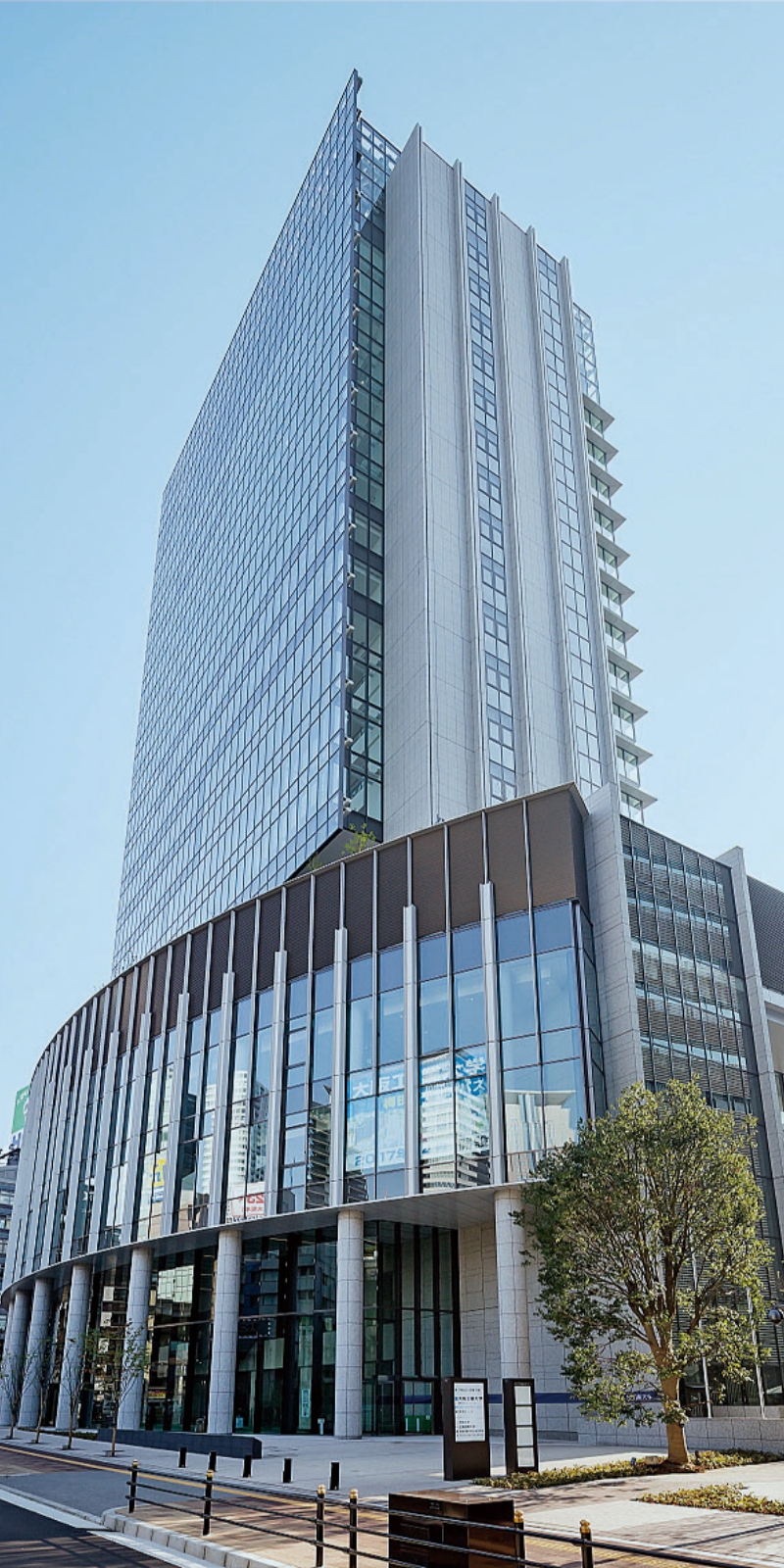
Osaka Institute of Technology
President Susumu Inoue
President Susumu Inoue
Osaka Institute of Technology was founded in 1922 by its predecessor, Kansai Technical College, based on the founding spirit of "educating professionals with practical skills backed by theory who can thrive in the field for the sake of the world, people, and the region." Since then, in response to the demands of society and the times, the college has striven to nurture professionals with a pioneering spirit who strive to create new intellectual and technological ideas.
Based on this philosophy, the Josho Gakuen School Corporation Code of Conduct, which must be followed, sets out "Attitude toward education and instruction," "Respect for human rights and individuality," and "Creating a healthy and cheerful workplace," and in order to work toward the realization of diversity, equity, and inclusion, we have formulated the "Basic Philosophy and Policy for Promoting Diversity, Equity, and Inclusion" and the "Guidelines for Dealing with Diversity, Including Sexual Orientation and Gender Identity, at Osaka Institute of Technology." Based on these, our university is committed to developing human resources through the development of an educational and research environment and raising awareness, so that the diversity of all students and faculty members is respected and they can maximize their individuality and capabilities.
Basic principles and policies for promoting diversity, equity and inclusion
1. Basic Philosophy
Osaka Institute of Technology of Technology's founding spirit is "to cultivate professional citizens who have practical skills backed by theory and can be active in the field, for the sake of the world, people, and the community." Its educational philosophy is "to cultivate professional citizens who, in response to the demands of society and the times, have acquired the foundations of specialized academic knowledge and the ability to apply it in practice, while also cultivating broad perspectives and rich humanity, and who are filled with a pioneering spirit and strive to create new intellectual and technological ideas."
Based on this philosophy, the Josho Gakuen School Corporation Code of Conduct, which must be adhered to, includes "attitude toward education and instruction," "respect for human rights and individuality," and "creating a healthy and bright workplace." In order to achieve diversity, equity, and inclusion, we are committed to developing human resources through the creation of an educational and research environment and raising awareness, so that the diversity of all students and faculty and staff is respected and they can make the most of their individuality and abilities.
Based on this philosophy, the Josho Gakuen School Corporation Code of Conduct, which must be adhered to, includes "attitude toward education and instruction," "respect for human rights and individuality," and "creating a healthy and bright workplace." In order to achieve diversity, equity, and inclusion, we are committed to developing human resources through the creation of an educational and research environment and raising awareness, so that the diversity of all students and faculty and staff is respected and they can make the most of their individuality and abilities.
2. Basic Policy
- Osaka Institute of Technology will raise awareness of the promotion of diversity, equity, and inclusion, and will endeavor to ensure that the diverse opinions of its members are respected in its decision-making processes.
- Osaka Institute of Technology strives to improve the learning, education, research, and working environment so that all members can maximize their individuality and capabilities.
- Osaka Institute of Technology of Technology promotes human resource development from the perspective of diversity, equity, and inclusion.
End
Guidelines for dealing with diversity in sexual orientation and gender identity at Osaka Institute of Technology
Based on its founding spirit and educational philosophy, Osaka Institute of Technology of Technology aims to cultivate broad perspectives and rich humanity, and to train professional workers with a pioneering spirit who strive to create new intellectual and technological ideas.
Based on this philosophy, our university respects diversity, including sexual orientation and gender identity, and strives to ensure that no one experiences mental distress or disadvantage during their student life.
1. Specific response policy under the current circumstances
2. Regarding harassment
Based on this philosophy, our university respects diversity, including sexual orientation and gender identity, and strives to ensure that no one experiences mental distress or disadvantage during their student life.
- We respect the individual's decisions regarding information such as sexual orientation and gender identity, whether to disclose it or not, and how to express it.
- We will prevent and eliminate discrimination and harassment based on sexual diversity.
- We will provide necessary information and raise awareness in order to deepen understanding of diverse sexualities.
- We will strive to create an environment where students can engage in educational and research activities with peace of mind, regardless of gender diversity.
1. Specific response policy under the current circumstances
(1) Name notation, use of aliases, etc.
You can choose how you would like to be known by others during your time on campus. This section describes how your personal information, such as your name and gender, is handled and how this can be flexibly adjusted.
① Regarding the display of names and the use of aliases
As a general rule, the names of students at our university are listed in the student register, student ID card, diploma, and various certificates using the "name on the family register." However, if the student requests it, they may use a nickname based on the gender they identify with.
If you would like to use an alias on campus, please contact the academic affairs department at your campus. After completing and submitting the application form, you will be issued a "Notice of Approval for Use of Alias, etc." Your student ID card and student registration data in the student information system will also be updated accordingly. Of course, any consultation regarding the use of an alias will be kept strictly confidential.
If you would like to use an alias on campus, please contact the academic affairs department at your campus. After completing and submitting the application form, you will be issued a "Notice of Approval for Use of Alias, etc." Your student ID card and student registration data in the student information system will also be updated accordingly. Of course, any consultation regarding the use of an alias will be kept strictly confidential.
You may be asked to explain the difference between your common name and your legal name. In that case, you should basically explain it yourself, for example by showing the "Notice of Approval to Use Common Name, etc." If necessary, we can issue a certificate (fees apply) stating that you are approved to use your common name in documents from our university.
② Gender information
Our university registers and manages gender information on family registers. If you change your gender on your family register, please submit a "Notification of Change" and go through the change procedure. We will promote the following initiatives to handle gender information carefully so that a person's gender information is not made public in a manner that is not intended by the person.
B. In principle, information distributed or disclosed to students (such as lists) will be made known to exclude the gender field.
(b) We will re-examine the necessity of including gender information in meeting materials, etc., and proceed with deleting such information or changing the way it is included.
(b) We will re-examine the necessity of including gender information in meeting materials, etc., and proceed with deleting such information or changing the way it is included.
(2) Certificate
We will continue to consider the necessity of indicating gender on various documents, and will create an environment in which, as a general rule, there is no gender field on documents and surveys that students fill out while enrolled. However, we cannot eliminate the requirement to enter gender on "enrollment procedure documents" and "health management information." In that case, we will consider measures such as adding a column for "other" in addition to "male" and "female."
① Regarding certificates, etc. Gender will not be stated on various certificates issued by our university, except for health certificates and forms specified by other institutions where gender must be stated.
② Certificates after graduation Certificates after graduation are issued under the name at the time of graduation (leave of enrollment). However, if you wish to have a certificate issued under the name after changing your name after graduation, you can do so by submitting a notification of change in the family register information along with a copy of the family register extract to the office handling the request, either by visiting the university or by mail.
(3) Classes
Depending on the class, there may be circumstances or conditions that make students feel anxious. This section describes situations in class that may trigger anxiety and how to deal with them flexibly.
① Name
We recommend that you use the common honorific "san" regardless of gender. We also recommend that you use the honorific "san" for students with foreign names.
We recommend that you use the common honorific "san" regardless of gender. We also recommend that you use the honorific "san" for students with foreign names.
②Class management (group division)
We will ensure that unnecessary groupings based on gender are not made.
We will ensure that unnecessary groupings based on gender are not made.
③ Regarding practical training, experiments, training, internships, studying abroad, etc. We will provide individual consultations regarding physical education practical training, experiments, and training. You can consult with us about grouping by gender, gender-specific rules, use of equipment, dress code, etc.
④ Regarding off-campus training (teaching practice, etc.) Although we may not always be able to accommodate your requests depending on the circumstances of the host institution, you can inquire about toilets, changing rooms, dress code, etc.
(4) Health check-up
Regular health checkups are generally conducted on separate dates for men and women, but individual support can be discussed in advance.
(5) Use of facilities
Our university aims to create a campus where students can feel safe and comfortable. This section provides information and options regarding the use of facilities.
①Toilets We have installed "gender-segregated toilets" and "barrier-free toilets" that anyone can use. Barrier-free toilets are installed separately. Please check the student handbook for the location of the barrier-free toilets. Our university will continue to improve the environment so that each student can use the toilet of their choice with peace of mind.
② Changing Rooms We will work on improving the environment by installing private changing rooms in the future. Currently, fitting boards have been installed in some of the toilets, so please use those.
③ Accommodations: We cannot guarantee that we will be able to accommodate your request for accommodation provided by the university, but you can enquire in advance.
(6) Dress code for ceremonies, etc.
You may attend the Entrance Ceremony and Graduation Ceremony in attire that reflects your individual identity. However, please keep in mind that these are important ceremonies that mark the start and end of your university life, so please dress appropriately.
(7) Extracurricular Activities
Regarding extracurricular activities, we will discuss the matter with each student individually and respond to them individually. Students can ask in advance about the use of changing rooms, consideration regarding physical contact with other students, etc.
(8) Job hunting
In 2017, the Ministry of Economy, Trade and Industry published the "Diversity 2.0 Action Guidelines" and the Japan Business Federation published "Towards the Realization of a Diversified and Inclusive Society," which outlined the actions and directions that companies should take to promote diversity. Each company and organization is gradually making efforts to specifically state this in their internal regulations, improve the work environment, and take into consideration international students, students with disabilities, LGBT, etc. in recruitment activities. In consideration of these, we do not require students to wear suits when participating in job guidance sessions and seminars held on campus. In addition, there is no item on the university-designated resume that requires students to state their gender. However, wearing a suit is not mandatory when participating in company information sessions held on or off campus or when taking a company interview, but we recommend wearing a suit from the perspective of the interviewer's first impression, etc. For consultations regarding these recruitment matters, please contact the Career Support Division of each campus.
(9) International Exchange
When participating in international exchanges on or off campus, we recommend that you research the culture, race, ethnicity, language, religion, laws, systems, customs, etc. of the host country in advance, and understand that there are diverse values. You can check the following consultation desk for information on learning with the host country, living environment, and support systems for the study abroad programs offered by the university.
(10) Statistical surveys, etc.
As a university, we may collect gender information for research and analysis purposes that we deem necessary, but we will not disclose gender information to identify individuals.
2. Regarding harassment
Our university, in accordance with the "Regulations for the Prevention of Human Rights Violations," prevents and eliminates discrimination and harassment on the grounds of sexuality. "Sexual remarks and actions" are considered sexual harassment, but remarks and behaviors that are insulting, discriminatory, or disgusting toward an individual's sexuality can also be considered harassment. In addition, terms such as "masculine" and "feminine" can be the cause or background of sexual harassment. Please also be careful about remarks about body shape, appearance, marriage, clothing, etc.
Information such as sexual orientation and gender identity is personal information, and publicizing this information without the individual's consent (outing) may constitute power harassment.
Information such as sexual orientation and gender identity is personal information, and publicizing this information without the individual's consent (outing) may constitute power harassment.
3. On-campus consultation desk
Terminology
| Contact department | Response details |
|---|---|
| Academic Affairs Division (Omiya Campus, Building 1, 2nd floor) |
Student ID cards, classes, exams, student rosters, report cards, teaching positions, certificates related to grades and student records, diplomas, certificates of completion, etc. |
| Student Affairs Division (Omiya Campus, Building 1, 2nd floor) |
Extracurricular activities, counseling, academic support for students with disabilities, etc. |
| Welfare Division (Omiya Campus, Building 1, 2nd floor) |
Scholarships, student discounts, school certificates, part-time jobs, international students, returnees, etc. |
| Nurse's Office (Omiya Campus, Building 2, 1st floor, Umeda Campus 4th floor, Hirakata Campus Building 1, 1st floor) |
Health checkups, health certificates, health consultations, etc. |
| Career Support Division (Omiya Campus, Building 8, 1st floor, Umeda Campus 7th floor, Hirakata Campus Building 1, 1st floor) |
Job hunting, internships, career education, extension courses, etc. |
| International Center (Omiya Campus Chast 1st floor) |
Study Abroad and more |
| Faculty of Robotics and Design Office (Umeda Campus, 7th floor) | Student IDs, classes, exams, student rosters, report cards, teaching positions, certificates related to grades and student records, diplomas, completion certificates, extracurricular activities, counseling, support for students with disabilities, scholarships, student discounts and commuting certificates, part-time jobs, international students and returnees, etc. |
| School of Faculty of Information Science and Technology Office (Hirakata Campus, Building 1, 1st floor) |
Terminology
| term | explanation |
|---|---|
| Sexual orientation | It is about which gender one is attracted to in terms of romantic and sexual attraction. Sexual orientation varies from person to person, with some people attracted to the opposite sex, some to the same sex, some not caring about the gender of the person they are attracted to, and some not feeling romantic feelings toward either men or women. |
| Gender identity | It refers to one's perception of one's gender. A person whose gender identity does not match their biological/physical sex or the sex on their family register at birth is called transgender. There are cases where a person's biological sex is male and their gender identity is female, or where a person's biological sex is female and their gender identity is male, and some people feel uncomfortable with their physical sex. |
| LGBTQ | It is an acronym for Lesbian (female homosexuals), Gay (male homosexuals), Bisexual (bisexuals), Transgender (a person whose physical sex they were assigned at birth differs from the gender they identify as), and Queer/Questioning (a person who is unclear about their own sexual orientation or gender identity, or who has intentionally not decided). |
| SOGI | It is an acronym of Sexual Orientation and Gender Identity. While LGBTQ is a concept that indicates the sexual orientation of a specific minority or a minority group, LGBTQ is a comprehensive concept that relates to all people, including heterosexuals and cisgender people. |
| Outing | This occurs when a third party publicly reveals someone's sexual orientation or gender identity without their consent, including when that person has come out as LGBTQ themselves. |
End
- Strengthening the development of female student talent to enhance social diversity -
Osaka Institute of Technology will begin accepting students through the "Special Recommendation Entrance Examination for Women" from the 2024 academic year.
Since its establishment, our university has accepted and endeavored to develop diverse talent in response to social trends and the demands of the times. It is symbolic that we established a night school from the beginning and have focused on education for working adults. Over the 100 years since then, we have provided learning opportunities to a diverse range of talent aspiring to play an active role in various engineering fields, producing over 110,000 graduates who can play an active role in the field, and contributing to the multifaceted development of society both in Japan and abroad. We are proud that the footsteps of our female graduates are also engraved in the trajectory of this social development.
Currently, the percentage of female students at our university is as high as 30-40% depending on the department or year, but the average is usually around 15% across the entire university. This is almost the same as the percentage of female engineering students in Japan. However, among our female students, there are some who are active as leaders in regular classes, student projects that boast the best performances in the country, and extracurricular activities. In addition, many women continue to demonstrate outstanding abilities in various fields after graduation. There is no need to listen to the recent voices calling for the promotion of female talent in Japan and around the world, but our university has already experienced firsthand that the abilities and perspectives of women are essential to the future revitalization of organizations and society.
Our university will continue to enrich its diverse education and research environment, so that it can realize intellectual and technological creativity from multiple perspectives and train professional workers with solid human capabilities. We will strive to expand the diversity of not only our students but also our faculty and researchers, and strive more than ever to create a campus environment where all members can easily study, teach, and research and demonstrate their abilities. We hope that these efforts at our university will not only nurture female talent in science and engineering, but will also eventually lead to increased diversity in society as a whole.
Support for admission

◆We will answer your questions and concerns at our open campus.
We hold events for female students and their parents who visit our open campus, with the aim of alleviating concerns about making friends and spending time on campus. These events provide an opportunity for students to talk at leisure with current female students about what motivated them to study science and engineering, campus life, and more. These events are intended to help female students who are deciding on their future career paths resolve any doubts or anxieties they may have, and help them visualize what it would be like to study at Osaka Institute of Technology.

◆Support for building relationships with friends before entering school
For female students who have decided to enter our university at an early stage, such as through the special female recommendation entrance exam, we hold pre-enrollment female consultation meetings to ensure a smooth start to student life after enrollment.
At the meeting held in March 2023, 44 participants, female faculty members from each faculty, and senior students held a roundtable discussion at Nanohana Cafeteria on the 21st floor of the Umeda Campus. The participants seemed nervous at the start of the discussion, but as the program progressed, they gradually relaxed and interacted with each other across the boundaries of the faculties and departments they planned to enroll in, in a friendly atmosphere. In a survey conducted after the event, about 90% of participants responded that their concerns and questions about university life after enrollment had been resolved, and comments such as, "I had a fun time," and "The stories of the senior female students were useful for my future after enrollment" were also seen.
At the meeting held in March 2023, 44 participants, female faculty members from each faculty, and senior students held a roundtable discussion at Nanohana Cafeteria on the 21st floor of the Umeda Campus. The participants seemed nervous at the start of the discussion, but as the program progressed, they gradually relaxed and interacted with each other across the boundaries of the faculties and departments they planned to enroll in, in a friendly atmosphere. In a survey conducted after the event, about 90% of participants responded that their concerns and questions about university life after enrollment had been resolved, and comments such as, "I had a fun time," and "The stories of the senior female students were useful for my future after enrollment" were also seen.
Support after enrollment

◆We provide a learning environment and system that supports the growth of each student.
In order to provide more than 7,000 students enrolled at Osaka Institute of Technology with detailed educational support in more than 7,000 ways, various sections, including each faculty and department and the Education Center, work together to provide various learning opportunities. With a system that supports students' learning from many angles, including regular classes, various extracurricular courses, extracurricular activities, and individual consultations, and an educational system that covers a wide range of subjects from basic to advanced, from theory to practice, we have established a support system that meets the needs of each individual student.

◆We support students in acquiring study habits that lead to independent growth.
Osaka Institute of Technology has set up an Education Center on each campus to help students with their problems and provide advice, such as "I can't solve the math problems...", "Physics is too difficult and I can't keep up with the classes...", or "I'm not very good at English...".
At the Education Centre, teachers and student tutors will provide you with personal guidance and help resolve any queries or concerns you may have.
We have female students as tutors, and we support all students to acquire self-discipline, which is the power to achieve self-growth, aiming to acquire continuous study habits. We also offer courses to acquire practical skills, so we can provide learning support tailored to each student's academic ability.

◆Provide career support for female students
In 2023, a seminar on the theme of "Etiquette Course for Students to Acquire as a Habit" was held at the Omiya and Umeda campuses, mainly for female students. This seminar was held as part of career education, where freelance announcer and visiting professor at Osaka Institute of Technology Saki Yagi gave advice on "what you can prepare while you are a student," "etiquette that you should acquire as a habit," and "how to speak in a way that leaves a good impression" in order to be successful in society. In the second half of the seminar, there was a Q&A session, during which students asked many questions such as "how to rely on people around you effectively" and "how to stay strong," and Yagi answered each one carefully. Participating students commented, "It was all for my own benefit, and I was able to resolve some of my anxieties, so I'm glad I was able to participate."
Starting in 2023, the Hirakata Campus will be hosting a "Female Student Career Seminar" for female students. In the first half of the seminar, our graduates will talk about how they are using what they learned at university in society and how they have approached job hunting and graduation research, while in the second half, a panel discussion and social gathering will be held with alumni, female faculty and staff, and current female students. This will be an opportunity for students to gain reference as they consider their future career paths.
Starting in 2023, the Hirakata Campus will be hosting a "Female Student Career Seminar" for female students. In the first half of the seminar, our graduates will talk about how they are using what they learned at university in society and how they have approached job hunting and graduation research, while in the second half, a panel discussion and social gathering will be held with alumni, female faculty and staff, and current female students. This will be an opportunity for students to gain reference as they consider their future career paths.
◆We provide a place for interaction
The Language Learning Center (LLC) at the Omiya Campus, the hub of international exchange at Osaka Institute of Technology, is not only a space for English study, but also has free spaces on the first and third floors where students can gather and socialize freely. Native staff are always on hand on the second floor, and various English learning materials are available. Students can also receive advice on their study plans to practice English conversation or prepare for studying abroad.
The total number of students who participated in the international exchange program in 2023 was 639, of which 206 (32%) were female. The fact that 8 out of 15 (53%) of the LLC student staff members mentioned above are female highlights the active role played by women in international exchange.
The total number of students who participated in the international exchange program in 2023 was 639, of which 206 (32%) were female. The fact that 8 out of 15 (53%) of the LLC student staff members mentioned above are female highlights the active role played by women in international exchange.

◆Many students are active in extracurricular activities
Extracurricular activities such as project activities and club activities are a place to gain various experiences in university life and are also a valuable opportunity to develop communication skills to play an active role in society. Some extracurricular activities, such as academic clubs (Civil Engineering Culture Research Club, Electrical Science Research Club, Applied Chemistry Research Club) and manufacturing projects (human-powered airplanes, solar, formula, robots), can lead to the cultivation of specialized knowledge.
Even in manufacturing projects that require a great deal of specialized knowledge in the electromechanical field (mechanical engineering, electrical engineering, and electronics), students are active beyond the boundaries of their department, for example, a female student from a department other than electromechanical engineering is serving as the leader of the human-powered aircraft project.
We also have club activities, such as the wind ensemble, in which many female students participate. We have created an environment where students can achieve what they want to do during their four years at university and have a fulfilling student life.
◆We answer your questions and concerns about student life and provide support to make you feel at ease.
We have prepared various support systems where faculty and staff can answer any questions or concerns you may have about your studies at university, your career path, extracurricular activities, and your student life. In addition, you can consult with the female staff at the Student Affairs Division or Student Counseling Office, who serve as a consultation point, regarding any concerns you may have about your student life.
Diversity-related subjects
We offer courses that allow you to learn about the essence of diversity from various perspectives.
-
Click here for a list of subjects
Classification Subject Name Faculty Department Grade manager Class Session theme Common subjects Japanese Culture and Society I All faculties All Departments 2 Mayumi Otani 11 The current situation of LGBT in Japan Faculty of Engineering *
SubjectInternational Relations Faculty of Engineering All Departments 2 Susumu Kawata 10 [Freedom of Expression and Hate Speech]
Why did singer Kiyoshiro Imawano sing "Kimigayo" in a rock style? Is racist speech acceptable?Psychology Faculty of Engineering All Departments 2 Mayumi Otani 6 Mind and Body: How to Read Conversion Disorder, Psychosomatic Disorders, and Physical Symptoms Building regulations Faculty of Engineering Department of Civil Engineering and Urban Design 4 Gen Tamura 13 Disasters and Architecture/People-Friendly Buildings Spatial Design Faculty of Engineering Department of Civil Engineering and Urban Design 3 Kazunari Tanaka 13 Theory and techniques of detail design 2 The World and Humanity Faculty of Engineering Department of Civil Engineering and Urban Design 1 Susumu Kawata
Hiroaki Uchida3 [International Understanding (3)]
Introduction to the Islamic World: Cultural DiversityArchitectural Planning II Faculty of Engineering Department of Architecture 2 Tetsu Yoshida 12 Designing for social inclusion The World and Humanity Faculty of Engineering Department of Architecture 1 Kiyoshi Matsuura
Yurika Nishiyama12 History and Gender The World and Humanity Faculty of Engineering Department of Mechanical Engineering 1 Susumu Kawata
Hiroaki Uchida3 [International Understanding (3)]
Introduction to the Islamic World: Cultural DiversityThe World and Humanity Faculty of Engineering Department of Electrical and Electronic Systems Engineering 1 Susumu Kawata
Hiroaki Uchida3 [International Understanding (3)]
Introduction to the Islamic World: Cultural DiversityThe World and Humanity Faculty of Engineering Department of Electronics and Information Systems Engineering 1 Yurika Nishiyama
Satoshi Kamikubo5 History and Gender The World and Humanity Faculty of Engineering Department of Environmental Engineering 1 Yurika Nishiyama
Mayumi Otani5 History and Gender Public Health Faculty of Engineering Department of Biomedical Engineering 3 Ryota Hosomi 14 Health System (2) Adult Health, Measures for People with Disabilities, Social Security System Robotics &
Faculty of Design Engineering ※
SubjectSpecial lectures on humanities and social sciences Faculty of Robotics and Design Department of Robotics
Department of System Design
Department of Design and Architecture3 Satoshi Kamikubo 13 People say that inequality makes them feel bad, and that inequality makes them motivated. But inequality will never disappear. Engineering Ethics Robotics &
Faculty of Engineering of Design and EngineeringDepartment of Robotics
Department of System Design
Department of Design and Architecture1 Miki Imai
Masahiro Yoshikawa
Akira Inoue
Kazunori Fukuhara
Koji Nishio7 Environmental Conservation and Ethics Diverse Society and Engineering Ethics Basic Information Processing Robotics &
Faculty of Engineering of Design and EngineeringDepartment of Robotics
Department of System Design
Department of Design and Architecture1 Akira Inoue 12 Human Interface Introduction to Design Engineering Robotics &
Faculty of Engineering of Design and EngineeringDepartment of System Design 2 Hiromitu Yokoyama 8 Design Engineering Opening Up New Frontiers in Society and Industry (1) Human Interaction Robotics &
Faculty of Engineering of Design and EngineeringDepartment of System Design 3 Hiroyuki Onoyama 11 Universal Design Design Theory III Robotics &
Faculty of Engineering of Design and EngineeringDepartment of Design and Architecture 3 Seiichi Shiraga
Miki Imai
Koji Nishio
Kazunori Fukuhara
Ryo Masuoka
Ai Akai
Noritsugu Tsumaki
Taku Nakamura and Ryo Masuoka
Asako Yamamoto
Shinji Miura2 Inclusive Design (Product Design) Ergonomics Robotics &
Faculty of Engineering of Design and EngineeringDepartment of Design and Architecture 2 Toshio Doi 6 Inclusion and Universal Design 7 Universal design and accessibility initiatives Information Design Theory Robotics &
Faculty of Engineering of Design and EngineeringDepartment of Design and Architecture 2 Ryo Masuoka 10 Current Issues in Type Design (1) AI and XR Applications Robotics &
Faculty of Engineering of Design and EngineeringDepartment of System Design 3 Masataka Seo 7 XR Applications in the Healthcare Field Faculty of Information Science ※
SubjectFoundations of Ethics Faculty of Information Science and Technology Department of Data Science
Department of Real World Computing
Department of Information and Computer Science
Department of Information Systems
Department of Media Science
Department of Network Design1 Toru Amemiya 2 II. About the Code Human Interface Faculty of Information Science and Technology Department of Information Systems
Department of Media Science
Department of Network Design3 Tomoko Koda 9 Universal Design Faculty of Intellectual Property ※
SubjectLife Stages and the Law Faculty of Intellectual Property Department of Intellectual Property 3 Takahiro Mochizuki 9 Working conditions: wages, working hours, holidays, etc. (Labor Law ②) Constitution II Faculty of Intellectual Property Department of Intellectual Property 2 Takahiro Mochizuki 1 General Overview of Human Rights (1)—What are Human Rights? International Relations Law Faculty of Intellectual Property Department of Intellectual Property 3 Akihiro Matsui 3 Human Rights in the International Community 1 Basic English for Law II Faculty of Intellectual Property Department of Intellectual Property 2 Makoto Imura 6 gender and racial equality laws
(Gender and Racial Equality Act)Psychology Faculty of Intellectual Property Department of Intellectual Property 2 Mayumi Otani 8 Adolescence: Ego identity, moratorium, and apathy
Teaching Subjects Educational Principles All faculties Teaching profession All Departments 2 Yoshito Hikida 10 Education for a New Era I (Gender Equality, Gender and Education) Education Administration All faculties Teaching staff All departments 3 Yoshito Hikida 12 Special Needs Education Human Development and Human Rights All faculties Teaching profession 2 Onsho Sumi 12 Thinking about gender issues Educational Counseling All faculties Teaching profession 2 Keiko Sakai 9 Game-based intervention for school refusal among children with developmental disorders Educational Psychology All faculties Teaching profession 2 Keiko Sakai 11 Understanding personality and individual differences (1) Special Needs Education All faculties Teaching profession 2 Yoichi Hasegawa
Keiko Sakai6 Understanding and Supporting Disabilities 1 (LD/ADHD)
The Importance of AssessmentIntroduction to welfare education Faculty of Engineering
Faculty of Information Science and TechnologyTeaching profession 3 Keiko Sakai
Yoshito Hikida
Toshiya Sawada
Kensuke Tanaka6 Current status and issues of welfare for people with disabilities Technology Education Method Faculty of Engineering
Robotics &
Faculty of Engineering of Design and EngineeringTeaching profession (subject area)
Department of Mechanical Engineering
Robotics &
All Departments of the Faculty of Design Faculty of Engineering2 Yoshito Hikida
Ikuo Tatsumi6 Technical education for children with disabilities Career Guidance A Faculty of Engineering
Robotics &
Faculty of Engineering of Design and EngineeringTeaching profession 3 Ikuo Tatsumi 7 Exploring the nature of employment and labor (2) Career Guidance B Faculty of Engineering
Robotics &
Faculty of Engineering of Design and EngineeringTeaching profession 3 Keiko Sakai 7 Friendships in Adolescence (2): Diversity of Friendships
*The courses available vary depending on the faculty and department.
*The syllabus is subject to change.
* Before enrolling in a course, please check the syllabus and the course application guidelines.
Nationwide Diversity Network

Our university participates in the National Diversity Network.