
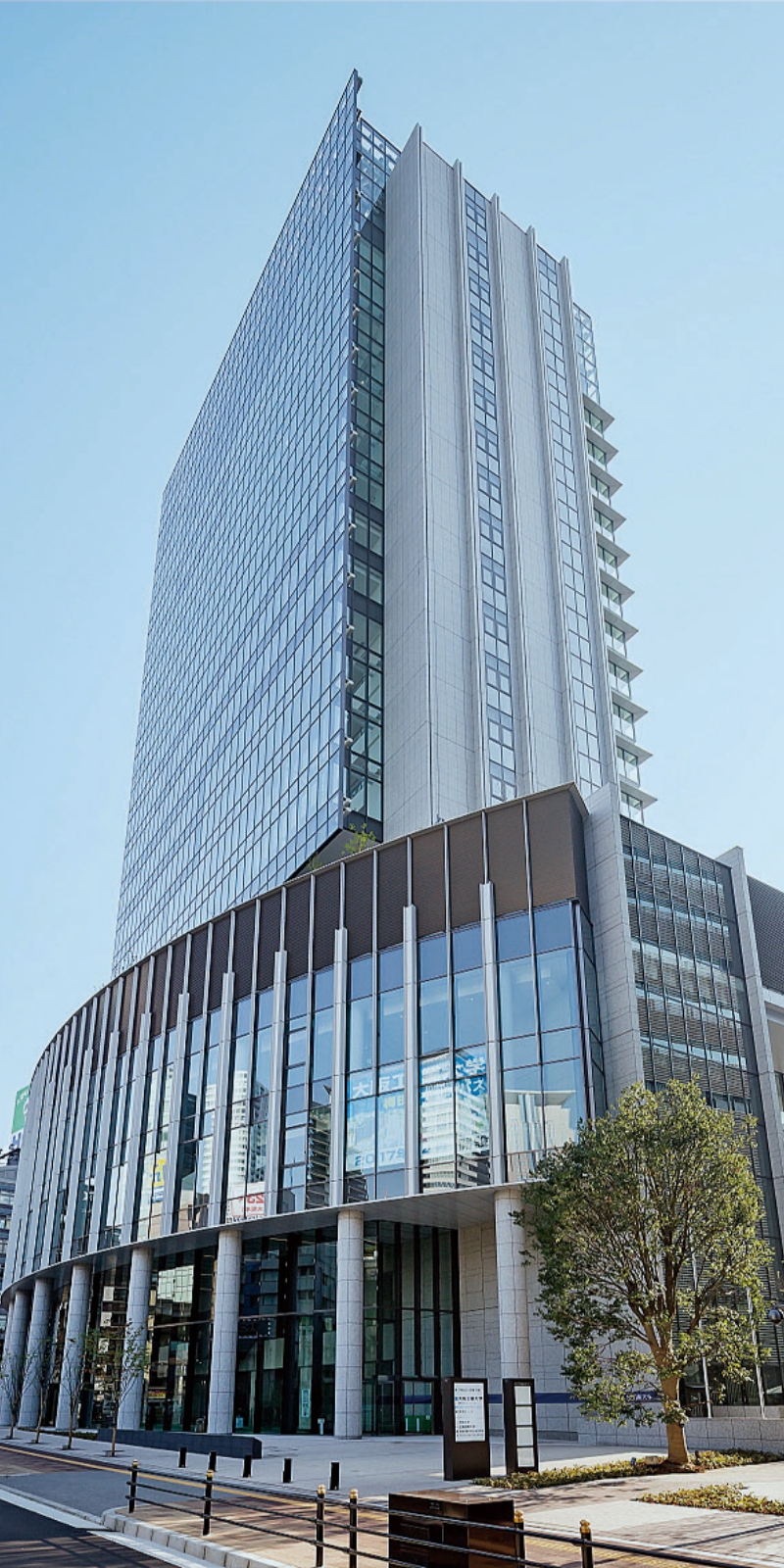






- Summary data from Osaka Institute of Technology(Academic Year 2026)
- Basic information about the school corporation and school
- management
- Educational Activities
- Student Life and Extracurricular Activities
- Social contribution and collaboration activities
- Career and employment status
- Campus facilities and equipment
- University Evaluation
- Compliance and Social Responsibility
- Survey results
- others
Summary data from Osaka Institute of Technology(Academic Year 2026)


Basic information about the school corporation and school
- Donation
- Officers and Councillors
- Capacity (undergraduate)
- Capacity (Graduate School)
- Number of exchange students accepted
-
Capacity occupancy rate
-
Number of working students
-
Number of international students
-
Number of graduates/completers (number of degrees awarded)
-
Graduate school enrollment rate
-
Student population (number of enrolled students, number of students per faculty member)
-
Number of students expelled or dropped out, dropout rate, number of students repeating a year
-
The percentage of those who enrolled in the graduate school and completed their studies within the standard period of study.
-
Other matters concerning the status of degree conferral
University organizational chart (2026 academic year)

* The Department of Network Design will stop accepting applications in April 2025.
List of Officers and Positions
| President | Susumu Inoue | Professor, Faculty of Engineering of Department of Civil Engineering and Urban Design |
|---|---|---|
| Vice President (in charge of education and research reform, student support, and industry-academia collaboration) | Emiko Ashitaka | Professor, Faculty of Engineering of Department of Biomedical Engineering |
| Assistant to the President | Mutsuo Sano | Professor, Faculty of Information Science and Technology and Department of Media Science Sciences |
| Assistant to the President (University Reform) | Toshimitsu Morizane | Professor, Faculty of Engineering of Electrical and Electronic Systems Engineering, Faculty of Engineering |
| Dean of Faculty of Engineering(concurrently serving as Dean of Graduate School) | Yasutomo Uetsuji | Professor, Faculty of Engineering of Department of Mechanical Engineering |
| Dean of the Faculty of Robotics and Design(also serves as Dean of the Graduate School) | Hiroyuki Kuramae | Professor, Department of Department of Robotics , Faculty of Robotics and Design |
| Director of Information Science (concurrently serving as Dean of Graduate School) | Masatsugu Shiihara | Professor, Faculty of Information Science and Technology of Department of Data Science of Information Sciences |
| Dean of the Faculty of Intellectual Property (also Dean of the Graduate School) | Tatsushi Gocho | Professor , Faculty of Intellectual Property, Department of Intellectual Property |
| Director of Academic Affairs | Atsushi Mukuhira | Professor, Faculty of Engineering of Division of Human Sciences |
| Library Director | Hiroyuki Teraji | Professor, Faculty of Engineering , Department of Architecture |
| Director of Information Center | Yukiji Yamauchi | Professor, Faculty of Information Science and Technology of Department of Information Systems Science |
| Director of the International Center | Masahiro Muraoka | Professor, Faculty of Engineering of Department of Applied Chemistry |
| Director of Education Center | Takayo Moriuchi | Professor, Faculty of Engineering of Department of Applied Chemistry |
| Director of the Nanomaterials and Microdevices Research Center | Kazuto Koike | Professor, Faculty of Engineering of Department of Electronics and Information Systems Engineering |
| Director of the Manufacturing Center | Shun Ushida | Professor, Faculty of Engineering of Department of Mechanical Engineering |
| Director of Yahata Engineering Laboratory (also Director of Structural Testing Center) | Osamu Oyama | Professor, Faculty of Engineering of Department of Civil Engineering and Urban Design |
| Director of Innovation Design Education and Research Center | Mutsuo Sano | Professor, Faculty of Information Science and Technology and Department of Media Science Sciences |
| Director of the Bio-Manufacturing Center | Eiji Nagamori | Professor, Faculty of Engineering of Department of Biomedical Engineering |
| Deputy Director of the Education Center (Hirakata) | Etsuo Hamada | Professor, Faculty of Information Science and Technology of Department of Data Science of Information Sciences |
| Deputy Director of the Manufacturing Center | Hideki Iwata | Manufacturing Center Engineer |
| Deputy Director of the Innovation Design Education and Research Center | Akira Inoue | Professor, Department of Department of System Design, Faculty of Robotics and Design Engineering |
| Kentaro Minagawa | Professor, Faculty of Information Science and Technology of Department of Data Science of Information Sciences | |
| Head Teacher | Atsushi Mukuhira | Professor, Faculty of Engineering of Division of Human Sciences |
| Head of Language Learning Center | Christopher Cladis | Language Learning Center, Specially Appointed Associate Professor |
Matters concerning the selection of admitted students
- Information regarding the content and questions of academic aptitude tests, etc. (undergraduate)
- Information regarding the content and questions of academic aptitude tests, etc. (graduate school)
- Selection Method (Undergraduate)
- Selection process (graduate school)
- Regarding considerations for taking the exam
- Number of applicants, examinees, successful candidates, and enrolled students (undergraduate) for each admission method category.
- Number of applicants, examinees, successful candidates, and enrolled students for each admission method category (graduate school)
-
Entrance Examination Status
*The selection process for each entrance examination category is described in the student application guidelines.
management
- business plan
- Regarding the financial support system for higher education
- Financial information (last year's inventory, balance sheet, income statement, business report, auditor's audit report)
-
Installation notification, installation plan implementation status report, and approval application form.
-
Faculty of Information Science and Technology of Department of Real World Computing<Established in 2020>
-
Faculty of Information Science and Technology, Department of Data Science(Established in 2021)
-
Faculty of Robotics & Design Faculty of Engineering(Established in FY2017)
-
Graduate School of Robotics and Design(Established in FY2017)
-
Graduate School of Engineering , Architecture, Civil Engineering and Urban Design(Established in FY2017)
-
Electrical, Electronic and Mechanical Engineering, Graduate School of Engineering (Established in FY2017)
-
Graduate School of Engineering , Applied Chemistry, Environmental and Biomedical Engineering(Established in FY2017)
Educational Activities
- Admissions Policy / Diploma Policy / Curriculum Policy
- WEB Syllabus
-
Educational goals and curriculum planning policy,
Curriculum maps, etc. - Curriculum and course enrollment, awarding of credits, graduation and awarding of degrees (undergraduate)
- Requirements for completion of course, awarding of degree (Graduate school)
- Summary of doctoral dissertation and dissertation contents and summary of the results of the dissertation examination
-
Number of faculty and staff (number of teaching staff, ratio of full-time/part-time faculty, number of administrative staff)
Educational and research objectives of each faculty and graduate school
■University
[University Objectives]
The university aims to educate and research specialized academic subjects, to cultivate professional citizens who have deep knowledge and practical application skills, who can realize intellectual and technological creations from an international perspective in response to the needs of the times, who have solid human qualities and who are always striving to improve themselves, and who will contribute to the development of society and promote the advancement of academics and culture.
(Osaka Institute of Technology Regulations, Article 1)
[Educational and research objectives]
- The Faculty of Engineering aims to cultivate engineers who are always striving to improve themselves, who are mindful of the global environment, and who can practice manufacturing through broad-based collaboration based on a foundation of specialized technology and human capabilities.
- The Faculty of Robotics and Design aims to cultivate professionals who can utilize engineering knowledge and technology from a human-centered perspective and contribute to the formation and development of a sustainable and prosperous society.
- The Faculty of Information Science and Technology aims to cultivate sound engineers and professionals who have knowledge and skills related to information and communications, and who, with a broad perspective and ethical standards, will contribute to the informationization of society and industrial activity and its development.
- The Faculty of Intellectual Property aims to train professionals who, with sound humanity, intellectual ability and an international sensibility, can play an active role in the industrial society of the 21st century and contribute to promoting the protection and utilization of intellectual property.
(Osaka Institute of Technology Institute of Technology Graduate School Regulations Article 3-2)
■ Graduate School
- The Graduate School (excluding the professional graduate school) aims to teach and research academic theory and its applications based on the foundation of undergraduate education, to delve into its depths and contribute to the advancement of culture.
- The professional graduate school within this graduate school aims to teach and research academic theory and its applications, and to cultivate the deep academic knowledge and outstanding abilities required for careers that require a high level of expertise.
(Osaka Institute of Technology Institute of Technology Graduate School Regulations Article 1)
[Graduate school and educational and research objectives]
- The graduate school has the Graduate School of Engineering, the Graduate School of Robotics and Design, the Graduate School of Information Science and Technology, and the Graduate School of Intellectual Property.
- The Graduate School of Engineering aims to train highly skilled engineers and professionals with broad perspectives who can utilize the cutting-edge science and technology required by 21st century society in a wide range of specialized fields, while also being mindful of the global environment and contributing to the enrichment of human life.
- The Graduate School of Robotics and Design aims to train highly specialized professionals who can utilize engineering knowledge and technology from a human-centered perspective and contribute to the formation and development of a sustainable and prosperous society.
- The Graduate School of Information Science and Technology aims to train highly skilled engineers and professionals who can accurately grasp the needs of the times and contribute to the information society by using information and communications technology, and who can be active internationally.
- The Graduate School of Intellectual Property is a professional course that aims to train highly specialized professionals who have the intellectual property knowledge and skills necessary to support innovation, as well as legal literacy, an international perspective, and business acumen.
(Osaka Institute of Technology Institute of Technology Graduate School Regulations Article 3)
Criteria for evaluation of graduate school dissertations
Student Life and Extracurricular Activities
- Learning Support
- Club and Circle Activities
- Tuition
- scholarship
- Employment and career development
- Nurse's Office
- Student Counseling
- Student Affairs Committee
- Support for students with disabilities
- Measures against harassment
- AED installation locations
- Support for international students
- Promoting Diversity, Equity and Inclusion
- About Osaka Institute of Technology's International Expansion (Factsheet)
Social contribution and collaboration activities
- Social Contribution Activities
- Inter-University Cooperation
- Industry-Government-Academia Collaboration
Career and employment status
-
Career Paths
- Employment and further education status list [Faculty]
- Employment and further education status list [Graduate school]
- List of employment status [International students]
Campus facilities and equipment
- Overview of campus and building area, earthquake resistance rate of school buildings, etc., and sports facilities
- Library collection
University Evaluation
Accreditation, self-assessment
University Institutional Accreditation

In 2023, our university underwent institutional accreditation by the Japan Higher Education Accreditation Council, a public interest incorporated foundation, and was found to be in compliance with the university evaluation standards.
The overall assessment in the evaluation report stated that "The university is based on its founding spirit of 'For the sake of the world, for the sake of people, and for the community, to nurture professional workers with practical skills backed by theory who can thrive in the field,' and has developed an educational curriculum that reflects the university's mission, objectives, educational goals, and three policies in its educational and research activities. The university maintains good communication between the corporation and the university in terms of management and administration, has secured a stable operational foundation that supports the university's 'medium-term plans and goals,' and manages its finances. The university has established its own performance indicators for internal quality assurance, and has established and is functioning as a system for self-inspection, evaluation, and improvement."
Additionally, the following are listed as "excellent points":
- By placing a dedicated employment officer in each department and working in cooperation with faculty and staff in charge of graduation research and extracurricular activities, the school is able to provide detailed, individual support to each student, and it is commendable that it has been able to maintain a high employment rate every year.
- The university provides university-wide support for student-led project activities such as "human-powered airplanes," "robots," "student formula," and "solar cars," by establishing and providing the "MonoLab ANNEX" as a base of operations, and by assigning faculty and specialized technicians, and it is commendable that the university has achieved a high level of success nationwide.
- It is commendable that the "Diploma Supplement System" checks and evaluates the degree to which the diploma policy is met, and provides detailed guidance to students from the time they enroll through their job-hunting activities and graduation.
- The "Medium-term Goals and Plans" have been set out in 10 areas, including student recruitment, education and research, student support, career paths and employment, and finances. Each department has drawn up "basic policies," "action plans," "target results and achievement status," and "annual achievement indicators," and these are then inspected and evaluated each year, which is commendable.
- The IR Center processes data collected from various departments within the university from a variety of perspectives, and publishes the detailed results in an "IR Annual Report" every year. This is commendable as it serves as a starting point for self-examination, evaluation, and improvement within the university.
In order to continue to meet the expectations of our students and everyone else, we will continue to work on further improvements and reforms, not only on the items you have advised us about, but also with the aim of improving our education and research.
Professional Graduate School Accreditation

Our university's Graduate School of Intellectual Property Studies was certified in 2023 as meeting the standards for Graduate School of Intellectual Property by the Japan University Accreditation Association.
Certification period: April 1, 2024 to March 31, 2029 (5 years)
Certification period: April 1, 2024 to March 31, 2029 (5 years)
- FY2023 Inspection and Evaluation Report
- Accreditation Results
- Japan University Accreditation Association website
The mark on the right is a certification mark indicating that the school meets the standards for Graduate School of Intellectual Property set by the Japan University Accreditation Association, a public interest incorporated foundation.
Self-examination and evaluation
In addition to accreditation, our university also regularly conducts self-inspection and self-evaluation activities.
- 2025 Self-Assessment and Evaluation Report
- FY2024 Self-Inspection and Evaluation Report
- FY2023 Self-assessment and evaluation report
- 2022 Self-assessment and evaluation report
- 2021 Self-assessment and evaluation report
- 2020 Self-assessment and evaluation report
- 2019 Self-evaluation report
- 2018 Self-assessment and evaluation report
- 2017 Self-evaluation report
- 2016 Self-evaluation report
- 2015 Self-evaluation report
- 2014 Self-evaluation report
- 2014 Self-Inspection and Evaluation Report Errata
- 2013 Self-evaluation report
- 2012 Self-Inspection and Evaluation Report
- 2011 Self-Inspection and Evaluation Report
Mid-term goals and plans
-
100th Anniversary Long-Term Vision
- Third Phase Mid-term Goals and Plans (2018-2022) - Overall Evaluation
- Phase III Mid-term Goals and Plans (2018-2022) - 2021 Evaluation
- Phase III Mid-term Goals and Plans (2018-2022) - 2020 Evaluation
- Phase III Mid-term Goals and Plans (2018-2022) - 2019 Evaluation
- Third Mid-term Goals and Plans (2018-2022) - 2018 Evaluation
Compliance and Social Responsibility
- Whistleblower hotline
- Measures against harassment
- privacy policy
- Intellectual Property Policy
- Conflict of Interest Policy
- Responsibility system for public research funds
- Social Media Policy
Survey results
- Alumni Survey [To be conducted in 2025]
- Corporate Evaluation Questionnaire [To be conducted in FY2025]
- Satisfaction Survey [Report on the 2025 Graduation Questionnaire]
- Report on changes in outside-class study time over time
others
Overseas training for teachers
The status of cooperation between professional universities and those in occupations requiring expertise, as well as those conducting businesses related to those occupations
Information about animal and human testing
- Regulations of the Ethics Committee for Life Science Experiments
- Regulations regarding animal testing
- Ethics for research involving human subjects
- Safety Management Regulations for Genetic Modification Experiments
- List of members of the Life Science Experiment Ethics Committee (April 2026)
- List of members of the Safety Committee for Genetic Engineering Experiments (April 2026)
- FY2025 Self-Inspection and Evaluation Report on Animal Experiments
- FY2024 Self-Inspection and Evaluation Report on Animal Experiments
- FY2023 Self-Inspection and Evaluation Report on Animal Experiments
- FY2022 Self-Inspection and Evaluation Report on Animal Experiments
- FY2021 Self-Inspection and Evaluation Report on Animal Experiments
- FY2025 Animal Experiment Education and Training Implementation Status
- FY2024 Animal Experiment Education and Training Implementation Status
- FY2023 Animal Experiment Education and Training Implementation Status
- FY2022 Animal Experiment Education and Training Implementation Status
- FY2021 Animal Experiment Education and Training Implementation Status
- Research Opt-Out (February 2025)
- Genetic recombination experiment guidelines
- External verification results report