




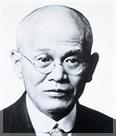
Founding spirit
For the sake of society, for the sake of people, for the sake of the community,
Possessing practical skills backed by theory,
To train specialized professionals who can excel in the field.
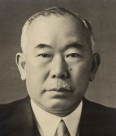
To succeed in the field
Educational Philosophy and Policy
Educational philosophy
Educational policy
- Cultivating strong human capabilities with a broad perspective
- Developing individuality, independence, and self-reliance, and acquiring the ability to cooperate.
- Implementation of preparatory education and introductory basic education.
- Cultivating logical thinking skills and information expression/communication skills.
- Emphasis on teamwork and the exercise of leadership
- Improvement and revision of lessons through collaboration between students and faculty.
- Emphasis on international exchange and cultivation of internationalism
- Enhancement of career guidance (career design support) system
- Encouragement of extracurricular activities and volunteer work
- Organic linkage of education, research, and social exchange (contribution)
The educational philosophy and policies of Osaka Institute of Technology<Full Text>
- The educational philosophy was revised in 2014.
- Approved by the Board of Directors of Osaka Institute of Technology Setsunan University (at the time) on December 15, 2004.
1. Philosophy of Education and Learning
- The foundation of education at this university is to manifest and refine the latent abilities of each student in a socially useful way. In other words, the main focus is on stimulating interest and motivation in learning, fostering a mindset of independence and self-reliance, and establishing a passionate attitude towards learning while clearly defining purpose and goals.
- Based on a deep understanding of human existence, and while coexisting with the environment, and with a spirit of international mutual understanding and cooperation, we aim to cultivate individuals who are physically and mentally sound, cultured, virtuous, and possess rich human qualities, who are aware of their responsibility to contribute to the peace, welfare, and sustainable development of global society, as well as the promotion of local communities.
- Students will acquire a solid foundation of knowledge and skills in their specialized field, and cultivate practical abilities to respond effectively to diverse challenges arising in the real world. In addition, they will develop a broad interest in academic fields other than their own, acquire a broad foundation, and further strive to create new knowledge and technologies, thereby fostering a pioneering spirit that contributes to the development of the intellectual creative cycle.
2. Basic Policy on Education and Learning
Based on the above philosophy, our university prioritizes the following: "acquiring the principles of democracy based on understanding human beings, respecting human rights, and mutual respect among people," "developing individuality and autonomy while acquiring cooperativeness," "establishing a sense of self-realization and self-responsibility," "acquiring accurate presentation and communication skills," and "cultivating leadership in organizational activities." Furthermore, our basic policy is to give sufficient educational consideration to the perspectives of "coexistence with the environment and ecosystems" and "contribution to the international community," which can be said to be key points of 21st-century academia. The following outlines the key points of specific measures in accordance with this policy.
- Cultivating strong human capabilities with a broad perspective
Based on a deep understanding of human existence, cultivating human knowledge and insight, fostering a firm awareness of human rights and ethical values, and learning about the principles of democracy such as mutual respect, coexistence among people, and symbiosis between humans and nature, is not only essential for establishing a common foundation for future academic research, but is also extremely important for peace and sustainable development in the international community and for the promotion of local communities. To this end, we place great importance on the thorough study of common subjects and basic education subjects. Furthermore, we believe that studying interdisciplinary fields in relation to one's own field of specialization will become increasingly important, and we will provide a flexible curriculum that makes such learning possible. In particular, since our university has the first Faculty of Intellectual Property established in Japan, we will establish a system that leverages the unique characteristics of our university for mutual exchange and cooperation between the Faculty of Science and Engineering and the Faculty of Intellectual Property, and for cultivating human resources who will be responsible for promoting scientific and technological innovation and the intellectual creation cycle that results from this.
- Developing individuality, independence, and self-reliance, and acquiring the ability to cooperate.
Rather than simply learning aimlessly, it is crucial to always clearly define one's own purpose and goals, and to learn while exploring the means to achieve them. In other words, it is important to independently find a learning method that suits one's own goals and abilities, and to make autonomous efforts to achieve those goals. In this way, when individuals who have established their own autonomy and individual abilities respect and cooperate with one another, and when outstanding individuals exercise appropriate leadership, a healthy and prosperous society will be built, and this point is emphasized as a fundamental principle of education.
- Implementation of preparatory education and introductory basic education.
To minimize differences in basic academic ability at the time of enrollment and reduce obstacles to taking various classes after enrollment, we will implement supplementary lessons and remedial classes in several basic subjects before and after enrollment, individual consultations and guidance (tutor system), and class grouping by academic ability. The aim is to eliminate the decline in motivation to study caused by initial academic deficiencies and to cultivate a sense of purpose in subsequent studies.
- Cultivating logical thinking skills and information expression/communication skills.
In this era of rapid globalization and informatization, with the aim of cultivating human resources who can play an active role in society and industry both domestically and internationally, we will focus on developing the ability to logically grasp and analyze things, accurately express the results as interpersonal information, and communicate that information internationally. In other words, we will emphasize acquiring the basic skills of presentation and communication with valuable content, and then steadily acquire foreign language skills, especially practical English skills, and basic information technology skills. To this end, we will appropriately provide a variety of English education and information technology subjects, and will give due consideration to the provision of exercise facilities and language labs (LL). In addition to regular lectures and exercises that efficiently utilize these resources, we will also actively encourage students' self-study and take care to make it easier for them to do so.
- Emphasis on teamwork and the exercise of leadership
Education that enables students to establish their own identity and assert themselves responsibly is an essential requirement for developing human resources who can thrive in the future international community. Furthermore, considering that most social tasks are carried out by diverse groups (teams) of experts, smooth cooperation and collaboration with others is one of the most important points, and developing the ability to exercise appropriate leadership when necessary within a team is also an important consideration in education.
- Improvement and revision of lessons through collaboration between students and faculty.
As stated in the philosophy, the true purpose of university classes is to bring out and activate students' potential abilities. To effectively achieve this, it is necessary for instructors to conduct classes adaptively and interactively, in line with students' interests and levels of understanding, rather than unilaterally deciding the content and methods of the classes. In other words, it is necessary to create an appropriate learning environment through collaboration between students and instructors. To this end, we will continuously conduct regular student course evaluation questionnaires and ensure that instructors respond sincerely to the results. Furthermore, we will continuously implement efforts (faculty development, FD) to create a more effective learning environment by having faculty and staff members frankly exchange opinions on the content and methods of classes and mutually inspire each other. In FD, we will also actively incorporate the opinions of third parties outside the university.
- Emphasis on international exchange and cultivation of internationalism
We will give full consideration to overseas training and study abroad programs for our students, as well as the acceptance of international students from other countries. Specifically, we will encourage overseas training (mainly conducted in the summer) and study abroad programs at foreign universities with which we have mutual exchange agreements. On the other hand, we will further expand the acceptance of international students. In addition, to make it easier for international students, we will establish a special admissions category, improve accommodation (International Conference Hall), enhance Japanese language education courses, and expand scholarship and subsidy programs as much as possible.
- Enhancement of career guidance (career design support) system
It is important for each individual to consider their future career path and life plan (career design) and to pursue learning that aligns with that plan. At this university, we provide opportunities for each student to discover and analyze their own individuality, aptitudes, and abilities, and we support them in raising their awareness of career planning from an early stage. Furthermore, in order to support the acquisition of various socially recognized qualifications, we offer a wide range of extracurricular extension courses in addition to regular classes.
- Encouragement of extracurricular activities and volunteer work
As part of education aimed at cultivating character and fostering rich human qualities, we actively encourage and support students' extracurricular activities, as well as socially meaningful volunteer activities, both materially and morally. Specifically, through these activities, we encourage students not only to improve their specific knowledge and skills, but also to develop proactiveness, independence, cooperation, responsibility, and initiative, as well as to acquire social skills and leadership abilities, and support them in achieving concrete results. As extracurricular activity organizations, we will establish a cultural club and an athletic club, each conducting leaders' camps in which faculty members also participate. In addition to providing subsidies to each club, we will further enhance the system of awards and encouragement for groups and individuals that achieve outstanding results.
- Organic linkage of education, research, and social exchange (contribution)
At this university, while placing the utmost importance on the systematic learning of fundamental academic concepts, we require students to experience creating new knowledge and technologies themselves, and to feel the deep joy and emotion that comes with achieving results, along with the hardships and efforts involved. This requires them to work together with faculty members to tackle unknown and unresolved problems, that is, to participate in basic research and development in university laboratories. Furthermore, to expose students to the dynamism of various activities in society and industry, we emphasize hands-on learning in industry-academia-government collaborative research and development through internships (experiential learning) at companies and external research institutions, or through organizations such as the Research Support Promotion Center.
3. Basic attitudes expected of learners
- As you begin your studies at university, take some time to reflect on what kind of profession you want to pursue in the future, what kind of work you want to do, and how you want to shape your life—in other words, design your life path. Then, based on that path, clarify the purpose and goals of your studies at university, consider the means and steps to achieve them, and create a concrete plan and schedule. Once you have decided on the path and methods, continue your studies with passion, enthusiasm, and determination, and actively rather than passively. You don't need to set your goals too high from the start, but gradually raise them while checking your progress. Do not get into the habit of being satisfied with low goals.
- Understanding your own personality, characteristics, and abilities—your strengths and weaknesses, your aptitudes and weaknesses—in other words, knowing yourself and analyzing yourself objectively, is extremely useful for setting academic goals and planning your life. Universities provide support systems for this purpose.
- While cultivating knowledge and skills in one's own specialized field is certainly important, it is also crucial to cultivate a broad interest in academic and cultural fields outside one's specialization, and to broaden one's general knowledge and perspective during one's youth. This is not only useful for one's work after entering society, but also important for enriching one's life.
In particular, at our university, we strongly encourage science and engineering students to acquire fundamental knowledge of intellectual property, and intellectual property students to understand the fundamentals of science and engineering and the overview of cutting-edge science and technology. - Beyond simply accumulating knowledge, strive to cultivate the ability to think for oneself. Furthermore, make an effort to develop the ability to identify and define problems independently, and to solve them.
- Strive to develop the ability to logically organize thoughts, clearly express them, and communicate them effectively to others (presentation and communication skills). Also, cultivate the ability to write logically clear and easy-to-understand sentences. Developing the ability to express and communicate in a foreign language, especially English, is also important.
- When you encounter questions, unclear points, or things that are difficult to understand while studying, try to find the answers yourself or ask your teachers, and don't leave any questions unanswered.
- Make as many friends as possible with whom you can talk frankly about anything, confide in, and especially those who will seriously listen to your problems and support you. The friends you make in college will be a lifelong asset.
- Health is the source of all activity. Always pay attention to your health and refrain from unnecessary leisure activities and excessive part-time work.
4. Basic attitudes required of educators
- When starting a class, it is necessary to explain why the lesson is necessary for students' future studies and careers, how it will be useful, and how it connects to more advanced knowledge and skills, thereby motivating them to engage with the class.
- In class, I try to face the students as much as possible (rather than just looking at the blackboard), making eye contact with them as I speak. This helps create a sense of intimacy with the listener and allows me to gauge whether they are interested in what I'm saying and to what extent they understand.
- During lectures, speak as loudly and clearly as possible, ensuring that you can be clearly heard even at the back of the classroom. When writing on the blackboard, strive to write neatly and clearly, using legible characters for equations and diagrams, and pay attention to avoiding messy placement. Also, students dislike it when you immediately erase what you've written.
- In class, we avoid a one-sided lecture style and instead encourage a dialogue-based approach, interspersing questions from students as needed. This, of course, also helps in checking students' level of understanding.
- While using slides, overhead projectors, and PowerPoint presentations as appropriate is effective, be careful not to proceed too quickly and smoothly, as this can lead to a false sense of understanding, even if the audience perceives it at the time.
- The principle is to conduct short quizzes (tests) weekly or every few weeks to assess understanding and performance. If this is strictly followed, final exams will likely become unnecessary. It also serves as a way to monitor attendance.
- I will respond sincerely to students' questions and requests regarding my lessons. When questions or requests are raised about my teaching methods, it is not always necessary to change them. However, it is necessary to provide a thorough explanation of why I teach in a particular way and what the objectives are, and to ensure that students understand and accept this (accountability).
The purpose of universities and graduate schools, and their educational and research objectives.
University
The purpose of a university
Educational and research objectives
- The Faculty of Engineering aims to cultivate engineers who are always striving to improve themselves, who are mindful of the global environment, and who can practice manufacturing through broad-based collaboration based on a foundation of specialized technology and human capabilities.
- The Faculty of Robotics and Design aims to cultivate professionals who can utilize engineering knowledge and technology from a human-centered perspective and contribute to the formation and development of a sustainable and prosperous society.
- The Faculty of Information Science and Technology aims to cultivate sound engineers and professionals who have knowledge and skills related to information and communications, and who, with a broad perspective and ethical standards, will contribute to the informationization of society and industrial activity and its development.
- The Faculty of Intellectual Property aims to train professionals who, with sound humanity, intellectual ability and an international sensibility, can play an active role in the industrial society of the 21st century and contribute to promoting the protection and utilization of intellectual property.
graduate school
Purpose of graduate school
- The Graduate School (excluding the professional graduate school) aims to teach and research academic theory and its applications based on the foundation of undergraduate education, to delve into its depths and contribute to the advancement of culture.
- The professional graduate school within this graduate school aims to teach and research academic theory and its applications, and to cultivate the deep academic knowledge and outstanding abilities required for careers that require a high level of expertise.
Graduate School and Educational and Research Objectives
- The graduate school has the Graduate School of Engineering, the Graduate School of Robotics and Design, the Graduate School of Information Science and Technology, and the Graduate School of Intellectual Property.
- The Graduate School of Engineering aims to train highly skilled engineers and professionals with broad perspectives who can utilize the cutting-edge science and technology required by 21st century society in a wide range of specialized fields, while also being mindful of the global environment and contributing to the enrichment of human life.
- The Graduate School of Robotics and Design aims to train highly specialized professionals who can utilize engineering knowledge and technology from a human-centered perspective and contribute to the formation and development of a sustainable and prosperous society.
- The Graduate School of Information Science and Technology aims to train highly skilled engineers and professionals who can accurately grasp the needs of the times and contribute to the information society by using information and communications technology, and who can be active internationally.
- The Graduate School of Intellectual Property is a professional course that aims to train highly specialized professionals who have the intellectual property knowledge and skills necessary to support innovation, as well as legal literacy, an international perspective, and business acumen.